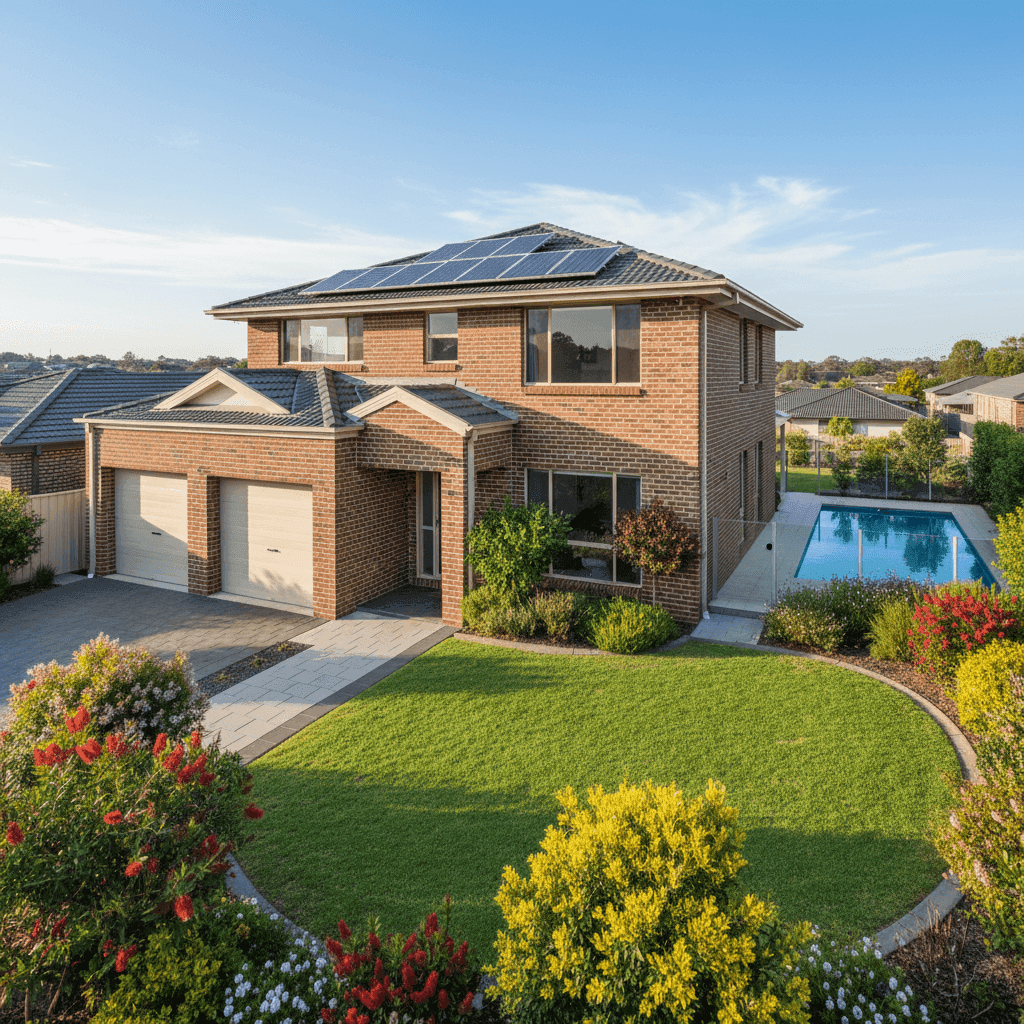
If you own a free standing home in Thornton, NSW 2322, you're probably curious whether you're paying a fair price for home and contents insurance. Thornton is a well-established suburb in the Hunter Region, sitting within the Cessnock Local Government Area and offering a mix of modern family homes and convenient access to Maitland and Newcastle. With property values on the rise across the region, making sure your home is adequately protected — and that you're not overpaying for that protection — has never been more important.
This article breaks down a recent home and contents insurance quote for a five-bedroom, two-bathroom free standing home in Thornton, helping you understand what's driving the premium and how it stacks up against local and national benchmarks.
---
Is This Quote Fair?
The quote in question comes in at $3,569 per year (or $349/month) for a building sum insured of $1,000,000 and contents cover of $200,000, with a $1,000 excess on both building and contents.
Our price rating for this quote is FAIR — Around Average, and the data backs that up. When you look at what other Thornton homeowners are paying, the suburb average sits at $2,436/yr and the median at $2,625/yr. At first glance, $3,569 might seem high relative to those figures — but context matters enormously here.
The suburb's 75th percentile premium is $3,666/yr, meaning roughly 75% of quotes sampled in the area come in below that figure. At $3,569, this quote sits just under that upper quartile threshold, which is consistent with a larger, well-appointed property carrying a higher sum insured. A five-bedroom home with a pool, solar panels, and ducted climate control is simply a more complex risk to insure than a three-bedroom brick cottage — and the premium reflects that reality.
The "FAIR" rating means you're not being gouged, but there may still be room to shop around.
---
How Thornton Compares
To put this quote in proper perspective, here's how Thornton stacks up against broader benchmarks:
| Benchmark | Average Premium | Median Premium |
|---|---|---|
| Thornton (NSW 2322) | $2,436/yr | $2,625/yr |
| Cessnock LGA | $2,462/yr | — |
| New South Wales | $3,801/yr | $3,410/yr |
| National | $2,965/yr | $2,716/yr |
A few things stand out here. First, Thornton and the broader Cessnock LGA are notably below the NSW state average, which is a positive sign for local homeowners. The NSW state average of $3,801/yr reflects the high-cost coastal and flood-prone areas that pull the statewide figure upward.
Second, Thornton also comes in under the national average of $2,965/yr, suggesting the suburb carries a relatively moderate risk profile compared to many parts of Australia — particularly Queensland and northern coastal regions where cyclone and flood risk drive premiums significantly higher.
For this specific quote, the $3,569 figure sits above the suburb average, but that's largely attributable to the property's size, features, and the relatively high sum insured. Based on 107 quotes sampled in the suburb, the spread is wide — from $1,516/yr at the 25th percentile to $3,666/yr at the 75th percentile — which underscores just how much individual property characteristics shape the final premium.
---
Property Features That Affect Your Premium
Several features of this particular home have a direct influence on the insurance premium. Understanding these can help you make smarter decisions when reviewing your cover.
Building Construction
The home was built in 2004 with brick veneer external walls and a tiled roof — both of which are viewed favourably by insurers. Brick veneer offers solid fire resistance and durability, while tiles are considered a low-maintenance, long-lasting roofing material. Homes built post-2000 also generally comply with more modern building codes, which can reduce risk in the eyes of underwriters.
Slab Foundation
A concrete slab foundation is standard for homes of this era in NSW and is generally considered stable and low-risk, particularly in areas without significant soil movement or flood exposure.
Swimming Pool
A pool adds both value and complexity to a home insurance policy. It increases the replacement cost of the property and may introduce some liability considerations. Insurers typically factor in pool fencing compliance and the overall condition of the pool area.
Solar Panels
Solar panels are an increasingly common feature on Australian homes, but they do add to the insured value of the building. Panels need to be covered for damage from storms, hail, or fire, and their presence on the roof can also affect claims related to roofing work.
Ducted Climate Control
A ducted air conditioning system is a significant fixed asset within the home. As a building fixture, it's typically covered under the building policy rather than contents, and its replacement cost contributes to the overall sum insured.
Building Size and Sum Insured
At 235 sqm with a building sum insured of $1,000,000, this is a well-covered property. It's worth noting that the sum insured should reflect the cost to rebuild — not the market value — and for a five-bedroom home with quality fixtures, a seven-figure sum insured is not unreasonable in today's construction cost environment.
---
Tips for Homeowners in Thornton
Whether you're reviewing an existing policy or shopping for new cover, here are some practical steps to make sure you're getting the right protection at the right price.
1. Review your sum insured annually Construction costs have risen sharply in recent years. If your building sum insured hasn't been updated to reflect current rebuild costs, you could be underinsured — which means a partial payout in the event of a total loss. Use an independent building cost calculator or ask your insurer to reassess.
2. Check what's included for your pool and solar panels Not all policies treat pools and solar panels the same way. Some may exclude accidental damage to panels or require separate endorsements for pool equipment. Read your Product Disclosure Statement (PDS) carefully and confirm these features are explicitly covered.
3. Consider your excess strategically A $1,000 excess on both building and contents is fairly standard, but increasing your excess can meaningfully reduce your annual premium. If you have the financial buffer to absorb a larger out-of-pocket cost in a claim, raising the excess to $2,000 or more could save you hundreds per year.
4. Compare quotes — even if you're happy with your current insurer The 107 quotes sampled in Thornton show a huge range in pricing for similar properties. Shopping around at renewal time is one of the most effective ways to ensure you're not paying more than necessary. Even a "FAIR" rating means there could be better value available elsewhere.
---
Ready to Compare?
Whether this is your first time insuring a home in Thornton or you're reviewing your existing cover, comparing quotes is the smartest first step. At CoverClub, we make it easy to benchmark your premium against real data from your suburb, your state, and across Australia.
Get a home insurance quote now and see how your property stacks up — you might be surprised by what you find.