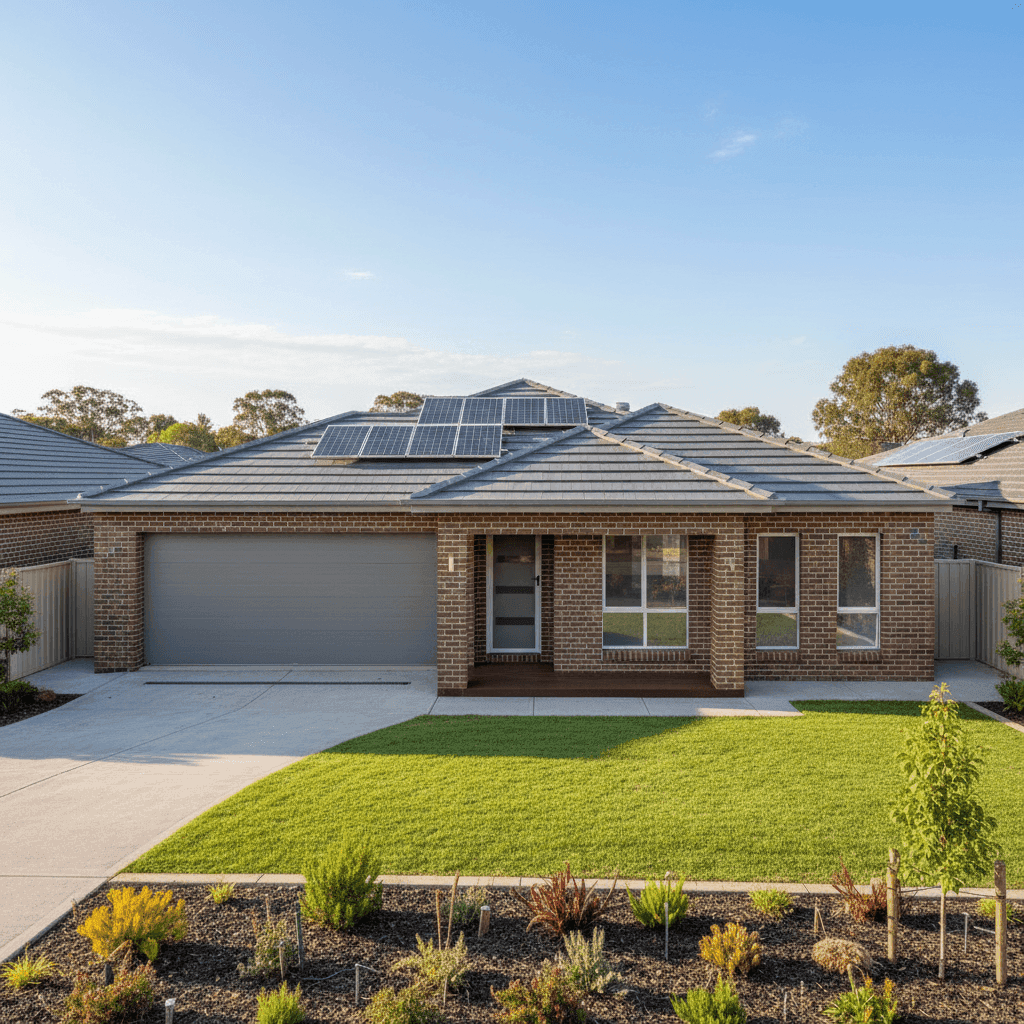
If you own a free standing home in Thornton, NSW 2322, you've probably wondered whether you're paying a fair price for building insurance — or whether there's a better deal out there. In this article, we break down a real building-only insurance quote for a four-bedroom, two-bathroom brick veneer home in Thornton, and put it in context against local, state, and national benchmarks. Whether you're renewing your policy or shopping around for the first time, this analysis will help you make a more informed decision.
---
Is This Quote Fair?
The quote in question comes in at $1,844 per year (or roughly $181 per month) for building-only cover on a 214 sqm free standing home, with a building excess of $2,000 and a sum insured of $900,000.
Our pricing engine rates this quote as FAIR — around average. That's a reasonable outcome for a well-constructed home in the Hunter Valley region. It's not the cheapest quote you'll find in the suburb, but it's meaningfully below several key benchmarks, which suggests the homeowner is in a reasonably competitive position without necessarily being at the bottom of the market.
To put it plainly: this isn't a standout bargain, but it's also not a price gouge. For a home of this size, age, and construction type, paying close to the suburb average is a solid starting point — particularly if the policy offers strong coverage terms alongside that price.
---
How Thornton Compares
To properly evaluate this quote, it helps to zoom out and look at what others are paying. Based on data from 107 quotes collected for Thornton (postcode 2322), here's how the numbers stack up:
| Benchmark | Premium |
|---|---|
| This Quote | $1,844/yr |
| Thornton Suburb Average | $2,436/yr |
| Thornton Suburb Median | $2,625/yr |
| Thornton 25th Percentile | $1,516/yr |
| Thornton 75th Percentile | $3,666/yr |
| LGA (Cessnock) Average | $2,462/yr |
| NSW State Average | $3,801/yr |
| NSW State Median | $3,410/yr |
| National Average | $2,965/yr |
| National Median | $2,716/yr |
A few things stand out here. At $1,844, this quote sits below the suburb average by around $592, and well below both the NSW state average ($3,801) and the national average ($2,965). That's a notable gap — NSW tends to run hotter than the national average, largely driven by high-risk coastal and bushfire-prone areas, so Thornton homeowners in general appear to benefit from relatively moderate premiums compared to the broader state picture.
The quote also falls between the 25th and 75th percentile range for the suburb ($1,516–$3,666), placing it comfortably in the middle of the local market. The cheapest 25% of Thornton quotes come in under $1,516, so there may be room to push further — but that would likely require comparing multiple insurers or adjusting policy terms.
---
Property Features That Affect Your Premium
Insurers don't price every home the same way. The specific characteristics of this property play a meaningful role in determining the final premium. Here's what's relevant:
Construction Type: Brick Veneer Walls & Tiled Roof
Brick veneer construction is generally viewed favourably by insurers. It offers solid fire resistance and structural durability, which can translate to lower premiums compared to timber-framed or clad homes. Combined with a tiled roof — another material associated with longevity and fire resistance — this home presents a relatively low-risk profile from a construction standpoint.
Build Year: 2012
A home built in 2012 benefits from modern building codes, which require higher standards for structural integrity, fire safety, and energy efficiency. Insurers often apply more favourable rates to newer homes, as they're less likely to have ageing wiring, plumbing, or structural issues that can lead to claims.
Slab Foundation & Timber/Laminate Flooring
A concrete slab foundation is a standard and stable choice in NSW, offering good resistance to subsidence and pest-related damage. Timber and laminate flooring, while attractive, can be more susceptible to water damage than tiles — something worth bearing in mind if you're considering adding contents cover in the future.
Solar Panels
This property has solar panels installed. While solar is a great investment for energy savings, it does add replacement cost to the building sum insured. It's worth confirming with your insurer that solar panels are explicitly covered under your building policy, as some policies have specific conditions or sub-limits for fixed solar systems.
No Pool, No Cyclone Risk
The absence of a swimming pool removes a common liability and maintenance risk that can nudge premiums upward. Thornton also falls outside designated cyclone risk zones, which is a meaningful factor — cyclone-rated premiums in northern Queensland, for example, can be many multiples of what Hunter Valley homeowners pay.
---
Tips for Homeowners in Thornton
1. Compare at least three quotes before renewing The spread between the 25th and 75th percentile in Thornton is enormous — from $1,516 to $3,666 per year. That's a $2,150 gap for what could be similar cover. Loyalty doesn't always pay in insurance, so it's worth running a fresh comparison each year. Get a quote at CoverClub to see how your current premium stacks up.
2. Check your sum insured reflects actual rebuild costs A sum insured of $900,000 for a 214 sqm home works out to roughly $4,200 per sqm — which is on the higher end but may be appropriate depending on fittings, site conditions, and demolition costs. Use a building cost estimator annually to make sure you're neither underinsured nor over-paying for coverage you don't need.
3. Confirm your solar panels are covered As mentioned above, solar panel systems are a fixed part of the building and should be included in your building sum insured. Ask your insurer directly whether panels are covered for storm damage, hail, and accidental breakage — and whether there are any sub-limits that apply.
4. Review your excess settings This policy carries a $2,000 building excess. Choosing a higher excess is one of the most direct ways to reduce your annual premium. If you have a healthy emergency fund and are unlikely to make small claims, opting for a $2,500 or $3,000 excess could shave a meaningful amount off your yearly cost.
---
Ready to Compare?
Whether this quote reflects your own situation or you're simply doing your research, the best way to know if you're getting a fair deal is to compare. CoverClub aggregates real quote data from across Australia so you can see exactly where your premium sits relative to your neighbours. Start your free comparison at CoverClub — it only takes a few minutes and could save you hundreds.