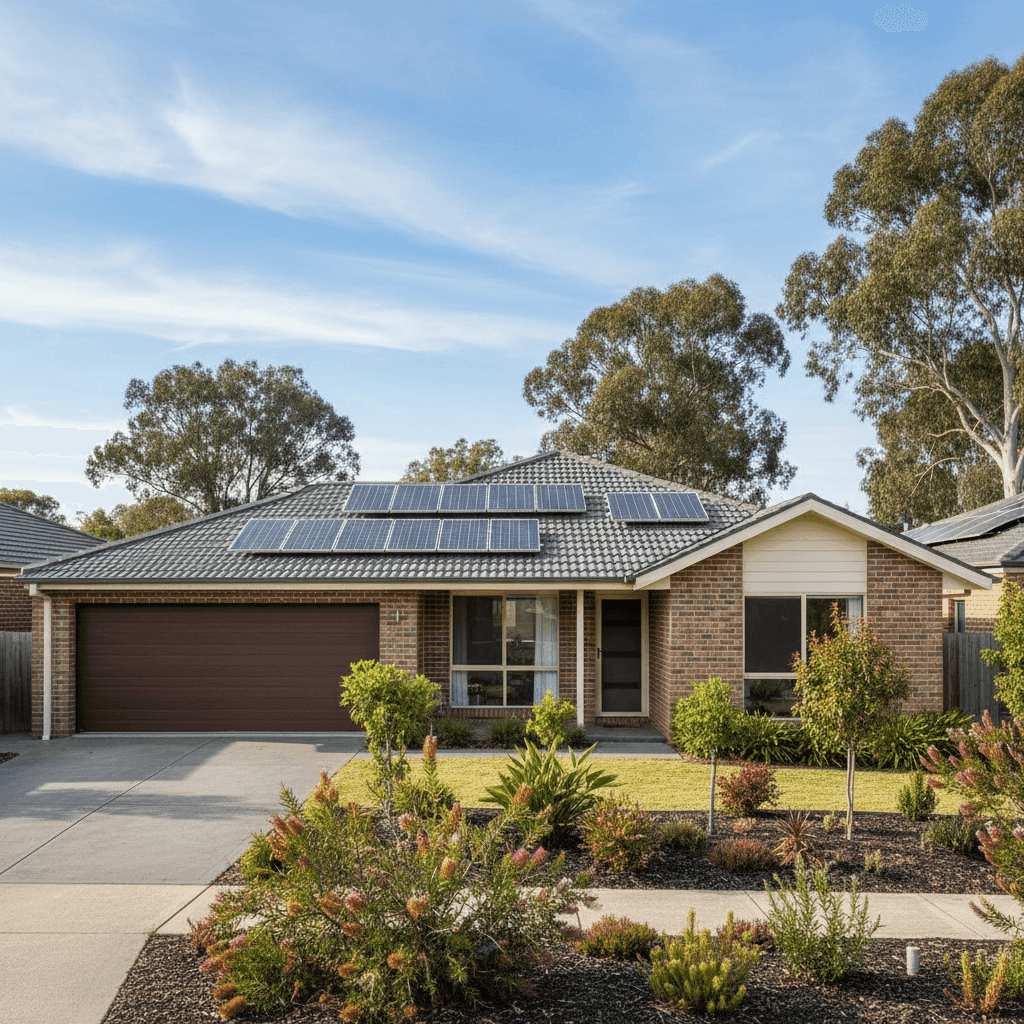
If you own a free standing home in Thurgoona, NSW 2640, you've probably wondered whether you're paying a fair price for home and contents insurance — or whether you could be doing better. This article breaks down a real insurance quote for a three-bedroom, two-bathroom brick veneer home in the suburb, comparing it against local, state, and national benchmarks to help you make a more informed decision.
---
Is This Quote Fair?
The quote in question comes in at $1,280 per year (or about $121 per month) for combined home and contents cover, with a building sum insured of $530,000 and contents valued at $80,000. The building excess is $2,000 and the contents excess is $1,000.
Our pricing engine rates this quote as CHEAP — below average for the area. That's a strong result. Based on 23 quotes sampled for Thurgoona, the suburb's average annual premium sits at $2,816, and the median is $2,179. This quote lands well below even the 25th percentile of $1,740 — meaning it's cheaper than at least 75% of comparable quotes in the suburb.
In plain terms: this is an excellent price for the cover on offer, and homeowners securing a similar deal should feel confident they're getting good value.
---
How Thurgoona Compares
To put this quote in broader context, here's how Thurgoona stacks up against New South Wales and national averages:
| Benchmark | Average Premium | Median Premium |
|---|---|---|
| Thurgoona (2640) | $2,816/yr | $2,179/yr |
| NSW State | $3,801/yr | $3,410/yr |
| National | $2,965/yr | $2,716/yr |
| LGA (Snowy Valleys) | $2,748/yr | — |
A few things stand out here. First, Thurgoona is notably cheaper than the NSW state average — homeowners here typically pay around $985 less per year than the average NSW policyholder. This is significant, given that parts of New South Wales — particularly coastal and flood-prone regions — can push premiums well above the national norm.
Thurgoona also comes in below the national average, which is a positive indicator for the area's overall risk profile. The Snowy Valleys LGA average of $2,748 is broadly in line with the suburb itself, suggesting pricing is consistent across the broader region.
Of course, individual premiums vary considerably — the suburb's 75th percentile sits at $3,346 — so there's a wide spread depending on property features, cover levels, and the insurer chosen.
---
Property Features That Affect Your Premium
Several characteristics of this particular property influence how insurers price the risk. Here's what matters most:
Construction & Materials
The home is built on a concrete slab foundation with brick veneer external walls and a tiled roof — a combination that insurers generally view favourably. Brick veneer is considered a robust and fire-resistant material, and tiled roofs tend to be more durable than corrugated iron or Colorbond in many weather scenarios. Together, these features typically attract lower premiums compared to lightweight or timber-framed construction.
Age of Property
Built in 2000, this home is relatively modern. Newer builds are generally easier and cheaper to insure because they're more likely to comply with contemporary building codes, have updated electrical wiring, and require less structural maintenance. Properties built before the 1980s, by contrast, can attract loading due to aging infrastructure.
Solar Panels
The presence of solar panels is worth noting. While they add value to the property, they also add replacement cost in the event of damage. Homeowners should confirm that their policy explicitly covers solar panels — some base policies exclude them or treat them as an optional add-on. At $530,000 sum insured, it's worth verifying the panels are factored into the building cover.
Ducted Climate Control
Ducted air conditioning is a significant fixed asset that forms part of the building sum insured. It can be costly to repair or replace, so ensuring the building sum insured is adequate to cover this — alongside the structure itself — is important.
No Pool, No Cyclone Risk
The absence of a pool removes a common source of liability and maintenance claims. And being outside a designated cyclone risk zone means this property avoids the significant premium loadings applied to homes in northern Queensland and parts of Western Australia.
Flooring
Tile flooring throughout is generally considered lower risk than carpet or timber from a water damage perspective, and it can be easier to repair after an event like a burst pipe or storm water ingress.
---
Tips for Homeowners in Thurgoona
Whether you're reviewing an existing policy or shopping around for the first time, here are some practical steps to get the best outcome:
- Check your building sum insured regularly. Construction costs have risen sharply across Australia in recent years. A sum insured of $530,000 may have been adequate when the policy was first taken out, but it's worth recalculating using a building cost estimator to ensure you're not underinsured. Many insurers offer tools to help with this.
- Confirm solar panels are covered. As mentioned above, solar panels aren't always automatically included in standard building cover. Review your Product Disclosure Statement (PDS) to confirm they're listed, and check whether the inverter — often located inside the home — is covered under building or contents.
- Consider your excess settings carefully. This quote carries a $2,000 building excess and $1,000 contents excess. Opting for a higher excess is one of the most effective ways to reduce your annual premium, but only if you're confident you could cover that amount out of pocket in the event of a claim. Conversely, if you've set a high excess to save money, make sure it's not so high that smaller claims become uneconomical to lodge.
- Compare quotes annually. Insurance loyalty rarely pays off in Australia. Insurers frequently offer better rates to new customers, meaning long-term policyholders can end up significantly overpaying. Even if your current premium is competitive, it's worth running a comparison each year at renewal time.
---
Ready to Compare?
Whether this quote is yours or you're simply curious about what you should be paying, CoverClub makes it easy to benchmark your home insurance. Get a quote at CoverClub and see how your premium stacks up against real data from your suburb, your state, and across Australia. It only takes a few minutes — and the savings could be well worth it.