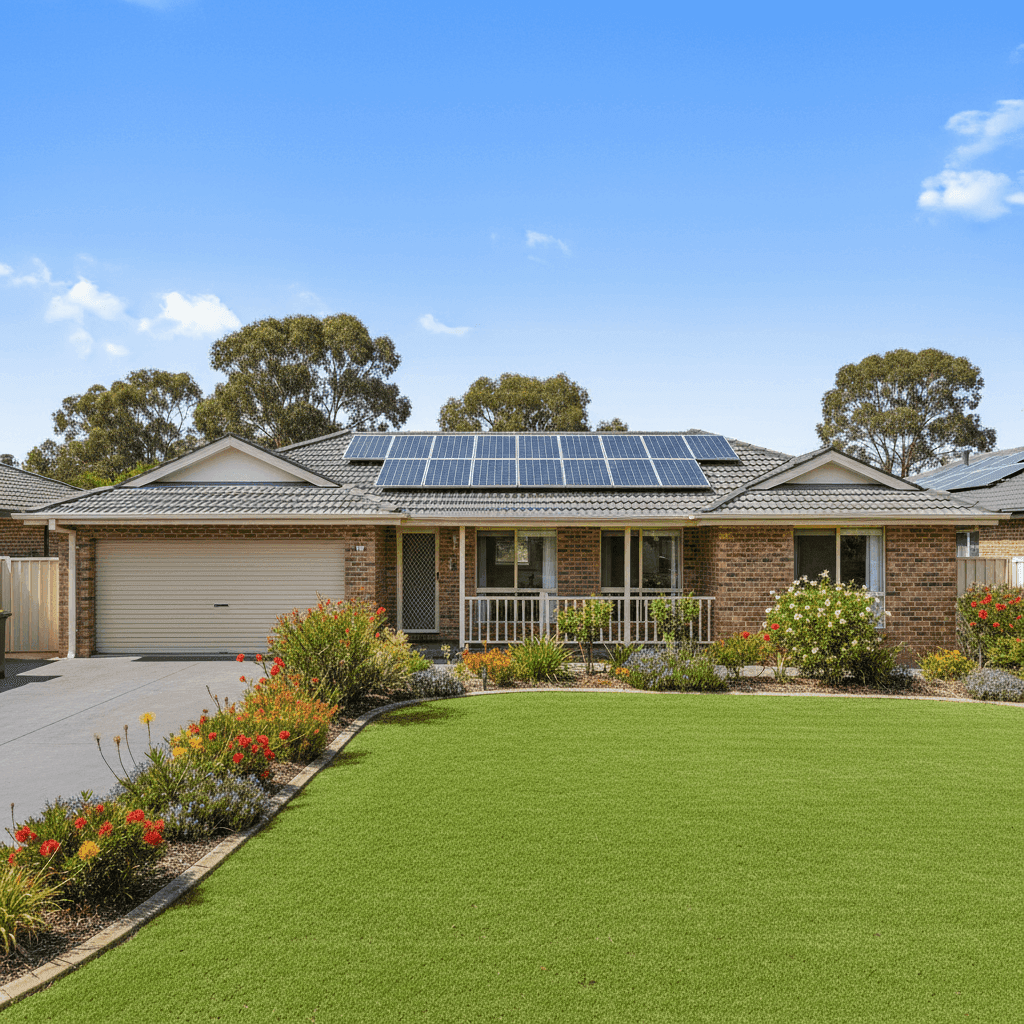
Thurgoona is a well-established residential suburb on the outskirts of Albury in southern New South Wales, popular with families thanks to its quiet streets, modern housing stock, and easy access to the Hume Highway corridor. If you own a free standing home here, understanding what you should be paying for home and contents insurance — and why — can save you hundreds of dollars every year.
This article breaks down a real insurance quote for a 3-bedroom, 2-bathroom brick veneer home in Thurgoona (postcode 2640), compares it against local, state, and national benchmarks, and offers practical tips to help you get the best value cover.
---
Is This Quote Fair?
The quote in question comes in at $1,147 per year (or roughly $106 per month) for combined home and contents cover, with a building sum insured of $537,000 and contents valued at $120,000.
Our price rating for this quote is CHEAP — below average — and the data backs that up convincingly.
At $1,147 annually, this premium sits well below the suburb average of $2,816/yr and even comfortably under the 25th percentile for Thurgoona, which sits at $1,740/yr. In plain terms, fewer than 25% of comparable quotes in this suburb come in cheaper than $1,740 — so landing at $1,147 represents genuinely strong value.
It's worth noting that the building excess on this policy is $5,000, which is relatively high. A higher excess is one of the key levers insurers use to reduce your upfront premium. If you needed to make a building claim, you'd be covering the first $5,000 yourself — so it's important to weigh the premium saving against your financial comfort with that out-of-pocket exposure. The contents excess of $1,000 is more typical.
That said, for homeowners who are claim-averse, financially comfortable absorbing a larger excess, or simply looking for catastrophic-event protection, this type of structure can make excellent financial sense.
---
How Thurgoona Compares
To put this quote in proper context, here's how Thurgoona stacks up against broader benchmarks. You can explore the full data on the Thurgoona suburb stats page, the NSW state overview, or the national insurance statistics page.
| Benchmark | Average Premium | Median Premium |
|---|---|---|
| Thurgoona (2640) | $2,816/yr | $2,179/yr |
| LGA (Snowy Valleys) | $2,858/yr | — |
| NSW State | $3,801/yr | $3,410/yr |
| National | $2,965/yr | $2,716/yr |
| This Quote | $1,147/yr | — |
A few things stand out here. First, Thurgoona's average premium of $2,816 is actually below both the NSW state average ($3,801) and the national average ($2,965) — suggesting that the Albury region benefits from relatively lower insurance risk compared to coastal or flood-prone parts of New South Wales. The LGA average of $2,858 aligns closely with the suburb figure, indicating consistent pricing across the broader area.
Second, the spread within Thurgoona itself is notable. With a 25th percentile of $1,740 and a 75th percentile of $3,346, there's a $1,606 gap between cheaper and pricier quotes in the same suburb. This underscores just how much individual property features, insurer choice, and policy structure can influence what you pay — even on the same street.
---
Property Features That Affect Your Premium
Several characteristics of this particular property work in favour of a lower premium:
Brick veneer construction is viewed favourably by most Australian insurers. It offers solid fire resistance and structural durability compared to weatherboard or lightweight cladding, which can translate to lower building risk assessments.
Tiled roof is another tick in the right column. Terracotta or concrete tiles are considered durable and low-maintenance, and they perform well in hail events compared to metal or older Colourbond sheeting.
Slab foundation is the standard for homes built in this era and region, and it carries no particular risk loading for insurers in non-reactive soil areas.
Built in 2000, this home sits in a sweet spot — modern enough to meet contemporary building codes (which include improved fire and structural standards) but established enough that its replacement cost is relatively predictable.
Solar panels are worth flagging. While they don't typically push premiums up dramatically, they do add to the insurable value of a home and some insurers specifically include or exclude solar system damage under their building policies. It's worth confirming your solar system is explicitly covered under your building sum insured.
Ducted climate control adds to the home's contents and fixtures value, and is generally captured under building cover as a fixed installation. Again, confirming this with your insurer is worthwhile.
No pool and no cyclone risk both simplify the risk profile. Pools introduce liability considerations, and cyclone-rated areas in northern Australia carry significant premium loadings — neither applies here.
---
Tips for Homeowners in Thurgoona
1. Don't set and forget your sum insured Building costs have risen sharply across regional NSW in recent years. A home built in 2000 at 169 sqm should have its replacement cost reviewed annually — not just at renewal time. Use a building cost calculator or speak to a quantity surveyor if you're unsure whether $537,000 is still adequate.
2. Understand your excess trade-off The $5,000 building excess on this policy is doing a lot of the heavy lifting in keeping the premium low. Before renewing, consider running a comparison at a $1,000 or $2,500 excess to see how much extra you'd pay for greater claim-time protection. The right answer depends on your savings buffer and risk tolerance.
3. Confirm solar panel cover With solar panels installed, check your policy wording carefully. Some insurers cover panels as part of the building, others treat them separately, and a few have exclusions for panel damage caused by storms or electrical faults. If it's ambiguous, ask your insurer directly.
4. Compare at renewal — every year The fact that this quote came in well below the suburb median shows that shopping around genuinely pays off in Thurgoona. Insurers reprice books regularly, and loyalty doesn't always reward policyholders. Running a fresh comparison at each renewal is one of the simplest ways to avoid overpaying.
---
Compare Home Insurance Quotes in Thurgoona
Whether you're reviewing an existing policy or buying cover for the first time, comparing multiple quotes is the most reliable way to ensure you're not overpaying. Get a home insurance quote at CoverClub and see how your property stacks up against real pricing data from across Thurgoona, NSW, and Australia.