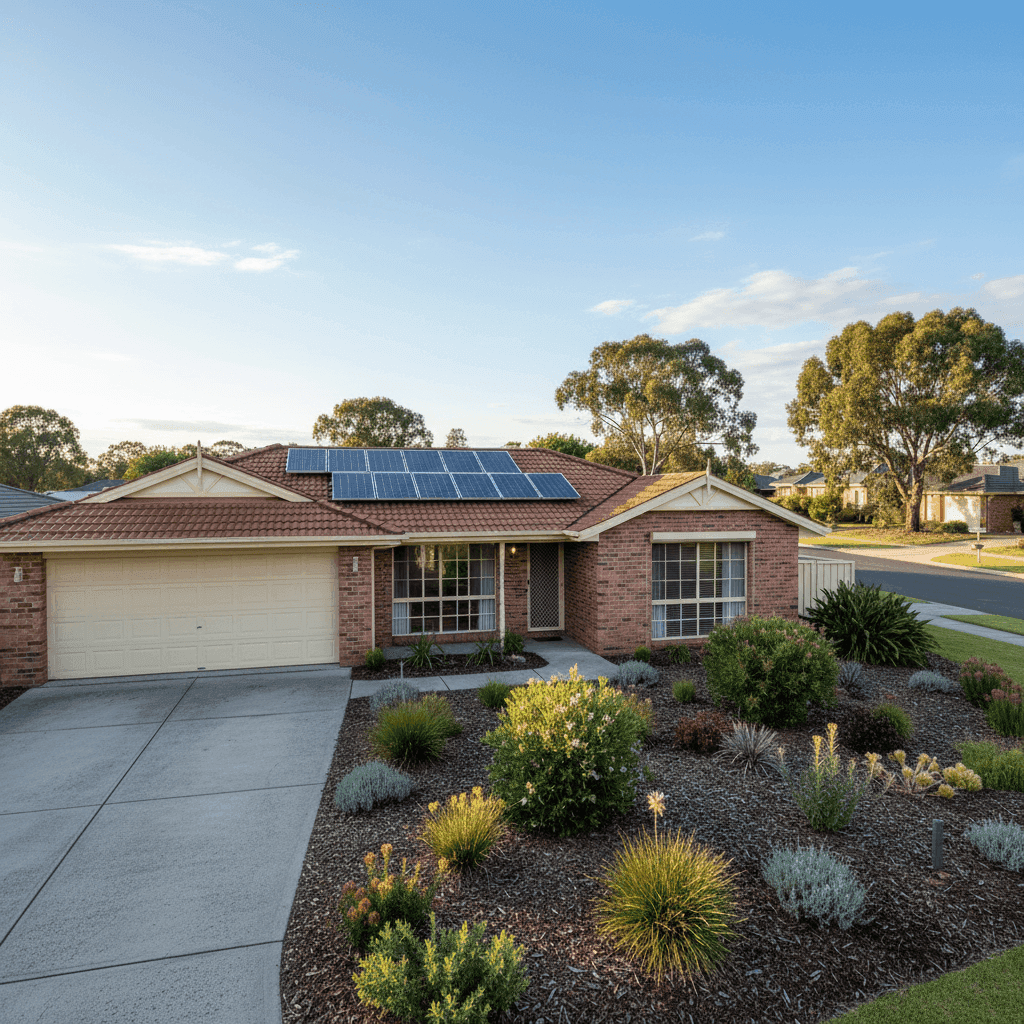
Thurgoona is a well-established residential suburb on the outskirts of Albury in southern New South Wales, popular with families looking for space and affordability within reach of the city. If you own a free standing home in this area, understanding what you should expect to pay for home and contents insurance — and whether your current quote is competitive — can make a real difference to your household budget.
This article breaks down a recent home and contents insurance quote for a four-bedroom, one-bathroom free standing home in Thurgoona, comparing it against local, state, and national benchmarks to help you make a more informed decision.
---
Is This Quote Fair?
The quote in question comes to $1,766 per year (or approximately $169 per month) for combined home and contents cover, with a $300,000 building sum insured and $50,000 in contents cover. Both the building and contents excess are set at $1,000.
Our pricing analysis rates this quote as Fair — Around Average. That's a reasonable outcome, but it's worth unpacking what "around average" actually means in context.
Based on 87 quotes collected for Thurgoona (postcode 2640), the suburb median premium sits at $1,669 per year, meaning this quote is only slightly above the midpoint for the area. The suburb average is higher at $2,365/yr, which is skewed upward by higher-value properties and more comprehensive cover levels. At $1,766, this quote falls comfortably within the middle range — above the 25th percentile of $1,114/yr but well below the 75th percentile of $2,452/yr.
In short, you're not getting a bargain, but you're also not being overcharged. There's likely room to improve with some targeted adjustments or by shopping around.
---
How Thurgoona Compares
One of the most striking things about this quote is how favourably Thurgoona compares to broader benchmarks.
| Benchmark | Average Premium | Median Premium |
|---|---|---|
| Thurgoona (2640) | $2,365/yr | $1,669/yr |
| LGA (Snowy Valleys) | $2,858/yr | — |
| NSW State | $9,528/yr | $3,770/yr |
| National | $5,347/yr | $2,764/yr |
The NSW state average of $9,528/yr is dramatically higher than what Thurgoona homeowners typically pay — largely because that figure is pulled upward by high-risk coastal areas, flood-prone regions, and densely populated metro markets like Sydney. The national average of $5,347/yr tells a similar story.
Even against the LGA average of $2,858/yr for the Snowy Valleys region, Thurgoona's median of $1,669/yr looks very competitive. This reflects the suburb's relatively low exposure to extreme weather events, its distance from bushfire-prone terrain, and the generally stable risk profile of the area.
For homeowners in Thurgoona, this is genuinely good news — you're in a suburb where insurance is meaningfully more affordable than most of NSW.
---
Property Features That Affect Your Premium
Several characteristics of this particular property will influence how insurers price the risk:
Brick Veneer Walls & Tiled Roof Brick veneer construction with a tiled roof is one of the most common and well-regarded combinations in Australian residential insurance. Brick veneer is considered fire-resistant and structurally sound, while tiles are durable and less susceptible to storm damage than some alternatives like corrugated iron. These features generally attract more competitive premiums.
Stump Foundation Homes built on stumps — common in older Australian properties — can present some additional risk considerations for insurers. Stumped foundations allow for movement over time, which may raise questions around structural integrity, particularly in areas with reactive soils. It's worth ensuring your policy covers any gradual movement exclusions carefully.
Construction Year: 1980 At over 40 years old, this home is well past the point where age alone becomes a significant pricing factor. Older homes may have outdated wiring, plumbing, or roofing that can increase the likelihood of a claim. Insurers will factor this in, and it's wise to ensure your sum insured reflects the cost to rebuild at today's prices — not the original construction cost.
Solar Panels Solar panels are an increasingly common feature on Australian homes, but they do add complexity to an insurance policy. They increase the replacement value of the property and can be damaged in hail or storm events. Make sure your policy explicitly covers solar panels — some standard policies include them, others treat them as an optional add-on.
Ducted Climate Control Ducted systems are a significant fixed asset and can be expensive to repair or replace. Their inclusion should be factored into your building sum insured to avoid being underinsured in the event of a claim.
Standard Fittings & Carpet Flooring Standard-quality fittings and carpet flooring are straightforward from an insurer's perspective — neither dramatically increases nor decreases the premium. Carpet is easier and cheaper to replace than hardwood or engineered timber, which is a minor positive.
No Pool, No Cyclone Risk Zone The absence of a pool removes a common source of liability claims, and Thurgoona's location well outside cyclone-affected regions of Australia means there's no cyclone loading applied to this premium.
---
Tips for Homeowners in Thurgoona
1. Review your building sum insured regularly With construction costs rising significantly across Australia in recent years, many homeowners are underinsured without realising it. A $300,000 building sum insured may have been appropriate a few years ago, but it's worth getting a current rebuild cost estimate — especially for a four-bedroom brick veneer home with ducted air conditioning and solar panels.
2. Confirm solar panel coverage explicitly Before renewing or switching policies, ask your insurer directly whether solar panels are covered under the building section, and up to what value. If they're not included or the limit is low, consider a policy that offers specific solar cover.
3. Shop around at renewal time Even a "fair" quote has room for improvement. Premiums can vary significantly between insurers for the same property and cover level. Using a comparison tool like CoverClub at renewal time takes only a few minutes and could save you hundreds of dollars annually.
4. Consider your excess strategically Both the building and contents excess on this policy are set at $1,000. Opting for a higher excess — say $2,000 — can reduce your annual premium noticeably. If you have emergency savings to cover a larger out-of-pocket amount in the event of a claim, this can be a smart way to lower your ongoing costs.
---
Compare Your Options with CoverClub
Whether you're reviewing an existing policy or shopping for the first time, it pays to see what else is available. CoverClub makes it easy to compare home and contents insurance quotes for properties across Thurgoona and the wider Albury region. Start your free quote today and see how much you could save.