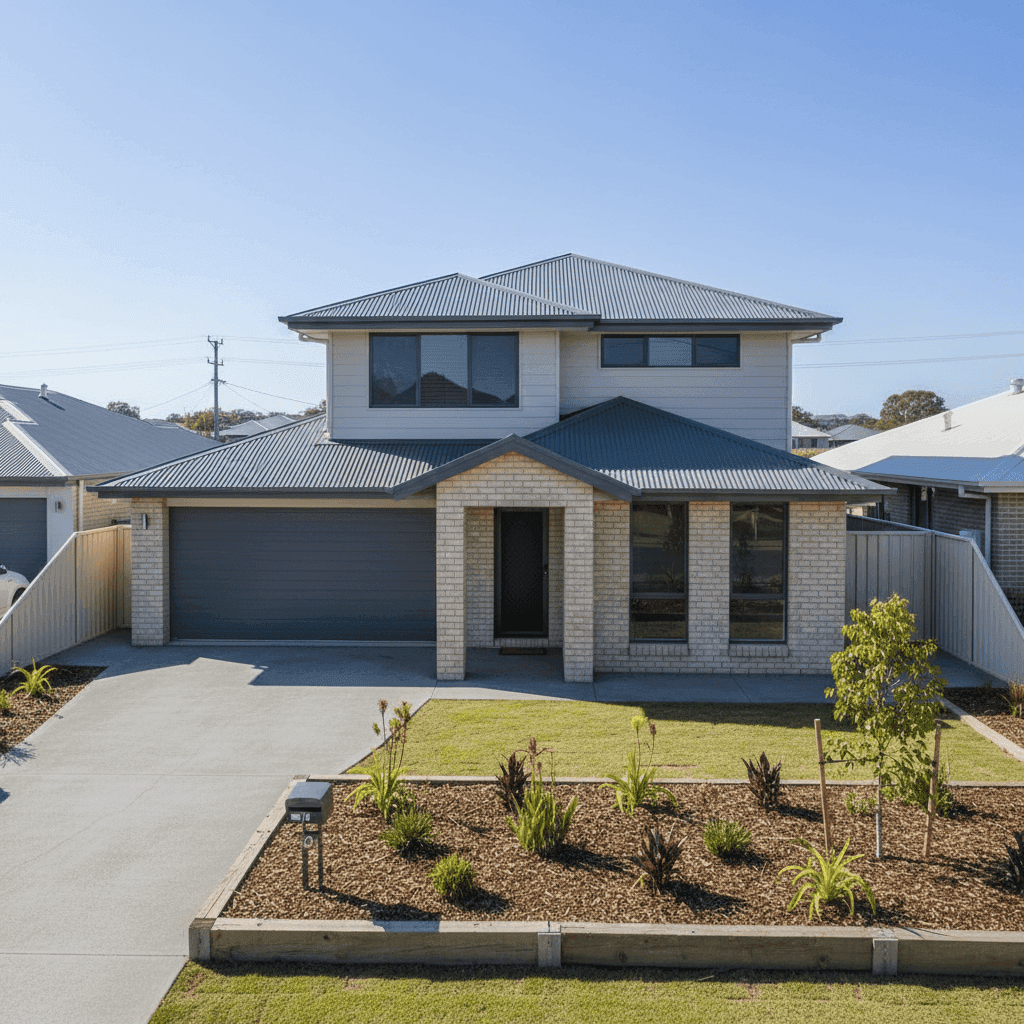
Tin Can Bay is a relaxed coastal town tucked into the southern reaches of the Sunshine Coast hinterland, known for its calm waterways, dolphin feeding at the foreshore, and a strong community of retirees and sea-changers. It's also a suburb where home insurance costs can vary quite a bit — and if you own a free-standing home here, understanding what drives your premium is well worth your time.
This article breaks down a recent building-only insurance quote for a three-bedroom, one-bathroom free-standing home in Tin Can Bay (postcode 4580) and puts it in context against local, state, and national benchmarks.
---
Is This Quote Fair?
The quote in question comes in at $3,173 per year (or around $304 per month) for building-only cover, with a $2,000 building excess. The sum insured is $606,000 — a figure that reflects the full cost of rebuilding the home from the ground up, not its market value.
Our pricing engine rates this quote as Fair — Around Average, which is a reasonable outcome for a property of this type in this location. It's not the cheapest you could find in the suburb, but it's well within the normal range. Homeowners who see a "Fair" rating can take some comfort that they're not being significantly overcharged, though there's still room to shop around and potentially do better.
The $2,000 building excess is on the higher side. A higher excess typically brings the annual premium down, so if this quote was structured with a lower excess, the yearly cost would likely be a little more.
---
How Tin Can Bay Compares
To understand whether $3,173 is genuinely reasonable, it helps to look at the broader data. Based on quotes collected for Tin Can Bay (4580), here's how this premium stacks up:
| Benchmark | Premium |
|---|---|
| This quote | $3,173/yr |
| Suburb average | $2,777/yr |
| Suburb median | $2,615/yr |
| Suburb 25th percentile | $2,083/yr |
| Suburb 75th percentile | $3,353/yr |
With a sample of 45 quotes from the suburb, this quote sits between the median and the 75th percentile — meaning it's slightly above the middle of the pack but still within what most homeowners in the area are paying. Roughly a quarter of comparable properties are paying more than $3,353 per year, so this is far from the top of the range.
Now zoom out to the state level, and the picture shifts considerably. Queensland as a whole has an average home insurance premium of $9,129 per year — one of the highest in the country, driven largely by extreme weather exposure across the state's north and west. The Queensland median sits at $3,903/yr, meaning this Tin Can Bay quote is actually below the state median. That's a meaningful positive.
Comparing against national figures, the story is similar. The national average is $5,347/yr and the national median is $2,764/yr. This quote is above the national median but well below the national average — a result that reflects Queensland's elevated risk profile overall, while Tin Can Bay itself sits in a more moderate risk zone compared to cyclone-prone or flood-heavy parts of the state.
It's also worth noting that the Fraser Coast LGA average is $4,810/yr, making this quote noticeably more affordable than the broader local government area average.
---
Property Features That Affect Your Premium
Several characteristics of this property have a meaningful influence on what it costs to insure. Here's how the key features play out:
Double Brick Walls Double brick construction is generally viewed favourably by insurers. It's robust, fire-resistant, and holds up well in storms compared to lightweight cladding or weatherboard. This likely contributes to a more competitive premium than you might see for a timber-framed home of similar size.
Steel / Colorbond Roof Colorbond roofing is a popular choice across Queensland and is well regarded by insurers. It's durable, resistant to corrosion, and performs reasonably well in high winds. Unlike older tile roofs, there's less risk of individual tiles dislodging in a storm event.
Slab Foundation A concrete slab foundation is a stable base that's generally straightforward for insurers to assess. It doesn't carry the same risk of subfloor damage or pest intrusion that can affect older stumped homes.
Construction Year: 1984 At around 40 years old, this home is not new — but it's not ancient either. Homes from this era were typically built to reasonable standards, though some ageing components (plumbing, wiring, roofing fixings) may be factored into the risk assessment. Keeping up with maintenance is especially important for homes of this age.
Ducted Climate Control The presence of ducted air conditioning adds to the overall replacement value of the home and can slightly increase the sum insured required. It's a factor worth keeping in mind when reviewing whether your sum insured accurately reflects what it would cost to rebuild and refit your home today.
No Pool, No Solar Panels The absence of a pool and solar panels simplifies the risk profile and keeps the sum insured calculation cleaner. Both features can add complexity and cost to a policy when present.
---
Tips for Homeowners in Tin Can Bay
1. Review your sum insured regularly Building costs have risen sharply across Australia in recent years. A sum insured of $606,000 may have been accurate when the policy was first set, but it's worth checking against a current building cost calculator at least once a year to avoid being underinsured.
2. Consider your excess carefully This quote carries a $2,000 building excess. While a higher excess reduces your annual premium, it also means a larger out-of-pocket cost if you need to make a claim. Think about what you could comfortably afford to pay in the event of a storm or fire, and adjust accordingly.
3. Maintain your home proactively Insurers may reduce or deny claims if damage is attributed to lack of maintenance. For a 1984-built home, it's smart to schedule regular checks on your roof fixings, gutters, and any ageing infrastructure — particularly before storm season.
4. Compare quotes at renewal time A "Fair" rating means this quote is reasonable, but the market is competitive. Premiums can vary by hundreds of dollars for the same property across different insurers. Taking 15 minutes to compare at renewal could make a real difference.
---
Ready to Compare?
Whether you're reviewing an existing policy or shopping for cover for the first time, CoverClub makes it easy to see how your quote stacks up. Get a building insurance quote for your Tin Can Bay home and compare it against real data from your suburb, your state, and across Australia — all in one place.