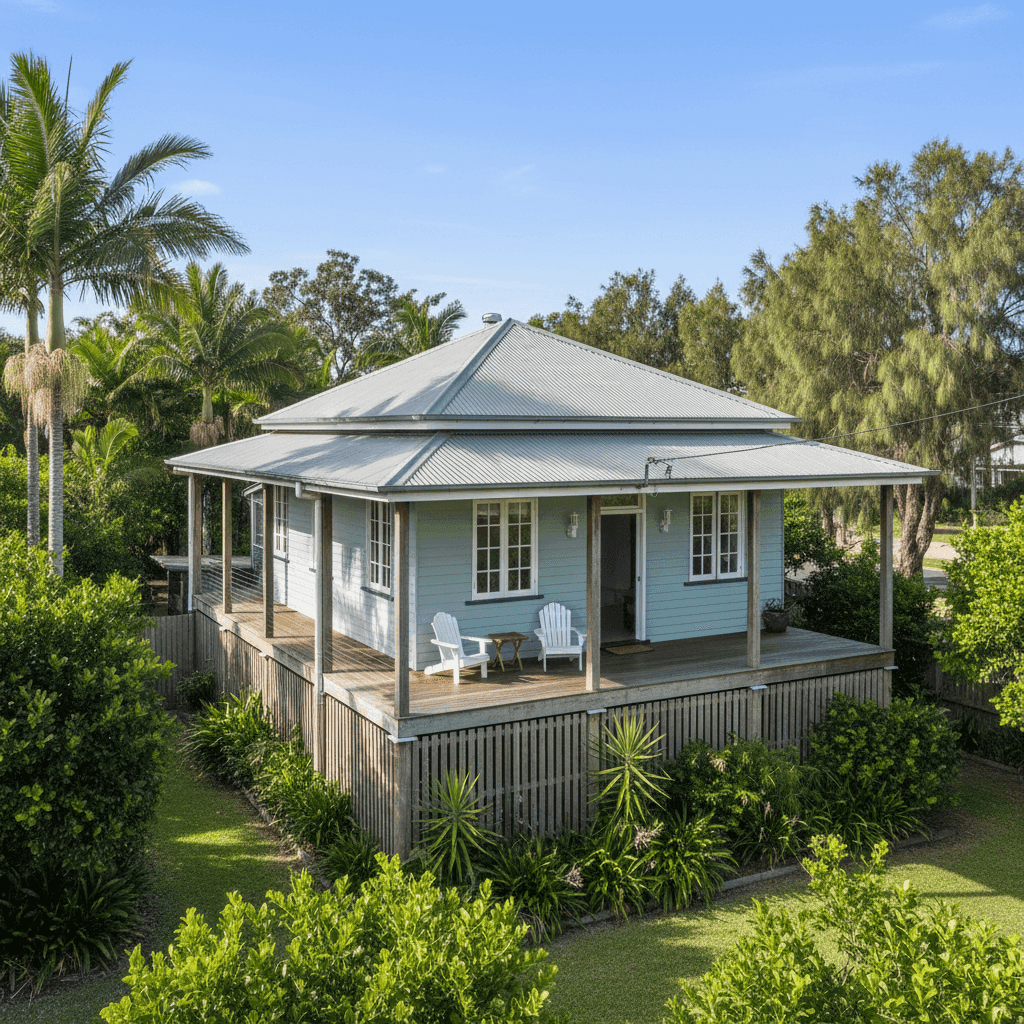
Tin Can Bay is a peaceful coastal town nestled in the Great Sandy Strait on Queensland's Sunshine Coast hinterland fringe — famous for its wild dolphin feeding and relaxed waterside lifestyle. But owning a free standing home here, like anywhere in Queensland, comes with real insurance considerations. This article breaks down a real home and contents insurance quote for a 3-bedroom, 2-bathroom weatherboard home in Tin Can Bay (QLD 4580) and helps you understand whether it represents good value — and what's driving the cost.
---
Is This Quote Fair?
The quote in question comes in at $2,716 per year (or $260/month) for combined home and contents cover, with a $517,000 building sum insured and $10,000 contents cover. Both the building and contents excess are set at $1,000.
Our pricing analysis rates this quote as FAIR — Around Average. That's a reasonable outcome for a property in this postcode, and here's why that matters: "fair" doesn't mean you're overpaying, but it does mean there's likely room to shop around. Insurers price risk differently, and the spread of premiums in Tin Can Bay is wide enough that a comparable policy could cost anywhere from around $2,083 (25th percentile) to $3,353 (75th percentile) per year.
At $2,716, this quote sits comfortably between the suburb median ($2,615/yr) and the suburb average ($2,777/yr) — meaning it's neither a standout deal nor a cause for concern. It's solidly mid-market. For a homeowner who values certainty and has chosen a reputable insurer, this is a defensible premium. That said, it's always worth comparing before you commit.
---
How Tin Can Bay Compares
One of the most striking things about this quote is how favourably Tin Can Bay compares to the broader Queensland market. Check out the numbers:
| Benchmark | Premium |
|---|---|
| This quote | $2,716/yr |
| Tin Can Bay suburb average | $2,777/yr |
| Tin Can Bay suburb median | $2,615/yr |
| Fraser Coast LGA average | $4,810/yr |
| QLD state average | $9,129/yr |
| QLD state median | $3,903/yr |
| National average | $5,347/yr |
| National median | $2,764/yr |
The Queensland state average of $9,129/yr is heavily skewed by high-risk postcodes — think cyclone-prone far north Queensland towns where premiums can run into the tens of thousands. The state median of $3,903/yr is a more realistic benchmark for most Queenslanders, and this Tin Can Bay quote comes in well below that figure.
Compared to the national average of $5,347/yr and even the national median of $2,764/yr, this quote holds up well. The Fraser Coast LGA average of $4,810/yr — which covers a broad region including Hervey Bay and Maryborough — is nearly double this quote, suggesting that Tin Can Bay is among the more affordably insured pockets of the region.
You can explore the full breakdown for this postcode on the Tin Can Bay insurance stats page, and compare it against all Queensland postcodes here.
---
Property Features That Affect Your Premium
Every insurer assesses risk based on the specific characteristics of your home. Here's how this property's features are likely influencing the premium:
Weatherboard Timber Walls
Weatherboard construction is common in coastal Queensland, but timber is generally considered a higher fire risk than brick veneer or full brick. Some insurers load premiums for timber-framed homes, though others are more lenient — especially for well-maintained, newer builds.
Steel/Colorbond Roof
Colorbond roofing is widely regarded as a positive by insurers. It's durable, resistant to ember attack, and performs well in high-wind events. Compared to older tile or corrugated iron roofs, a Colorbond roof can help moderate your premium.
Elevated on Stumps (At Least 1 Metre)
This is a significant factor for Tin Can Bay. The property is elevated by at least one metre on stumps — a classic Queenslander-style construction. Elevation provides meaningful flood resilience, as water can flow beneath the home rather than through it. In a coastal and low-lying region like the Great Sandy Strait area, this feature can make a genuine difference to how insurers assess inundation risk.
2006 Construction
A home built in 2006 falls under Queensland's post-2000 building code era, which introduced stronger cyclone and wind-resistance standards across the state. This is generally viewed favourably by underwriters.
Ducted Climate Control
Ducted air conditioning systems are a contents and building consideration — they add to the replacement value of the home and can be a source of claims (e.g. compressor failures, water damage from leaks). Ensuring your sum insured accounts for this system is important.
No Pool, No Solar
The absence of a pool removes a common liability and maintenance risk from the equation. Similarly, no solar panels means one fewer potential source of electrical or roof-penetration related claims.
Building Size: 139 sqm
At 139 square metres, this is a modest but well-proportioned family home. The $517,000 sum insured equates to roughly $3,720/sqm — broadly reasonable for a weatherboard home with standard fittings, though it's worth reviewing this figure periodically as construction costs continue to rise across Queensland.
---
Tips for Homeowners in Tin Can Bay
1. Review your sum insured annually Construction costs in regional Queensland have risen sharply in recent years. A sum insured set a few years ago may no longer reflect what it would actually cost to rebuild your home from scratch. Use a building cost calculator or speak with a local builder to sense-check your figure.
2. Shop around — the spread is wide With a 25th-to-75th percentile range of $2,083 to $3,353 in this suburb alone, there's clearly significant variation in how insurers price this postcode. A quote at the 25th percentile would save you over $600 a year compared to one at the 75th. Compare quotes at CoverClub to see where you land.
3. Consider your flood and storm cover carefully Tin Can Bay's coastal and estuarine setting means storm surge and localised flooding are genuine risks, even without a formal cyclone designation. Read your Product Disclosure Statement carefully to understand what's covered under "flood," "storm," and "water damage" — these definitions vary significantly between insurers.
4. Don't underinsure your contents A $10,000 contents sum may be appropriate for a lightly furnished property or holiday home, but if this is your primary residence, it's worth doing a room-by-room assessment of your belongings. Furniture, appliances, clothing, electronics and white goods can add up quickly — many Australians are significantly underinsured on contents.
---
Compare Your Own Quote
Whether you're a long-time Tin Can Bay local or you've recently made the move to this beautiful corner of Queensland, it pays to make sure your home insurance is working as hard as you are. CoverClub makes it easy to compare home and contents quotes from multiple insurers in minutes.