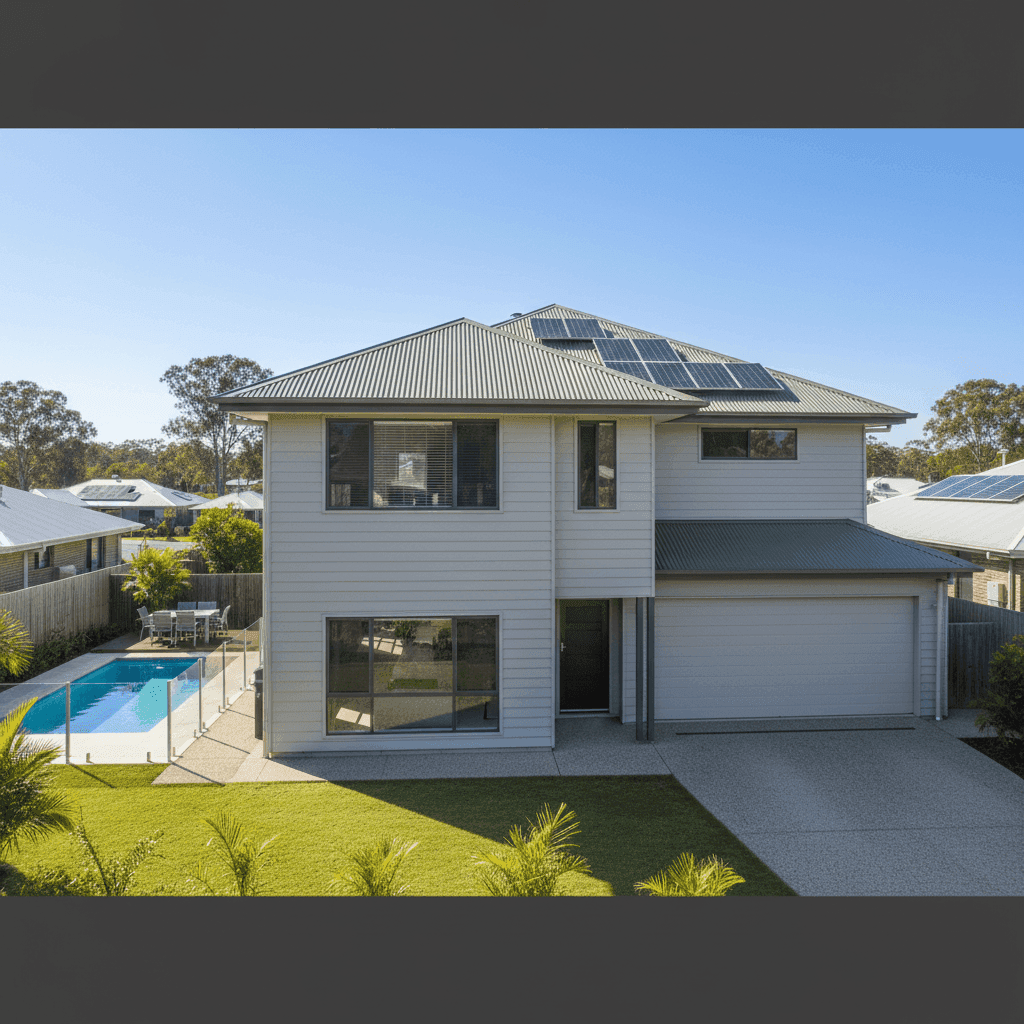
Tinana is a well-established residential suburb in the Fraser Coast region of Queensland, sitting within the Gympie Local Government Area. For owners of a four-bedroom, free-standing home here, understanding what you should be paying for home and contents insurance — and why — can make a real difference to your household budget. This article breaks down a recent quote of $2,703 per year (or $252 per month) for a property in Tinana QLD 4650, and puts it into context against local, state, and national benchmarks.
---
Is This Quote Fair?
The short answer: yes, broadly speaking — but there's nuance worth unpacking.
This quote has been rated Fair (Around Average), which means it sits in a reasonable range relative to what other Tinana homeowners are paying, without being a standout bargain or an obvious overpay.
At $2,703 per year, this premium falls:
- Below the suburb average of $4,305/yr
- Below the suburb median of $3,044/yr
- Above the suburb's 25th percentile of $2,227/yr
- Well below the 75th percentile of $6,949/yr
In practical terms, this quote is cheaper than most Tinana homeowners are paying, but it's not in the cheapest quarter of quotes either. Given the building sum insured of $705,000 and contents cover of $50,000, the coverage is substantial — so getting it for under $2,750 annually is a reasonable outcome.
It's also worth noting that the building excess is set at $5,000, which is relatively high. A higher excess typically reduces your premium, so part of what's keeping this quote competitive is the homeowner's willingness to absorb more out-of-pocket cost in the event of a claim. The contents excess of $1,000 is more standard.
---
How Tinana Compares
To properly assess value, it helps to zoom out and look at the broader picture. Here's how this quote stacks up across multiple levels:
| Benchmark | Premium |
|---|---|
| This Quote | $2,703/yr |
| Tinana Suburb Average | $4,305/yr |
| Tinana Suburb Median | $3,044/yr |
| Gympie LGA Average | $4,135/yr |
| QLD State Average | $4,547/yr |
| QLD State Median | $3,931/yr |
| National Average | $2,965/yr |
| National Median | $2,716/yr |
A few things stand out immediately. Queensland homeowners pay significantly more than the national average — the state average of $4,547/yr is 53% higher than the national average of $2,965/yr. This reflects the elevated risk profile of Queensland properties, which are exposed to a range of weather events including flooding, severe storms, and hail.
Tinana itself sits within that elevated risk environment. The suburb average of $4,305/yr is broadly in line with the Gympie LGA average of $4,135/yr, suggesting local insurers are pricing the area consistently.
What's interesting is that this particular quote — at $2,703/yr — actually sits below the national average, which is quite unusual for a Queensland property. This makes it a comparatively strong result for a homeowner in this region.
You can explore more data for this postcode at the Tinana suburb stats page, or compare it against the broader Queensland insurance landscape and national benchmarks.
> Note: The suburb sample size for Tinana is 16 quotes, which is a modest dataset. Averages based on smaller samples can shift meaningfully with just a few outliers, so treat the suburb figures as directional rather than definitive.
---
Property Features That Affect Your Premium
Every home tells its own story, and insurers read that story carefully when calculating your premium. Here's how this property's characteristics likely influence what's being charged:
Hardiplank/Hardiflex External Walls Fibre cement cladding like Hardiplank is generally viewed favourably by insurers. It's non-combustible, resistant to rot and termites, and holds up well in Queensland's humid climate. This is likely a mild positive factor in pricing.
Steel/Colorbond Roof Colorbond roofing is durable, cyclone-rated, and widely used across Queensland. It performs well in high-wind events and is less susceptible to storm damage than older roofing materials. Insurers tend to price Colorbond roofs more favourably than tiles or older metal sheeting.
Concrete Slab Foundation Slab construction is standard and generally considered low-risk from an insurer's perspective. It doesn't carry the underfloor vulnerability of older timber-stumped homes, which can be prone to flooding damage in certain areas.
Timber/Laminate Flooring Timber and laminate floors can be a cost consideration for insurers — they're more susceptible to water damage than tiles, and replacement costs can be significant. This may contribute marginally to premium pricing.
Swimming Pool Pools add to the insured value of the property and can introduce liability considerations. They're a standard feature in Queensland homes, but they do factor into the overall risk and replacement cost calculation.
Solar Panels Solar systems represent a meaningful addition to the property's value. Panels can be damaged by hail, storms, or fire, and their replacement cost should ideally be reflected in the building sum insured. It's worth confirming with your insurer that solar panels are explicitly covered under the policy.
Construction Year: 1997 A home built in the late 1990s is mature but not old. It predates some of the more stringent modern building codes but is generally considered structurally sound. Insurers may apply modest age-related adjustments, though this is unlikely to be a major driver here.
No Cyclone Risk Tinana does not fall within a designated cyclone risk zone, which is a meaningful premium saver compared to coastal Far North Queensland properties. This is likely one of the key reasons this quote sits below the state average.
---
Tips for Homeowners in Tinana
1. Review your building sum insured annually Construction costs in Queensland have risen sharply in recent years. A sum insured of $705,000 for a 214 sqm home works out to roughly $3,294 per square metre — a reasonable figure, but worth stress-testing against current rebuild cost estimates. Being underinsured at claim time can be a costly surprise.
2. Confirm solar panel coverage explicitly Solar panels are increasingly common in Queensland, but not all policies cover them automatically as part of the building. Ask your insurer directly whether your system is covered, up to what value, and whether storm and hail damage are included.
3. Consider whether your excess settings are right for you A $5,000 building excess is on the higher end of the scale. While it helps keep premiums down, it means you'd be significantly out of pocket for any claim below that threshold. If your financial buffer has changed, it may be worth modelling what a lower excess would cost in additional premium.
4. Shop the market every renewal cycle Even if your current quote looks competitive, the home insurance market shifts regularly. Insurers reprice risk zones, adjust models, and introduce new products. Running a comparison at renewal — even if you stay with your current provider — ensures you're not quietly drifting into an overpriced policy. Get a fresh quote at CoverClub to see how your current premium stacks up.
---
Compare Your Home Insurance with CoverClub
Whether you're reviewing an existing policy or shopping for the first time, CoverClub makes it easy to see how your quote compares to real data from homeowners in your area. With transparent benchmarking across suburb, state, and national levels, you can make a more informed decision — without the guesswork. Start your comparison today and find out if you're getting a fair deal on your home and contents insurance.