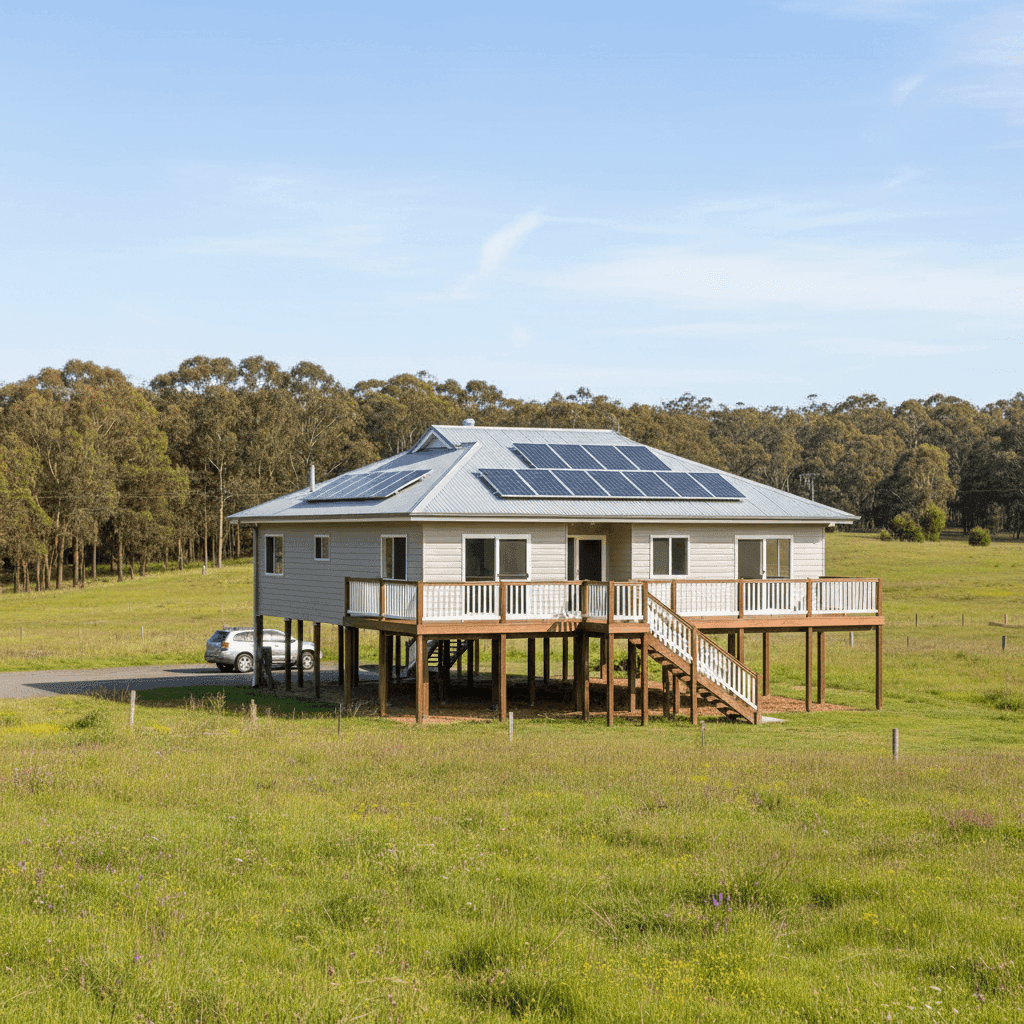
If you own a free standing home in Tingha, NSW 2369, you're likely no stranger to the realities of rural property insurance. This small New England town sits in the Armidale Regional Council area, and like many regional NSW communities, its homeowners face a unique mix of risk factors that insurers weigh carefully when calculating premiums. In this article, we analyse a recent home and contents insurance quote for a four-bedroom property in Tingha — and help you understand whether the price stacks up.
---
Is This Quote Fair?
The quote in question comes in at $3,524 per year (or $366/month) for a combined home and contents policy, covering a building sum insured of $449,000 and $50,000 worth of contents. The building excess is set at $3,000, with a $1,000 excess on contents.
Our rating for this quote is Expensive — above average for the Tingha suburb.
Here's the context: the suburb average premium for Tingha sits at $2,171 per year, with a median of $2,089. This quote lands well above the 75th percentile of $2,556 — meaning it's pricier than at least three-quarters of comparable quotes we've seen for this postcode. That's a meaningful gap, and one worth investigating before simply accepting the premium at face value.
That said, the higher-than-average price isn't necessarily unjustified. Several property-specific characteristics (discussed below) can push premiums upward, and the sum insured of $449,000 is a significant figure that directly influences the cost of cover.
---
How Tingha Compares
To put this quote in broader perspective, here's how Tingha stacks up against state and national benchmarks:
| Benchmark | Average Premium | Median Premium |
|---|---|---|
| Tingha (Suburb) | $2,171/yr | $2,089/yr |
| LGA (Armidale) | $3,354/yr | — |
| NSW | $9,528/yr | $3,770/yr |
| National | $5,347/yr | $2,764/yr |
> Note: NSW state averages are heavily skewed by high-value and high-risk properties, particularly in flood-prone and coastal areas — which is why the median is a more reliable comparison point.
Compared to the NSW state median of $3,770, this quote of $3,524 is actually slightly below — which is a reassuring sign. Against the national median of $2,764, it's higher, but not dramatically so given the property's characteristics and the LGA average of $3,354.
The suburb sample size is relatively small (14 quotes), so the local averages should be treated as a guide rather than a definitive benchmark. Still, the data suggests this quote is on the expensive side for Tingha specifically, even if it sits in a reasonable range when viewed through a broader lens.
---
Property Features That Affect Your Premium
Several features of this particular property are likely contributing to the above-average premium. Let's break them down:
Elevated Foundation (Poles)
The home is built on poles and elevated by at least one metre. While this style — common in Queensland and northern NSW — offers excellent protection against flooding and moisture, it can increase rebuilding costs due to the complexity of the subfloor structure. Insurers factor in these elevated construction costs when calculating the sum insured and, by extension, the premium.
Hardiplank / Hardiflex External Walls
Fibre cement cladding like Hardiplank is a durable, low-maintenance material that performs well in Australian conditions. From an insurance perspective, it's generally viewed favourably — more fire-resistant than timber weatherboard and less prone to rot. This is unlikely to be pushing the premium up significantly.
Steel / Colorbond Roof
Colorbond roofing is a popular and well-regarded choice across regional Australia. It's durable, cyclone-resistant (though Tingha is not in a designated cyclone risk area), and relatively straightforward to repair or replace. Again, this is a neutral-to-positive factor for insurers.
Solar Panels
The property has solar panels installed. While solar is a great investment for energy costs, it does add to the replacement value of a home. Panels can be damaged by hail, fire, or storm events, and their inclusion in a policy adds to the insurer's potential liability. Make sure your building sum insured adequately accounts for the cost of replacing your system.
Timber / Laminate Flooring
Elevated homes with timber flooring can be more susceptible to certain types of water damage — particularly if there's a plumbing failure or storm-driven moisture ingress. This may be a minor contributing factor to the premium.
Building Size and Sum Insured
At 235 sqm and a sum insured of $449,000, this is a substantial property by regional NSW standards. A higher sum insured directly increases the premium, as the insurer is taking on greater financial exposure in the event of a total loss.
---
Tips for Homeowners in Tingha
If you're looking to get better value on your home insurance, here are four practical steps worth considering:
- Review your sum insured carefully. It's tempting to over-insure "just in case," but paying for more coverage than you need inflates your premium unnecessarily. Use a building cost calculator to estimate your home's true rebuild cost — and make sure solar panels are included in that figure.
- Compare multiple insurers. The gap between the cheapest and most expensive quotes in Tingha is significant. Even a modest saving of $300–$500 per year adds up over time. Get a fresh quote at CoverClub to see what other insurers are offering for your address.
- Consider your excess settings. This policy carries a $3,000 building excess — which is on the higher end. A higher excess generally lowers your premium, but make sure you're comfortable covering that amount out of pocket if you need to make a claim. Balancing excess and premium is a personal financial decision worth thinking through.
- Ask about discounts. Many insurers offer discounts for things like bundling home and contents (already done here), paying annually rather than monthly, or having security features installed. It's always worth asking your insurer what discounts may apply to your policy.
---
Ready to Compare?
Whether you're renewing your policy or shopping for the first time, it pays to compare. CoverClub makes it easy to see real quotes for your specific address and property type — so you're not flying blind. Start comparing home insurance quotes today and find out if there's a better deal waiting for your Tingha home. You can also explore suburb-level insurance data for Tingha to benchmark any quote you receive.