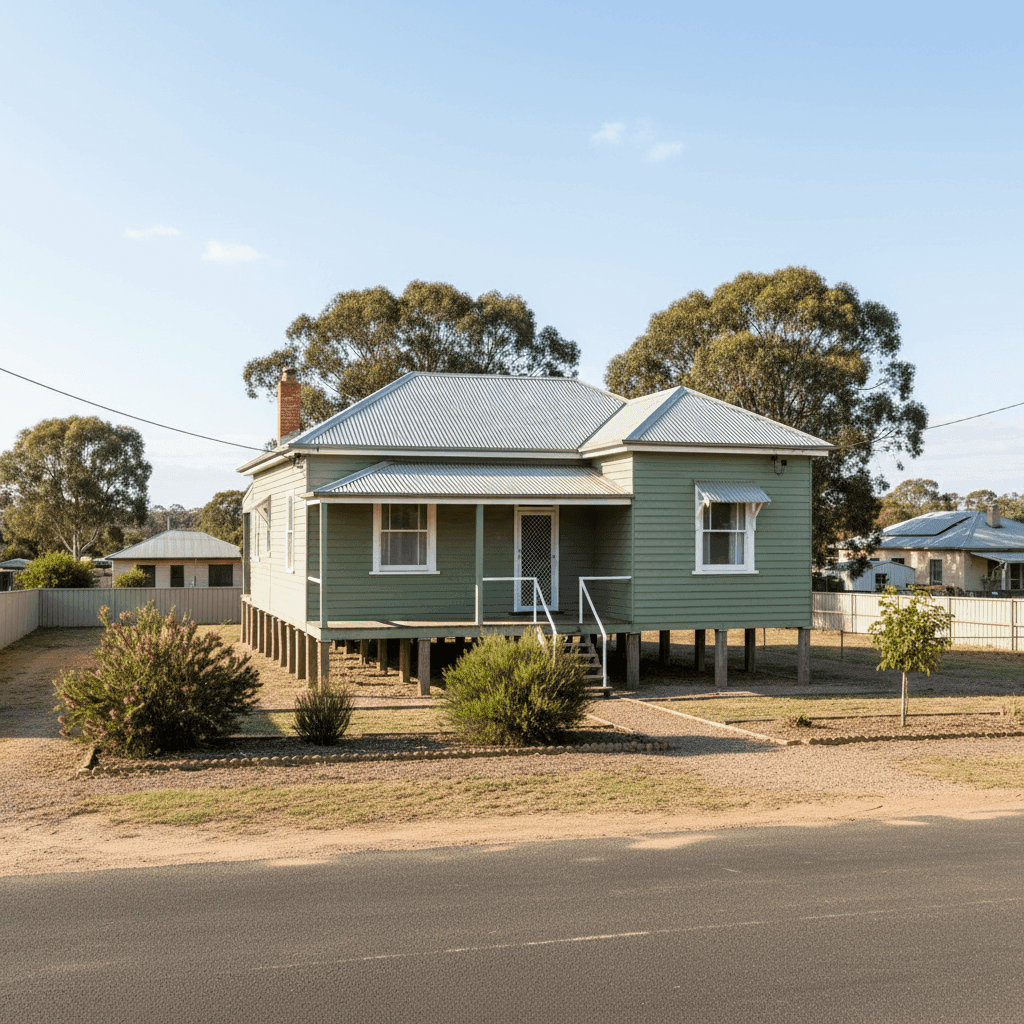
Home insurance premiums across regional New South Wales can vary enormously depending on where you live, how your home is built, and what level of cover you choose. In this article, we take a close look at a real home and contents insurance quote for a two-bedroom free standing home in Tingha, NSW 2369 — a small rural town in the New England region — and break down exactly what's driving the price.
---
Is This Quote Fair?
The quote in question comes in at $2,095 per year (or $205 per month) for combined home and contents cover, with a building sum insured of $400,000 and contents valued at $50,000. Both the building and contents excess are set at $2,000.
Our pricing analysis rates this quote as CHEAP — below average — and the numbers back that up convincingly.
When you stack this premium against the suburb average for Tingha of $6,369 per year, this quote is saving the homeowner more than $4,274 annually. Even compared to the suburb's 25th percentile — meaning the cheapest quarter of quotes — which sits at $4,644 per year, this premium is still dramatically lower.
Put simply, this is an excellent result for a homeowner in Tingha. Whether it reflects a particularly competitive insurer, a favourable risk profile, or a combination of both, a quote at this level is well worth locking in.
---
How Tingha Compares
To fully appreciate how this quote stacks up, it helps to zoom out and look at the broader pricing landscape.
| Benchmark | Annual Premium |
|---|---|
| This Quote | $2,095 |
| Tingha Suburb Average | $6,369 |
| Tingha Suburb Median | $5,920 |
| Tingha 25th Percentile | $4,644 |
| Tingha 75th Percentile | $7,533 |
| LGA (Armidale) Average | $5,846 |
| NSW State Average | $3,801 |
| NSW State Median | $3,410 |
| National Average | $2,965 |
| National Median | $2,716 |
A few things stand out here. First, Tingha is a notably expensive suburb for home insurance — the local average of $6,369 is 67% above the NSW state average of $3,801, and more than double the national average of $2,965. You can explore NSW-wide insurance data and national benchmarks to see how other regions compare.
This elevated local pricing likely reflects a combination of factors: the age of housing stock in the area, the prevalence of timber construction, and the general remoteness of the town, which can increase repair and rebuilding costs. With only 20 quotes in our Tingha sample, there's also some natural variation in the data — but the trend is clear.
Against that backdrop, a premium of $2,095 is remarkable. It sits below even the national median of $2,716, which means this homeowner is paying less than most Australians — despite being in one of the more expensive pockets of NSW.
---
Property Features That Affect Your Premium
Several characteristics of this property are worth examining, as they directly influence what insurers charge.
Weatherboard timber construction is one of the most significant factors. Weatherboard homes are more susceptible to fire and general wear than brick or rendered masonry, which typically pushes premiums higher. Many insurers apply a loading to timber-framed or clad homes, particularly in regional areas where fire risk can be elevated.
The 1960 construction year adds another layer of complexity. Homes built in this era may have ageing electrical wiring, plumbing, and structural elements that don't meet modern building codes. Insurers factor this in when assessing the likelihood and cost of a claim.
Stump foundations are common in older regional homes and can be a consideration for insurers, particularly regarding subsidence, pest damage, and underfloor maintenance. That said, stumped homes are well understood by Australian insurers and aren't necessarily a dealbreaker for competitive pricing.
Steel/Colorbond roofing is actually a positive signal for insurers. It's durable, low-maintenance, and performs well in harsh weather conditions — far better than ageing terracotta or asbestos cement sheeting that's common on homes of this era.
Ducted climate control is worth noting as a contents/fixtures consideration. These systems can be costly to repair or replace, and their presence may influence how the sum insured is calculated. Ensuring your building sum insured accounts for the replacement cost of fixed systems like ducted air conditioning is important.
The absence of a pool and solar panels keeps things straightforward — both can add complexity (and cost) to a policy.
---
Tips for Homeowners in Tingha
If you own a home in Tingha or the surrounding New England region, here are some practical steps to make sure you're getting the best possible outcome from your home insurance.
1. Don't assume your neighbours are paying what you're paying. The wide spread between the 25th and 75th percentile premiums in Tingha ($4,644 to $7,533) shows just how much variation exists in the local market. Shopping around — or using a comparison tool — can make a substantial difference to your annual bill.
2. Review your building sum insured carefully. With a 105 sqm home built in 1960, it's worth getting a professional rebuilding cost estimate to make sure $400,000 is appropriate. Underinsurance is a serious risk: if your home is destroyed and the rebuild costs more than your sum insured, you'll be out of pocket for the difference.
3. Maintain your weatherboard cladding proactively. Insurers may scrutinise claims more closely on older timber homes if there's evidence of deferred maintenance. Keeping your cladding painted, sealed, and free from rot not only protects the home but also supports your position if you ever need to make a claim.
4. Consider your excess level strategically. Both the building and contents excess on this policy are set at $2,000. A higher excess generally reduces your premium, but make sure you can comfortably cover that amount out of pocket in the event of a claim. For smaller claims, it may not even be worth claiming at all — so calibrate your excess to the types of events you'd realistically claim for.
---
Compare Your Own Quote
Whether you're renewing your policy or shopping for the first time, it pays to know where your premium sits relative to the market. CoverClub makes it easy to compare home insurance quotes and see real pricing data for your suburb.