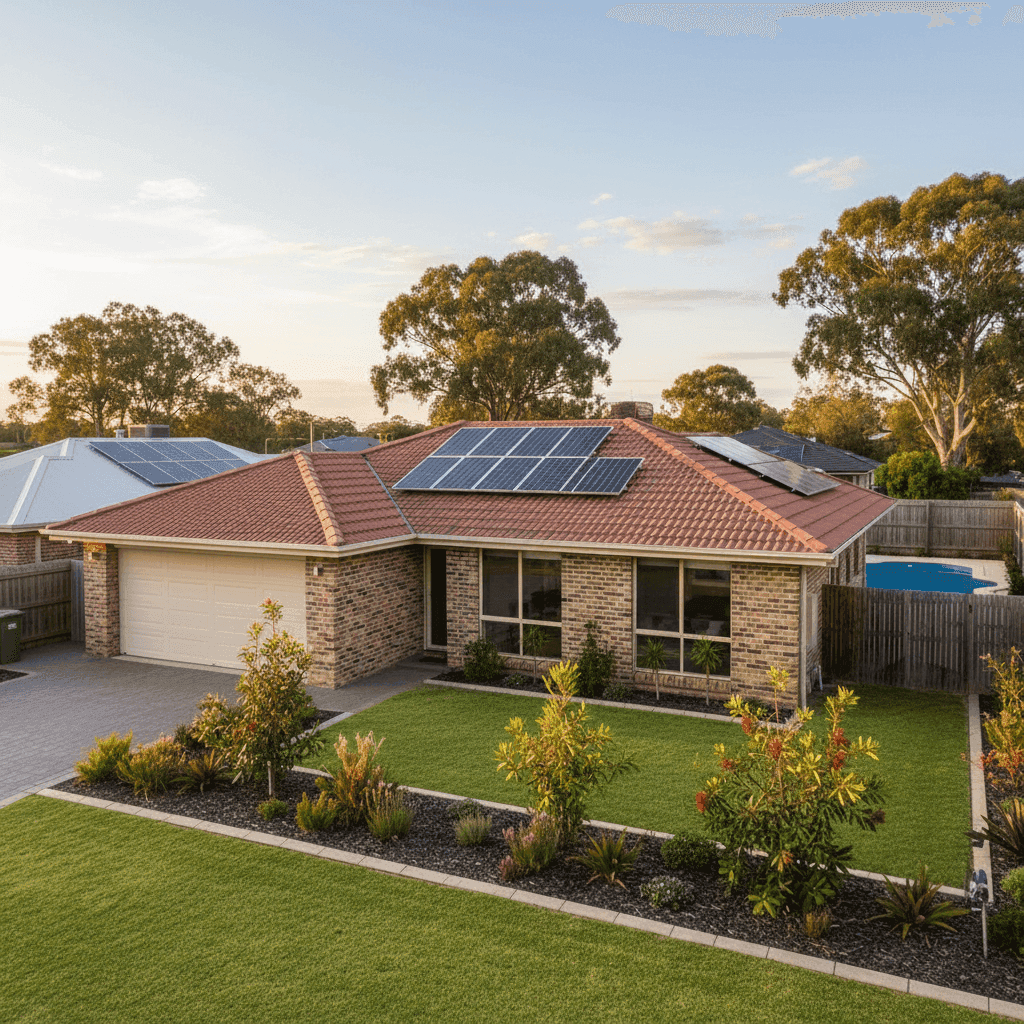
If you own a free standing home in Tocumwal, NSW 2714, you already know this quiet Murray River town offers a relaxed lifestyle — but what should you expect to pay for home and contents insurance? This article breaks down a real quote for a three-bedroom, brick veneer home in the area, compares it against local, state, and national benchmarks, and offers practical advice for keeping your premiums in check.
---
Is This Quote Fair?
The quote in question comes in at $2,215 per year (or roughly $217 per month) for combined home and contents cover — with a building sum insured of $637,000 and contents valued at $75,000. Both the building and contents excess are set at $1,000.
Our price rating for this quote is CHEAP — below average for the Tocumwal area. That's genuinely good news for the homeowner. Based on data from 97 quotes collected for the Tocumwal suburb, the suburb average sits at $4,760 per year, meaning this quote is saving the homeowner more than $2,500 annually compared to what many of their neighbours are paying.
Even when measured against the suburb's 25th percentile — the threshold below which only one-in-four quotes fall — the figure is $3,007 per year. At $2,215, this quote comfortably undercuts even that lower benchmark, placing it well into "cheap" territory by any reasonable measure.
---
How Tocumwal Compares
To put this quote in broader context, it helps to look beyond the suburb boundary.
| Benchmark | Annual Premium |
|---|---|
| This Quote | $2,215 |
| Tocumwal Suburb Average | $4,760 |
| Tocumwal Suburb Median | $3,982 |
| Murray River LGA Average | $24,396 |
| NSW State Average | $9,528 |
| NSW State Median | $3,770 |
| National Average | $5,347 |
| National Median | $2,764 |
A few things stand out here. First, the Murray River LGA average of $24,396 is extraordinarily high — likely driven upward by flood-prone properties along the river corridor that attract very expensive premiums. This skews LGA averages significantly and is a good reminder that averages can be misleading when a subset of high-risk properties is included in the pool.
Second, the NSW state average of $9,528 is more than four times this quote — largely because it is pulled upward by high-value Sydney properties and coastal areas with elevated storm and flood risk. The NSW median of $3,770 is a more representative figure, and even against that, this quote still looks competitive.
At the national level, the average premium of $5,347 again reflects the influence of high-risk postcodes — cyclone-prone Queensland, flood-affected river towns, and bushfire-exposed rural areas. The national median of $2,764 is actually fairly close to this quote, suggesting it sits in a reasonable range when viewed across the whole country.
---
Property Features That Affect Your Premium
Several characteristics of this particular property work in the homeowner's favour from an underwriting perspective.
Brick veneer construction is generally viewed positively by insurers. It offers solid fire resistance and structural durability compared to timber-framed or clad homes, which can translate to lower rebuild risk and, in turn, lower premiums.
Tiled roofing is similarly regarded as a lower-risk roofing material compared to corrugated iron or Colorbond in some contexts, though tiles can be more susceptible to hail damage. Overall, tiles remain a well-regarded choice for insurers.
Slab foundation is a straightforward, stable foundation type that doesn't carry the elevated risk associated with stumped or suspended floors, particularly in areas where ground movement or moisture ingress can be a concern.
The home was built in 1995, placing it in a relatively modern cohort. Homes from this era typically comply with building codes that introduced improved structural standards, and they're old enough that any early construction defects have generally been identified and resolved.
The property also features a swimming pool, solar panels, and ducted climate control — all of which can add to the insured value of the home and its contents. Solar panels in particular are worth discussing with your insurer to ensure they are explicitly covered, as policies vary on whether rooftop systems are included under building cover or require a separate endorsement.
Notably, Tocumwal is not classified as a cyclone risk area, which removes one of the more significant premium loading factors seen in northern parts of Australia.
---
Tips for Homeowners in Tocumwal
1. Review your sum insured regularly A building sum insured of $637,000 for a 130 sqm home in Tocumwal reflects a focus on full replacement cost — including demolition, debris removal, and professional fees — rather than market value. Construction costs have risen significantly in recent years, so it's worth reviewing this figure annually to avoid being underinsured.
2. Ask about solar panel coverage With solar panels on the roof, confirm with your insurer exactly how they are covered. Some policies include them automatically under building cover; others treat them as an optional extra. Given the cost of replacing a full solar system, this is not a detail to overlook.
3. Consider your flood risk Tocumwal sits near the Murray River, and while many properties in the town itself are not in high-risk flood zones, it's worth checking your specific flood overlay through the NSW Flood Data Portal and ensuring your policy includes flood cover if relevant. The LGA's very high average premium suggests flood risk is a significant factor for some properties in the region.
4. Compare quotes before renewing The fact that this quote comes in well below the suburb average is a strong argument for shopping around rather than simply accepting a renewal offer. Insurers price risk differently, and the spread between the cheapest and most expensive quotes in Tocumwal is substantial. Use a comparison tool to benchmark your renewal each year.
---
Get a Quote for Your Tocumwal Home
Whether you're a first-time buyer or a long-time Tocumwal resident reviewing your existing cover, it pays to compare. CoverClub makes it easy to see how quotes from multiple insurers stack up for your specific property. Start your comparison today and find out if you're getting a fair deal — or leaving money on the table.
For more localised data on insurance costs in Tocumwal, visit our Tocumwal suburb stats page, or explore NSW-wide insurance trends and national benchmarks for broader context.