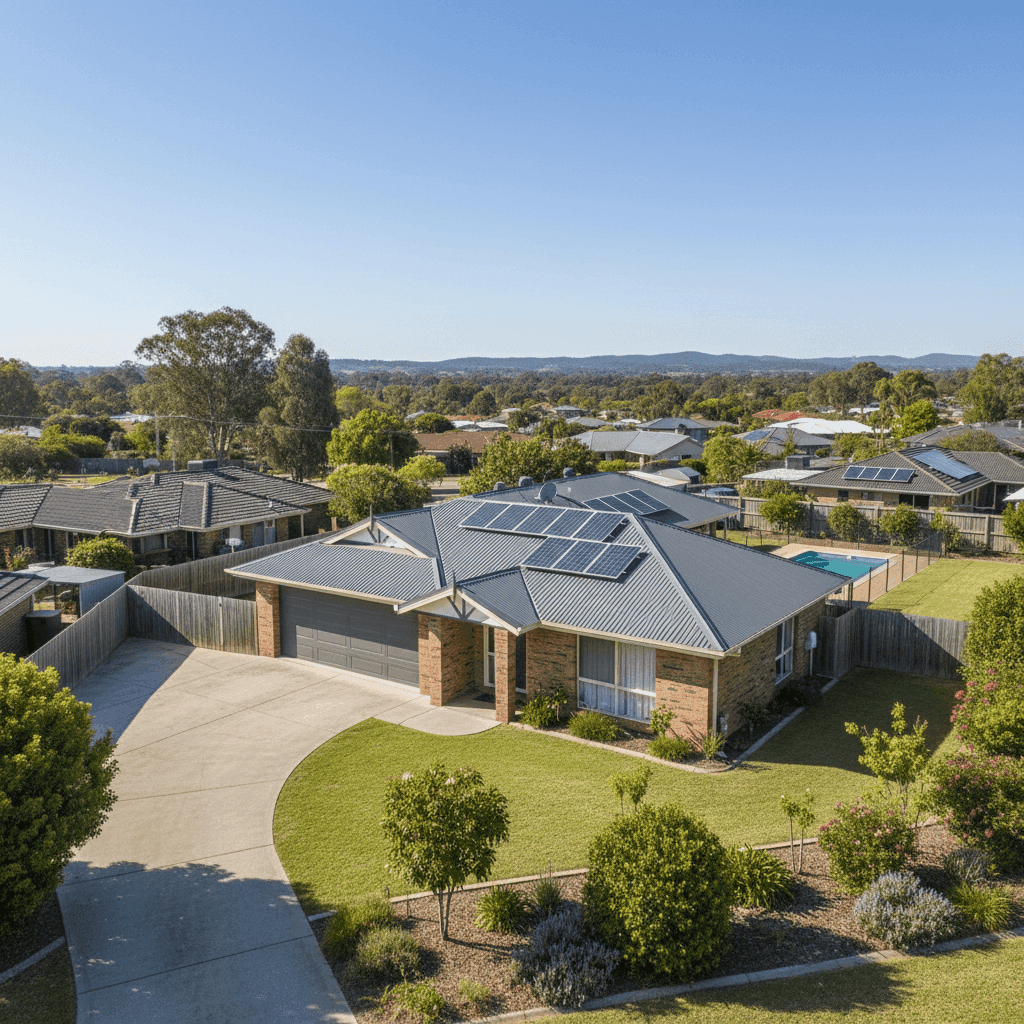
If you own a free standing home in Tolland, NSW 2650, you're probably wondering whether the premium sitting in your inbox is genuinely competitive — or whether you're quietly paying more than you need to. This article breaks down a real home and contents insurance quote for a four-bedroom property in Tolland, benchmarks it against suburb, state and national data, and gives you practical steps to make sure you're getting value for money.
---
Is This Quote Fair?
The quote in question comes in at $2,955 per year (or $289 per month) for combined home and contents cover, with a building sum insured of $850,000 and $50,000 in contents cover. Both the building and contents excess are set at $1,000.
Our price rating for this quote is FAIR — Around Average, which is a reasonable result but certainly leaves room to explore.
To put that in context: the suburb average for Tolland sits at $2,905 per year, and the median is $2,838. This quote is tracking just $50 above the local average and roughly $117 above the median — a modest difference that most homeowners would consider acceptable, but not outstanding. If you're the type who likes to know you're in the best quarter of payers, the 25th percentile for Tolland is $2,330 per year, meaning there are policies out there that cover comparable properties for meaningfully less.
The good news? You're well within a normal range for the suburb. The opportunity? With a bit of comparison shopping, there's a realistic chance of trimming $300–$600 off your annual premium without sacrificing meaningful cover.
---
How Tolland Compares
One of the most striking things about this quote is how favourably Tolland sits relative to broader benchmarks. Check out the numbers:
| Benchmark | Premium |
|---|---|
| This Quote | $2,955/yr |
| Tolland Suburb Average | $2,905/yr |
| Tolland Suburb Median | $2,838/yr |
| NSW State Average | $9,528/yr |
| NSW State Median | $3,770/yr |
| National Average | $5,347/yr |
| National Median | $2,764/yr |
| Narrandera LGA Average | $2,038/yr |
The NSW state average of $9,528 is dramatically higher than what Tolland homeowners are paying — though it's worth noting that Sydney's coastal and flood-prone suburbs pull that figure up considerably. The NSW state median of $3,770 is a more representative yardstick, and this quote still comes in well beneath it.
Against national figures, the story is similarly encouraging. The national average of $5,347 reflects the heavy weighting of high-risk areas like Queensland's cyclone belt and flood plains across multiple states. The national median of $2,764 is the more useful comparison — and this quote sits only $191 above it.
What's particularly interesting is the Narrandera LGA average of $2,038, which is notably lower than the Tolland suburb average. This suggests there may be variation within the LGA worth investigating, and it's a good reason to explore Tolland-specific data when benchmarking your own policy. Note that the suburb sample size here is 20 quotes, so while directionally useful, the data is best treated as a guide rather than a definitive market survey.
---
Property Features That Affect Your Premium
Several characteristics of this property have a direct influence on the premium calculated by insurers.
Brick veneer construction with a Colorbond roof is generally viewed favourably by insurers. Brick veneer offers solid fire and impact resistance, while steel Colorbond roofing is durable, low-maintenance, and performs well in high-wind conditions. This combination typically attracts more competitive pricing compared to weatherboard exteriors or older tile roofs prone to cracking.
Stump foundations are worth noting. While common in regional NSW homes built in the early 1990s, stumps can introduce subsidence and movement risk over time — particularly as soil moisture levels shift with seasonal drought and rainfall patterns. Insurers may factor this into their assessment, and it's worth ensuring your policy explicitly covers building movement related to subfloor issues.
The swimming pool adds replacement value to the property and can increase the likelihood of certain liability claims. It's important to confirm your policy includes adequate public liability cover — most comprehensive home policies include at least $20 million, but it pays to check.
Solar panels are an increasingly common feature and one that catches some homeowners off guard at claim time. Make sure your policy covers the panels as part of the building sum insured, and that the $850,000 figure accounts for their replacement cost. A quality 6–10kW solar system can cost $8,000–$15,000 to replace.
Ducted climate control is another high-value fixed asset. Like solar, it should be captured within the building sum insured rather than treated as a contents item, since it's permanently installed.
Carpet flooring throughout is a standard feature that doesn't significantly move the needle on premium, but it's worth keeping in mind for contents cover — floor coverings are typically covered under the building policy, not contents.
At 214 sqm on a 939 sqm block in a non-cyclone-risk area, this is a well-proportioned suburban property with a risk profile that insurers tend to price predictably.
---
Tips for Homeowners in Tolland
1. Review your building sum insured annually. With construction costs rising across regional NSW, the cost to rebuild a 214 sqm brick veneer home has increased significantly in recent years. The $850,000 sum insured may be appropriate today, but it's worth getting a rebuild cost estimate every 12–24 months to avoid being underinsured at claim time.
2. Bundle strategically — but compare first. Combining home and contents under one policy (as this quote does) often attracts a discount, and it simplifies the claims process. However, don't assume bundling always delivers the best outcome. Some insurers offer sharper pricing on standalone building cover, so it's worth running both scenarios through a comparison tool.
3. Confirm your pool and solar are properly covered. Ask your insurer explicitly whether your swimming pool (including pump, filter, and surrounds) and solar panel system are itemised within your building cover. Gaps here are a common source of claim disputes.
4. Consider your excess trade-off. Both excesses on this policy are set at $1,000. Increasing your excess to $2,000 can reduce your annual premium by 10–20% depending on the insurer. If you have a solid emergency fund and haven't made a claim in several years, a higher excess may be a smart way to lower your ongoing costs.
---
Compare Your Options at CoverClub
Whether you're renewing your current policy or shopping for the first time, it pays to see the full picture. CoverClub makes it easy to compare home and contents quotes for properties in Tolland and across NSW — so you can make a confident, informed decision. Get a quote today and find out where your premium really sits in the market.