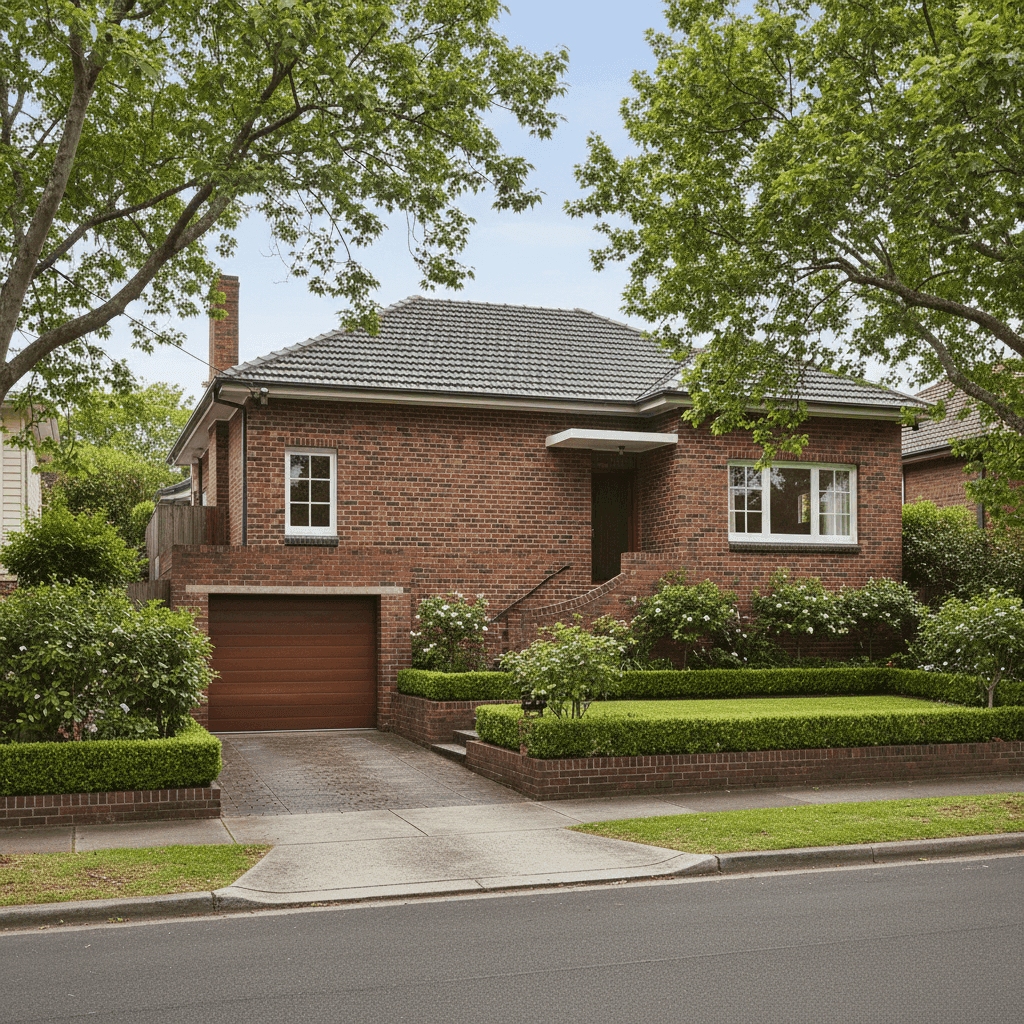
Toorak is one of Melbourne's most prestigious suburbs — tree-lined streets, heritage architecture, and property values to match. But prestige doesn't always mean paying a premium on your home insurance. This article breaks down a real home and contents insurance quote for a 2-bedroom townhouse in Toorak (VIC 3142), explains how it stacks up against local and national benchmarks, and highlights the key property features that are likely influencing the price.
---
Is This Quote Fair?
The annual premium for this quote came in at $1,482 per year (or $145/month), covering both building and contents with a sum insured of $200,000 each. Both the building and contents excess are set at $5,000.
Our price rating for this quote is CHEAP — below average — and the data backs that up clearly. The suburb average for Toorak sits at $2,980 per year, meaning this quote is roughly 50% below what most Toorak homeowners are paying. Even the 25th percentile — the cheapest quarter of quotes in the area — comes in at $2,239/yr, which is still significantly higher than this figure.
So what's going on? A few things are likely at play. The $5,000 excess on both building and contents is notably high, and insurers typically reward policyholders who are willing to absorb more risk upfront with lower premiums. The property is also a strata/body corporate townhouse, which means the insurer is only covering the interior and contents — the external structure and common areas are typically handled by the owners corporation policy. This can meaningfully reduce the building sum insured and, in turn, the premium.
It's worth noting that while this quote is competitively priced, the high excess means you'd need to weigh up whether a claim is worth making for anything under $5,000. For minor damage or small contents losses, you'd be covering those costs yourself.
---
How Toorak Compares
To put this quote in context, here's how Toorak's insurance costs sit relative to broader benchmarks:
| Benchmark | Average Premium |
|---|---|
| This quote | $1,482/yr |
| Toorak (suburb average) | $2,980/yr |
| Toorak (suburb median) | $2,950/yr |
| Stonnington LGA average | $2,235/yr |
| Victoria state average | $3,000/yr |
| Victoria state median | $2,718/yr |
| National average | $5,347/yr |
| National median | $2,764/yr |
(Based on 31 quotes sampled for the Toorak area)
Toorak's suburb average of $2,980 is broadly in line with the Victorian state average of $3,000, suggesting that inner-Melbourne suburbs carry a fairly typical risk profile for the state. What's striking is how far above the national average of $5,347 these figures sit — a reminder that regions prone to cyclones, flooding, and bushfires (particularly in Queensland and northern Australia) are pulling that national number upward significantly.
For a Toorak townhouse owner, the more relevant comparison is the Stonnington LGA average of $2,235/yr, which is the most geographically precise benchmark available. This quote still comes in well below that figure.
---
Property Features That Affect Your Premium
Several characteristics of this property are worth unpacking, as they each play a role in how insurers assess risk and price cover.
Double Brick construction is generally viewed favourably by insurers. It's durable, fire-resistant, and holds up well structurally over time — all factors that reduce the likelihood and severity of claims. Compared to timber-framed or clad homes, double brick typically attracts lower premiums.
Concrete roof is similarly well-regarded. Concrete tiles are robust, long-lasting, and resistant to storm damage. Insurers tend to penalise older or higher-maintenance roofing materials (like terracotta or corrugated iron in poor condition), so a concrete roof is a genuine advantage here.
Elevated by at least 1 metre can be a double-edged characteristic. On the positive side, elevation reduces the risk of inundation from surface water or minor flooding events. However, some insurers factor in the potential for greater wind exposure or structural complexity. On balance, for a Melbourne property not in a designated flood zone, elevation is likely a neutral-to-positive rating factor.
Construction year: 1966 means this is a mid-century property — old enough to have some age-related considerations (older wiring, plumbing, and materials), but double brick construction from this era is often considered very solid. Some insurers may apply a loading for older homes, though this is more commonly seen with timber-framed properties.
Above-average fittings quality is relevant primarily for the contents and internal finishes. Higher-quality fixtures, appliances, and finishes increase the cost to rebuild or replace — which is why an accurate sum insured is important. Underinsuring a well-appointed home is a common and costly mistake.
Ducted climate control is a significant asset that adds to the replacement value of the property. It's the kind of system that's expensive to reinstall and easy to overlook when estimating your building sum insured.
Body corporate/strata property — as mentioned above, this is one of the most influential factors. In a strata arrangement, the owners corporation typically insures the building structure under a shared policy. Your individual policy generally covers the interior of your lot and your personal contents, which reduces the scope (and cost) of your building cover considerably.
---
Tips for Homeowners in Toorak
1. Review your strata policy carefully before setting your building sum insured. In a body corporate arrangement, there's often overlap — and sometimes gaps — between what the owners corporation policy covers and your individual policy. Ask your strata manager for a copy of the building policy and confirm exactly what you're responsible for insuring yourself (typically internal fixtures, fittings, and improvements you've made).
2. Think carefully about your excess level. A $5,000 excess is on the higher end and is a key reason this premium is so competitive. If you have the financial buffer to cover smaller incidents out of pocket, this can be a smart strategy. But if a $5,000 outlay would be a stretch, consider whether a lower excess (and slightly higher premium) might suit you better.
3. Make sure your contents sum insured reflects reality. $200,000 in contents cover is a reasonable starting point for an above-average-quality Toorak townhouse, but it's worth doing a proper inventory. High-value items like jewellery, art, electronics, and designer furniture add up quickly — and many standard policies have per-item limits that may not cover your most valuable possessions without a specific listing.
4. Compare quotes annually — don't let your policy auto-renew without checking. The insurance market moves, and the gap between your current insurer's renewal price and what's available elsewhere can be substantial. Compare home and contents quotes at CoverClub to make sure you're not paying more than you need to at renewal time.
---
Ready to Compare?
Whether you're a Toorak local or just researching what home insurance should cost in Melbourne's inner suburbs, CoverClub makes it easy to compare quotes side by side. Enter your address to get started and see how your current premium stacks up against the market — you might be surprised at what you find. You can also explore detailed Toorak insurance data or browse Victoria-wide statistics to get a fuller picture of what homeowners in your area are paying.