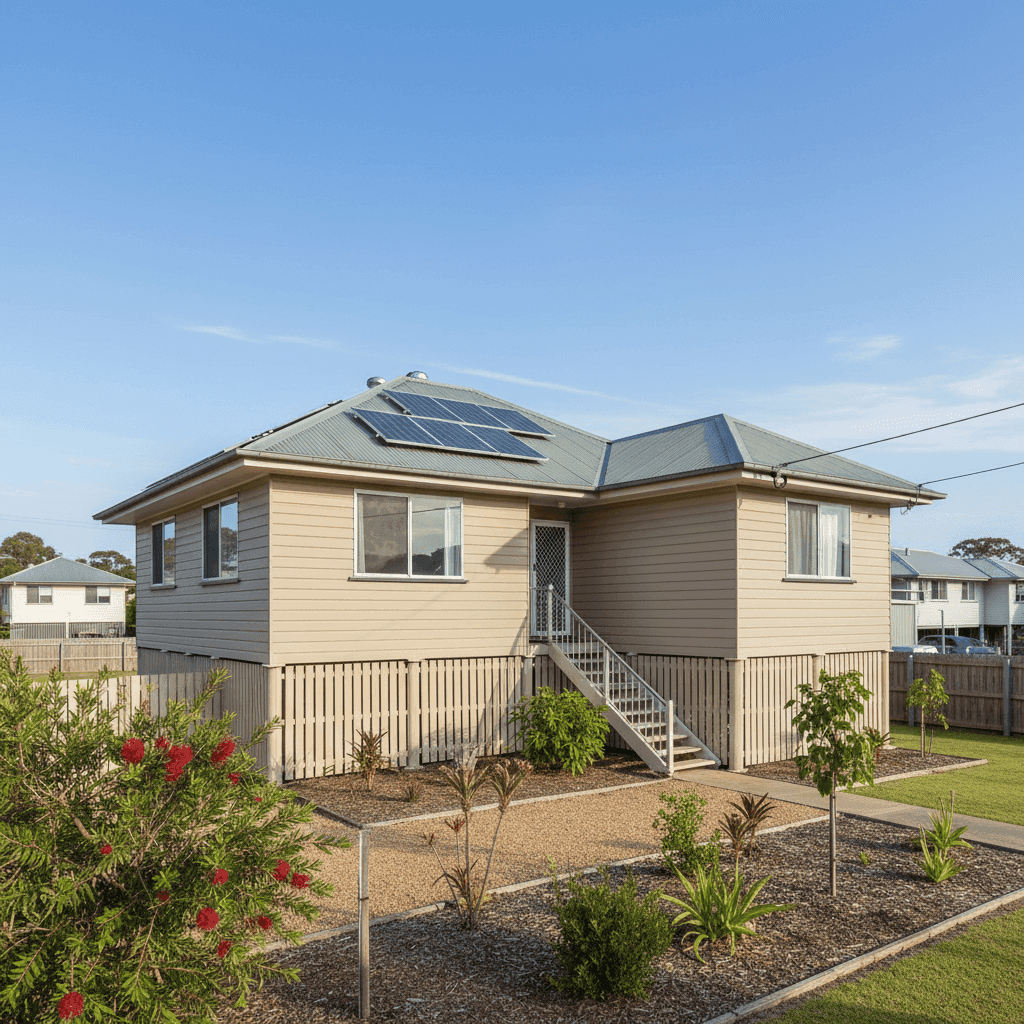
Home insurance in Queensland can be a complicated beast — premiums vary enormously depending on where you live, what your home is built from, and how insurers assess local risk. This article takes a close look at a real home and contents insurance quote for a three-bedroom, two-bathroom free standing home in Toorbul, QLD 4510, breaking down whether the price is reasonable, how it stacks up against local and national benchmarks, and what homeowners in this area can do to keep costs in check.
---
Is This Quote Fair?
The quote in question comes in at $3,295 per year (or $323/month) for combined home and contents cover, with a building sum insured of $298,000 and contents valued at $50,000. The building excess is set at $3,000, with a separate $1,000 excess applying to contents claims.
Our price rating for this quote is FAIR — around average for the area.
That assessment holds up when you look at the numbers. The suburb average premium for Toorbul sits at $2,659/year, while the median is $2,819/year — meaning this quote is moderately above the midpoint of what locals are paying. However, it falls well within the interquartile range: the 25th percentile is $1,720/year and the 75th percentile is $3,528/year. In other words, roughly half of all comparable quotes in the suburb land between those two figures, and this one sits comfortably inside that band.
So while you're not getting a bargain, you're also not being gouged. For a property with some of the characteristics this one has (more on those below), a premium in this range is broadly consistent with market expectations.
---
How Toorbul Compares
To put this quote in proper context, it helps to zoom out and look at the bigger picture. Here's how Toorbul's insurance costs compare across different geographies, based on data from CoverClub's suburb stats for Toorbul:
| Benchmark | Average Premium | Median Premium |
|---|---|---|
| Toorbul (suburb) | $2,659/yr | $2,819/yr |
| Moreton Bay LGA | $3,145/yr | — |
| Queensland (state) | $4,547/yr | $3,931/yr |
| National | $2,965/yr | $2,716/yr |
A few things stand out here. First, Queensland as a whole is significantly more expensive than the rest of the country — the state average of $4,547/year is well above the national average of $2,965/year. This reflects the elevated risk profile of much of Queensland, where cyclones, flooding, and storm events are more frequent and more severe than in southern states.
Toorbul, interestingly, tracks below both the state average and the Moreton Bay LGA average, suggesting it's a relatively more affordable pocket within a generally expensive state. The quote we're analysing sits above the suburb average but below the LGA average — which is consistent with the "fair" rating.
It's worth noting that the suburb sample size here is 48 quotes, which gives us a reasonable (though not enormous) dataset to draw from. As more data comes in, these benchmarks will continue to refine.
---
Property Features That Affect Your Premium
Several characteristics of this property are worth discussing, as they directly influence how insurers price the risk.
Fibro Asbestos Walls
This is arguably the most significant factor. Homes with fibro asbestos external walls — common in Queensland homes built in the 1950s through 1970s — attract higher premiums across most insurers. The reason is twofold: asbestos-containing materials require specialist handling and disposal during repairs, which dramatically increases the cost of any building claim. Some insurers also apply restrictions or exclusions to these properties, so it's critical to disclose this accurately and ensure your policy actually covers repair and reinstatement.
Construction Era (1970)
A home built in 1970 is over 50 years old, which means aging infrastructure — plumbing, wiring, roofing — is a consideration. Older homes can be more susceptible to gradual deterioration that leads to claims, and replacement costs can be higher due to the need to match period materials or bring the structure up to current building codes.
Steel/Colorbond Roof
On the positive side, a Colorbond steel roof is generally viewed favourably by insurers. It's durable, fire-resistant, and performs well in storm conditions compared to older tile or fibro roofing. This likely helps moderate the premium compared to what it might otherwise be.
Stump Foundation
Homes on stumps (also known as timber or concrete piers) are common in Queensland and offer good flood resilience if the stumps are tall enough to elevate the floor above flood levels. However, they can also present risks — stump deterioration, subsidence, and the potential for damage in storm events. Insurers factor this in, particularly in coastal and low-lying areas like Toorbul.
Solar Panels
The property has solar panels installed. Most home insurance policies cover solar panels as part of the building, but it's worth confirming this with your insurer and ensuring the sum insured adequately reflects their replacement value. Panels have become a meaningful cost component that's easy to underestimate.
Location: Toorbul, QLD
Toorbul is a small coastal community on Pumicestone Passage, north of Brisbane. Its proximity to water makes it a beautiful place to live — but also one where storm surge, flooding, and coastal weather events are genuine considerations. Insurers price these risks into premiums for properties in this area.
---
Tips for Homeowners in Toorbul
1. Review your sum insured carefully At $298,000, the building sum insured needs to reflect the full cost of rebuilding — not the market value of the property. With a fibro asbestos home, demolition and disposal costs alone can be substantial. Consider getting a professional building replacement cost assessment to make sure you're not underinsured.
2. Ask about asbestos-specific coverage Not all policies treat asbestos the same way. Some have sub-limits or exclusions for asbestos removal and reinstatement. Before you commit to a policy, ask your insurer directly how they handle claims involving asbestos-containing materials. This is non-negotiable for a home like this one.
3. Consider a higher excess to reduce your premium The building excess on this quote is already $3,000, which is on the higher end. If cash flow allows, maintaining a higher excess is a legitimate way to keep annual premiums down — just make sure you could actually cover that excess in the event of a claim.
4. Shop around at renewal time Insurance loyalty rarely pays off. Premiums can shift significantly from year to year, and insurers price new customers differently from existing ones. Use a comparison tool like CoverClub to benchmark your renewal quote against the current market before you auto-renew.
---
Compare Your Quote at CoverClub
Whether you're reviewing an existing policy or shopping for cover for the first time, CoverClub makes it easy to see how your premium stacks up against what others are paying in your area. With suburb-level data across thousands of Australian postcodes, you can get a clear picture of the market in minutes. Start comparing home insurance quotes today and make sure you're getting genuine value for your cover.