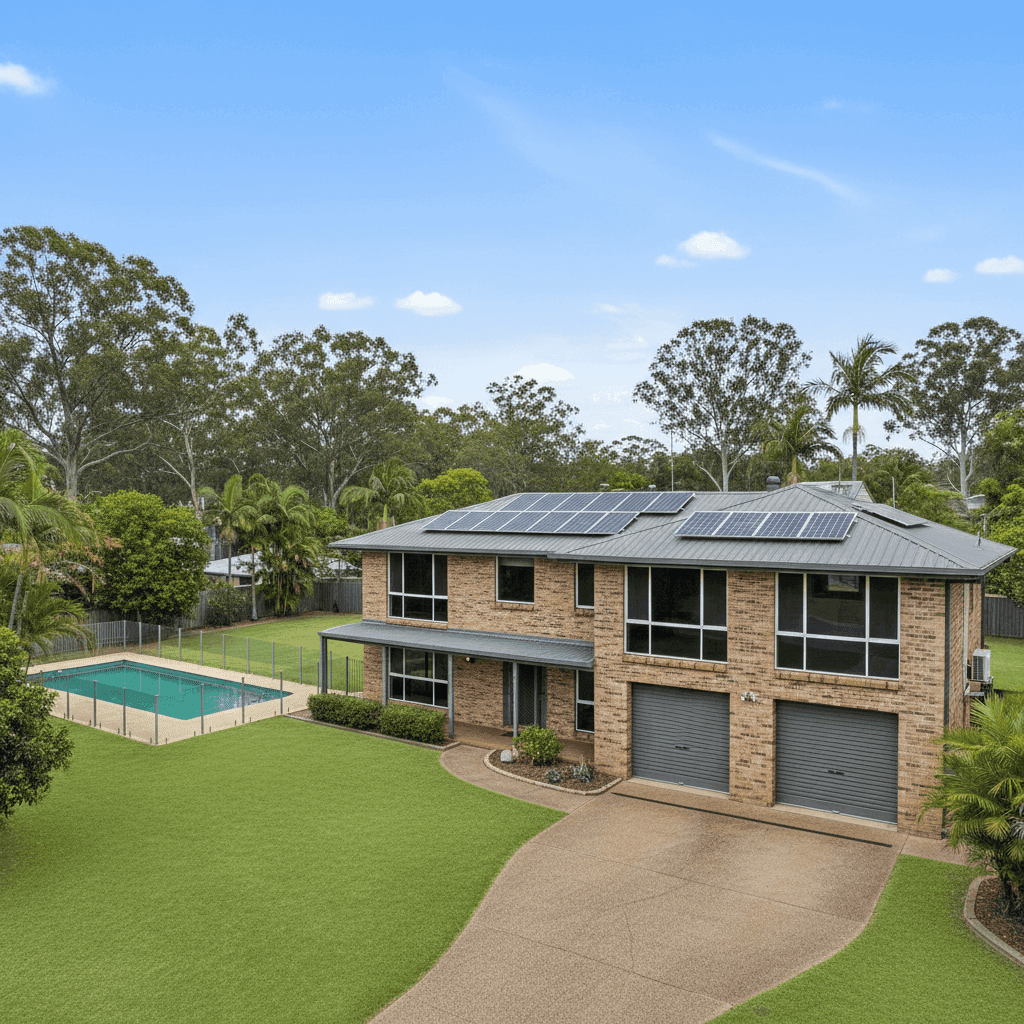
Torquay is a relaxed coastal town sitting on the shores of Hervey Bay in Queensland's Wide Bay region — and like many beachside communities, it comes with its own unique set of home insurance considerations. This article takes a close look at a real home and contents insurance quote for a four-bedroom, free-standing home in Torquay (postcode 4655), breaking down whether the price stacks up and what factors are likely driving the cost.
---
Is This Quote Fair?
The quote in question comes in at $3,893 per year (or roughly $351 per month) for combined home and contents cover, with a building sum insured of $810,000 and contents valued at $50,000. The building excess is set at $2,000, with a separate $1,000 excess applying to contents claims.
Our price rating for this quote is Expensive — above average for the Torquay area.
To put that in perspective, the suburb average premium sits at $2,340 per year, while the median is $2,527. This quote lands well above both figures, and even clears the 75th percentile threshold of $3,266 — meaning it's pricier than at least three-quarters of comparable quotes we've seen in the suburb.
That said, context matters. The building sum insured of $810,000 is on the higher end for the area, and the property includes features like a swimming pool and solar panels, both of which add to the insurer's risk exposure. A higher rebuild cost naturally commands a higher premium, so some of the price gap is explainable — but it's still worth exploring whether a better deal is available.
---
How Torquay Compares
To get a fuller picture, it helps to zoom out and look at Torquay's local insurance data, as well as broader Queensland and national benchmarks.
| Benchmark | Average Premium | Median Premium |
|---|---|---|
| Torquay (4655) | $2,340/yr | $2,527/yr |
| Queensland | $9,129/yr | $3,903/yr |
| National | $5,347/yr | $2,764/yr |
A few things stand out here. Queensland's average premium of $9,129 is extraordinarily high — this is heavily skewed by cyclone-prone postcodes in Far North Queensland, where premiums can reach tens of thousands of dollars annually. The median of $3,903 is a far more representative figure for most Queensland homeowners.
Torquay's premiums are notably lower than both the state and national medians, which reflects the town's relatively benign risk profile. It sits outside designated cyclone risk zones, flood exposure is manageable for most properties, and the area doesn't face the same bushfire pressures as inland or elevated regions. For a coastal Queensland town, that's a meaningful advantage.
The quote of $3,893 sits just below the Queensland median and above the national median — placing it in a reasonable range when viewed through a state lens, but still above what most Torquay homeowners are paying locally.
---
Property Features That Affect Your Premium
Several characteristics of this property will be influencing the premium, both positively and negatively.
Double brick construction is generally viewed favourably by insurers. It offers strong resistance to wind, impact, and fire, and tends to be more durable than lightweight cladding. This should be working in the homeowner's favour.
Steel/Colorbond roofing is another plus. It's a popular choice in coastal Queensland for good reason — it handles heat, wind, and salt air well, and is less susceptible to storm damage than older tile roofs. Insurers typically price Colorbond roofs more competitively.
Slab foundation is standard and unremarkable from a risk perspective, though it's worth noting that older slab homes (this one was built in 1970) can sometimes have issues with moisture ingress or cracking over time, which may be a factor in assessments.
Timber and laminate flooring can be a double-edged sword. Timber floors add value and appeal, but they're more vulnerable to water damage than tiles — something worth keeping in mind when setting your contents and building sums insured.
The swimming pool adds liability exposure and increases the overall rebuild cost, which flows through to a higher premium. Insurers factor in the cost of pool fencing, equipment, and surrounding structures.
Solar panels are increasingly common on Australian rooftops, but they do add complexity to a claim. Panels can be damaged by hail, storm, or fire, and their replacement cost needs to be factored into the building sum insured. It's worth confirming with your insurer that your panels are explicitly covered under your policy.
The 1970 construction year is worth flagging. Older homes may have ageing electrical wiring, plumbing, or structural elements that increase the likelihood of a claim — and some insurers price this risk into the premium.
---
Tips for Homeowners in Torquay
1. Review your building sum insured carefully. At $810,000, this is a substantial rebuild figure. Make sure it reflects current construction costs in the area — building costs have risen sharply in recent years. Underinsuring to save on premiums can leave you significantly out of pocket after a major loss. Equally, if your sum insured is higher than necessary, you may be paying more than you need to.
2. Shop around — seriously. The gap between the 25th percentile ($1,134/yr) and this quote ($3,893/yr) in Torquay is enormous. While some of that difference comes down to property size and features, it's clear that premiums vary widely between insurers for similar homes. Getting multiple quotes is the single most effective way to reduce your insurance costs.
3. Confirm your solar panels and pool are properly covered. Don't assume these are automatically included or that the default coverage limits are adequate. Ask your insurer specifically how solar panels are covered (storm damage, fire, theft), and whether your pool, pump, and fencing are included in the building sum insured.
4. Consider your excess settings. This policy carries a $2,000 building excess and $1,000 contents excess. Opting for a higher excess can reduce your annual premium — but make sure you could comfortably cover that amount out of pocket in the event of a claim. Finding the right balance depends on your financial situation and risk appetite.
---
Ready to Find a Better Deal?
Whether you're happy with your current cover or suspect you're paying too much, it pays to compare. At CoverClub, you can get a home and contents insurance quote tailored to your property in minutes — and see how it stacks up against real data from your suburb. Don't settle for the first number you're given; the right cover at the right price is out there.