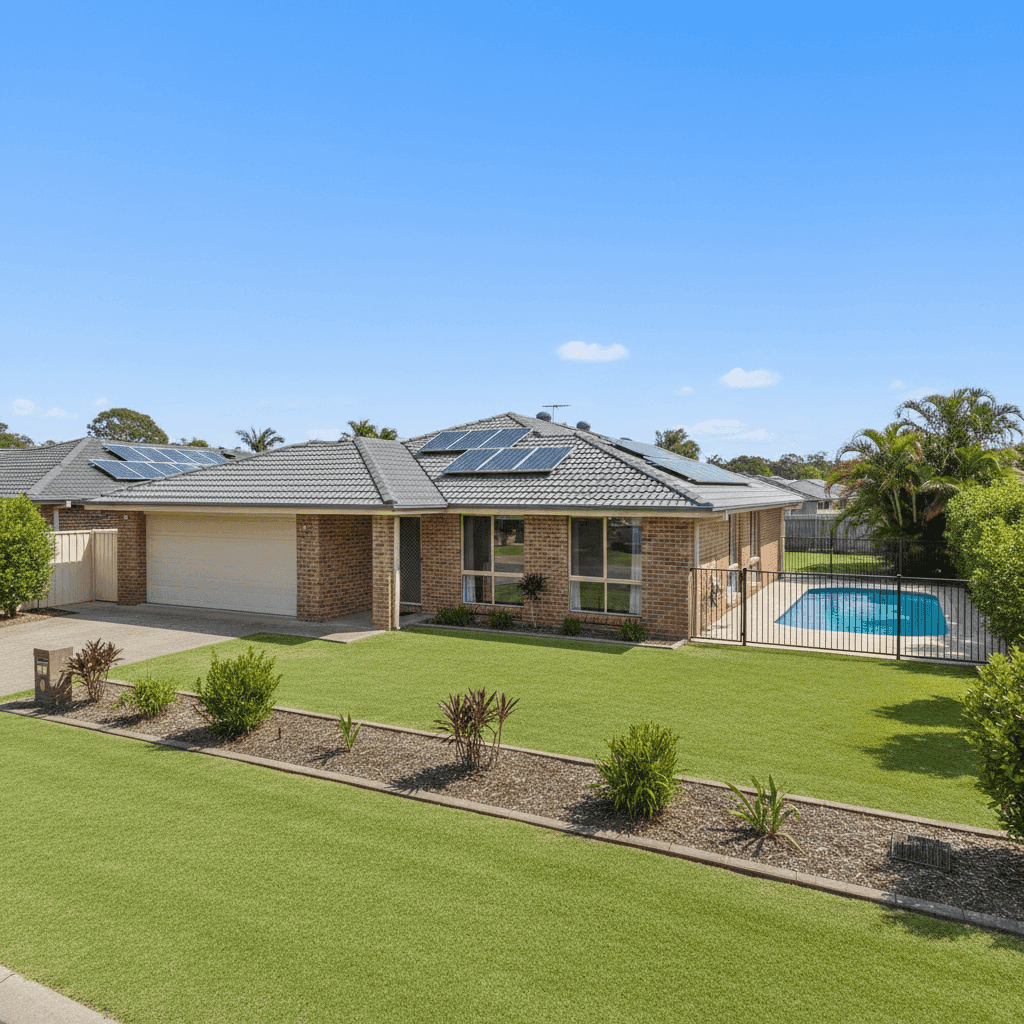
If you own a free standing home in Torquay, QLD 4655 — a coastal community in the Fraser Coast region — you've probably wondered whether you're paying too much (or too little) for home and contents insurance. This article breaks down a real insurance quote for a 3-bedroom, 2-bathroom brick veneer home in the suburb, compares it against local, state, and national benchmarks, and offers practical tips to help you get the best value cover.
---
Is This Quote Fair?
The annual premium for this property comes in at $1,513 per year (or roughly $151 per month), covering both building (sum insured: $651,000) and contents ($50,000). Our price rating for this quote is FAIR — Around Average.
At first glance, $1,513 might seem like a reasonable figure, and in the context of the broader Torquay market, it genuinely is. This premium sits just above the suburb's 25th percentile of $1,466/yr, meaning roughly three-quarters of comparable quotes in the area come in higher. It's well below both the suburb average ($4,142/yr) and the suburb median ($2,823/yr), which suggests this particular quote is on the more competitive end of what's available locally.
That said, "fair" doesn't necessarily mean "the best available." There's always room to compare, and even a modest saving of a few hundred dollars a year adds up significantly over the life of a mortgage.
---
How Torquay Compares
To put this quote in proper context, it helps to look at the numbers across three levels — suburb, state, and nation. You can explore the full data on the Torquay insurance stats page, the QLD state overview, and the national insurance stats.
| Benchmark | Average Premium | Median Premium |
|---|---|---|
| Torquay (QLD 4655) | $4,142/yr | $2,823/yr |
| Queensland (State) | $4,547/yr | $3,931/yr |
| National | $2,965/yr | $2,716/yr |
A few things stand out here:
- Torquay premiums are high relative to the national average. The suburb average of $4,142/yr is nearly 40% above the national average of $2,965/yr. This is consistent with the elevated risk profile that coastal Queensland properties often carry — think storm surge, flooding, and general weather volatility.
- Queensland as a whole is even pricier. The state average of $4,547/yr is the highest of the three benchmarks, reflecting the well-documented insurance pressures across Queensland driven by cyclone, flood, and severe weather exposure.
- This quote beats all three median figures. At $1,513/yr, the premium analysed here is substantially below the Torquay median ($2,823), the QLD median ($3,931), and even the national median ($2,716). That's a meaningful result, though it's worth confirming the policy's inclusions, exclusions, and excess levels before declaring it a winner.
The building excess on this policy is $2,000 and the contents excess is $1,000 — both fairly standard figures. Higher excesses typically reduce the annual premium, so it's worth considering whether those levels suit your financial situation.
---
Property Features That Affect Your Premium
Several characteristics of this property directly influence what insurers charge. Here's how the key features play out:
Brick Veneer Walls Brick veneer is generally viewed favourably by insurers. It offers solid fire resistance and reasonable structural durability, which can help keep premiums lower compared to timber-framed or clad constructions. It's not as robust as full-brick, but it strikes a good balance between cost and resilience.
Tiled Roof Concrete or terracotta tiles are a mid-range roofing choice from an insurance perspective. They're durable under normal conditions but can be more susceptible to damage from hail or impact events than metal roofing. In coastal Queensland, where storm activity is a real consideration, the roof type is a factor insurers weigh carefully.
Slab Foundation A concrete slab foundation is the standard for homes of this era and construction type. It's generally considered low-risk by insurers — there's no subfloor space to worry about, and slabs tend to perform well in flood-prone areas (though the contents and fit-out are still at risk from inundation).
Swimming Pool Having a pool adds to the overall replacement cost of the property, which is reflected in the sum insured. Pools also introduce some liability considerations. Homeowners should ensure their policy explicitly covers pool infrastructure, including pumps, filtration systems, and fencing.
Solar Panels Solar panels are increasingly common on Australian homes, but they're not always automatically covered under standard building policies. It's essential to confirm that your insurer covers panels for damage from storms, hail, or fire — and that the sum insured accounts for their replacement value. With energy costs rising, the panels represent a meaningful asset worth protecting.
2004 Construction At around 20 years old, this home is in a period where major systems (roof, plumbing, electrical) may be approaching the end of their typical service life. Insurers sometimes apply age-related loadings or exclusions for older properties, so it's worth reviewing the policy fine print.
214 sqm Building Size At 214 square metres, this is a comfortably sized family home. The sum insured of $651,000 works out to approximately $3,042 per square metre — broadly in line with current rebuild cost estimates for brick veneer homes in regional Queensland, though this should be reviewed periodically as construction costs continue to rise.
---
Tips for Homeowners in Torquay
1. Review your sum insured annually Construction costs in Queensland have risen sharply in recent years. A sum insured that was accurate two years ago may now leave you underinsured. Use a building cost calculator or speak to a quantity surveyor to ensure your coverage keeps pace with actual rebuild costs.
2. Confirm solar panels and pool equipment are covered Don't assume these are automatically included. Ask your insurer specifically whether solar panels, inverters, pool pumps, and fencing are covered — and for what events. Storm and hail damage are particularly relevant in coastal Queensland.
3. Consider your excess carefully This policy carries a $2,000 building excess. While a higher excess reduces your premium, it also means you'll need to cover more out of pocket when you do make a claim. Make sure the excess level is genuinely affordable for your household, especially for smaller claims.
4. Shop around at renewal time Insurance loyalty rarely pays off. The Torquay market shows a wide spread between the 25th percentile ($1,466/yr) and the 75th percentile ($4,151/yr) — a gap of nearly $2,700. That spread tells you the market is highly variable, and switching insurers (or simply asking for a better rate) can yield significant savings.
---
Compare Your Home Insurance with CoverClub
Whether you're buying a new policy or reviewing your existing one, it pays to compare. CoverClub makes it easy to see real quotes from multiple insurers side by side, so you can make a confident, informed decision. Get a home insurance quote today and find out whether your current premium is truly competitive — or whether there's a better deal waiting for you.