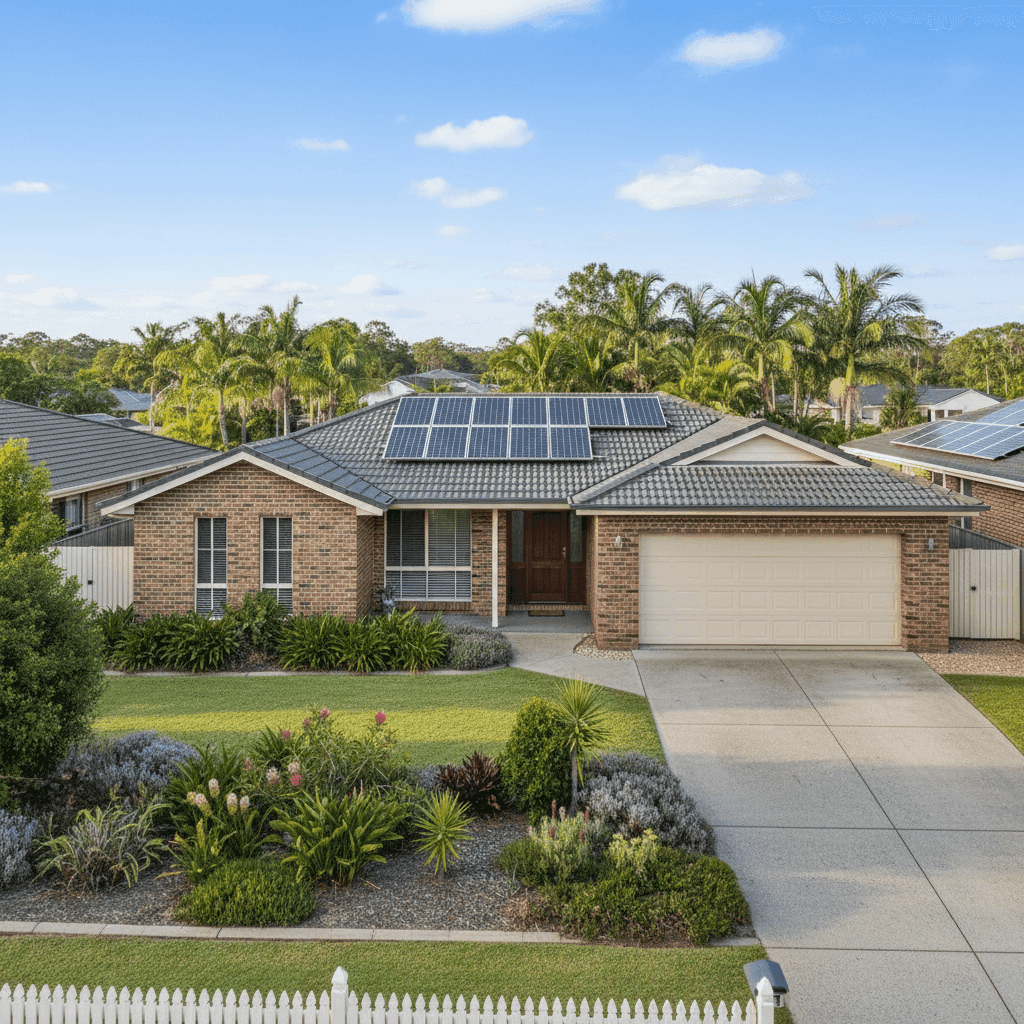
Torquay, nestled in the Wide Bay–Burnett region of Queensland (postcode 4655), is a coastal suburb that offers a relaxed lifestyle — but like any Queensland property, insuring your home here comes with its own set of considerations. This article breaks down a real building insurance quote for a four-bedroom, two-bathroom free-standing home in Torquay, and puts the numbers into context so you can judge whether you're getting a fair deal.
---
Is This Quote Fair?
The quote in question sits at $1,782 per year (or $171 per month) for building-only cover on a 214 sqm brick veneer home, with a $649,000 sum insured and a $1,000 excess. Our analysis rates this quote as FAIR — Around Average.
That "fair" rating is meaningful. It doesn't mean you're overpaying dramatically, but it also signals there's room to potentially do better. The quote lands comfortably below the suburb average of $2,340/yr and the suburb median of $2,527/yr, which is a positive sign. However, it sits above the 25th percentile of $1,134/yr — meaning roughly a quarter of comparable Torquay properties are being quoted less than $1,134 annually. That gap is worth exploring if you haven't shopped around recently.
At $1,782/yr, this homeowner is paying meaningfully less than the typical Torquay policyholder, which suggests the property's characteristics and the insurer's pricing model are working in their favour. Still, the spread between the 25th percentile ($1,134) and the 75th percentile ($3,266) is substantial — a reminder of just how much premiums can vary based on property features, insurer appetite, and coverage choices.
---
How Torquay Compares
To properly contextualise this quote, it helps to zoom out and look at the broader picture. Here's how Torquay stacks up against Queensland and the nation:
| Benchmark | Average Premium | Median Premium |
|---|---|---|
| Torquay (4655) | $2,340/yr | $2,527/yr |
| Queensland | $9,129/yr | $3,903/yr |
| National | $5,347/yr | $2,764/yr |
Based on [Torquay suburb data](https://coverclub.com.au/stats/QLD/4655/torquay) (30 quotes), [QLD state data](https://coverclub.com.au/stats/QLD), and [national data](https://coverclub.com.au/stats/national).
A few things stand out here. Queensland's average premium of $9,129/yr is extraordinarily high compared to both the national average and Torquay's local figures. This is largely driven by high-risk cyclone and flood zones in Far North Queensland and other exposed coastal areas, which pull the state average upward significantly. The median is a more reliable indicator for most homeowners — and at $3,903/yr for QLD versus $2,527/yr for Torquay, this suburb is tracking well below the state median.
Compared to the national median of $2,764/yr, Torquay's median of $2,527/yr is slightly cheaper, which is somewhat surprising given Queensland's general reputation for elevated insurance costs. This quote at $1,782/yr beats both the suburb and national medians — a reasonable result for the homeowner.
For a deeper dive into how premiums are trending in this postcode, visit the Torquay suburb stats page.
---
Property Features That Affect Your Premium
Every home is different, and insurers weigh up a range of property characteristics when calculating your premium. Here's how this particular property's features likely influence its pricing:
Brick Veneer Walls & Tiled Roof Brick veneer is generally viewed favourably by insurers. It's durable, fire-resistant, and performs well in most weather events. Combined with a tiled roof — another relatively resilient material — this property presents a lower risk profile than, say, a weatherboard home with a metal sheet roof. These construction materials typically attract more competitive premiums.
Slab Foundation A concrete slab foundation is standard for Queensland homes of this era and is generally considered low-risk from an insurance perspective. It avoids the moisture and pest concerns sometimes associated with older raised timber stumps.
Built in 1998 At roughly 27 years old, this home sits in a comfortable middle ground. It's not so new that it commands a premium for high-end finishes, nor so old that insurers worry about aging infrastructure. Homes from the late 1990s were typically built to solid standards and are well-understood by underwriters.
Solar Panels The presence of solar panels adds a modest layer of complexity to building cover. Panels are generally included under building insurance, but they represent an additional asset that contributes to the overall sum insured. Homeowners should confirm their policy explicitly covers solar panels — including damage from storms or hail — and that the $649,000 sum insured accounts for replacement costs.
Ducted Climate Control Ducted air conditioning is a significant fixed asset and is typically covered under building insurance. It's worth verifying that your sum insured reflects the cost of replacing the entire system, as ducted systems can be expensive to reinstall.
No Pool, Standard Fittings The absence of a swimming pool removes a common liability and maintenance concern that can nudge premiums upward. Standard-quality fittings also keep the replacement cost estimate grounded, avoiding the inflated rebuild costs associated with high-end or bespoke finishes.
Not in a Cyclone Risk Area This is a significant factor. Torquay QLD 4655 is not classified as a cyclone risk zone, which meaningfully reduces the risk loading that affects so many Queensland coastal properties further north. This likely contributes to the relatively competitive premium on this quote.
---
Tips for Homeowners in Torquay
Whether you're reviewing an existing policy or shopping for a new one, these practical steps can help you get better value on your home insurance:
- Check your sum insured annually. Building costs have risen sharply in recent years due to labour shortages and material price increases. A sum insured of $649,000 for a 214 sqm home works out to roughly $3,033 per sqm — broadly in line with current Queensland rebuild estimates, but worth verifying with an independent building cost calculator each year to avoid being underinsured.
- Confirm solar panels are explicitly covered. Not all policies treat solar panels the same way. Ask your insurer whether panels are covered for accidental damage, storm damage, and electrical faults — and whether the payout is replacement value or depreciated value.
- Compare at least three quotes before renewing. The spread between the 25th and 75th percentile in Torquay ($1,134 vs $3,266) shows that different insurers price this suburb very differently. Loyalty doesn't always pay — shopping around at renewal time is one of the most effective ways to reduce your premium.
- Consider your excess strategically. This policy carries a $1,000 excess. Opting for a higher excess (e.g., $2,000) can reduce your annual premium, which makes sense if you have the financial buffer to cover it in the event of a claim. Conversely, a lower excess may be worth the extra premium cost if cash flow is a concern.
---
Ready to Compare?
If this quote has prompted you to take a closer look at your own home insurance, CoverClub makes it easy to see what's available for your property. Get a quote at CoverClub and find out whether you're paying a fair price — or whether there's a better deal waiting for you.