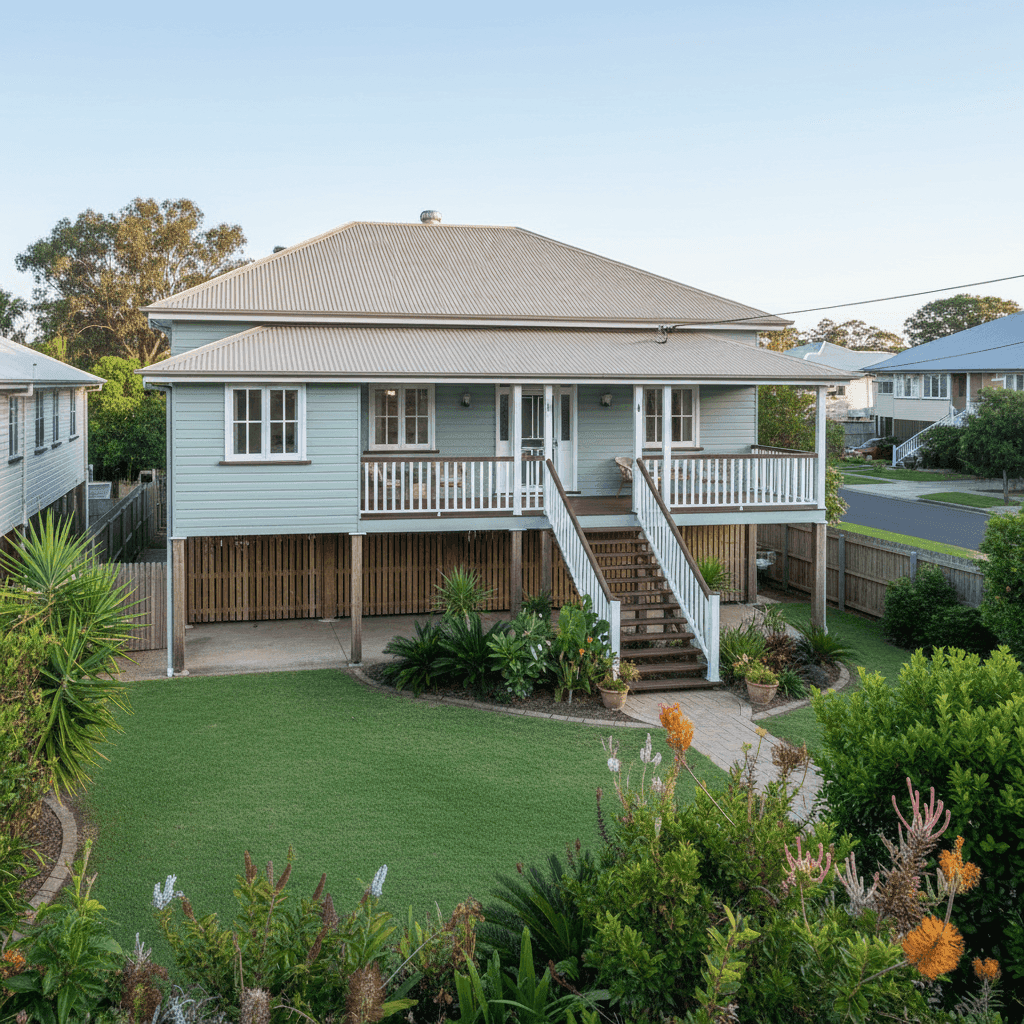
Torquay is a coastal town in Queensland's Wide Bay region, and like many seaside communities, it comes with a unique set of considerations when it comes to protecting your home. This analysis looks at a building-only insurance quote for a three-bedroom, two-bathroom free standing home in Torquay (postcode 4655) — a weatherboard property built in 1957, elevated on stumps, with a Colorbond steel roof and timber flooring throughout.
If you've recently received a quote and wondered whether you're paying a fair price, you're in the right place. Let's break it down.
---
Is This Quote Fair?
The annual premium for this property came in at $3,518 per year (or $337/month), with a building sum insured of $599,000 and a building excess of $2,000.
Our price rating for this quote is Expensive — Above Average.
To put that in context: the suburb average premium in Torquay sits at $2,340/yr, and the median is $2,527/yr. This quote lands well above both of those benchmarks, and also above the suburb's 75th percentile of $3,266/yr — meaning it's pricier than roughly three-quarters of comparable quotes we've seen in the area.
That said, "expensive" doesn't necessarily mean "wrong." Several property-specific factors (which we'll explore below) can legitimately push a premium higher than the local average. The key question is whether those factors justify the gap — and whether shopping around might uncover a more competitive price for the same level of cover.
---
How Torquay Compares
Understanding where this quote sits relative to broader benchmarks helps paint a clearer picture.
| Benchmark | Premium |
|---|---|
| This Quote | $3,518/yr |
| Torquay Suburb Average | $2,340/yr |
| Torquay Suburb Median | $2,527/yr |
| Torquay 25th Percentile | $1,134/yr |
| Torquay 75th Percentile | $3,266/yr |
| QLD State Average | $9,129/yr |
| QLD State Median | $3,903/yr |
| National Average | $5,347/yr |
| National Median | $2,764/yr |
Based on 30 quotes sampled for the Torquay 4655 area.
Relative to Queensland as a whole, this quote is actually quite reasonable — the state average sits at a hefty $9,129/yr, driven by high-risk cyclone and flood zones across the north of the state. The QLD median of $3,903/yr is also above this quote, which suggests that on a state-wide basis, $3,518 is not out of the ordinary.
Compared to national benchmarks, the picture is similar — the national average is $5,347/yr and the national median is $2,764/yr. So while this quote is above the national median, it's well below the national average.
The real story is at the local level. Within Torquay itself, this premium is above what most homeowners in the suburb are paying, which warrants a closer look at the property's specific risk profile.
---
Property Features That Affect Your Premium
Several characteristics of this home are likely contributing to the higher-than-average premium. Here's what insurers pay close attention to:
Age of Construction (1957)
At nearly 70 years old, this home is considered an older dwelling by most insurers. Older properties can carry higher rebuild risk due to outdated materials, plumbing, or wiring that may not meet current building codes. Insurers typically apply age-related loadings to account for this.
Weatherboard Timber Walls
Weatherboard construction is common in Queensland's older housing stock, but it's generally viewed as a higher risk material compared to brick or rendered masonry. Timber is more susceptible to fire, termite damage, and moisture-related deterioration — all of which can influence how an insurer prices the policy.
Elevated on Stumps
Being elevated by at least one metre on stumps is actually a double-edged sword. On the positive side, elevation can reduce flood risk by keeping the main living area above ground level — a significant benefit in a coastal town like Torquay. However, elevated homes can also be more expensive to repair or rebuild due to the complexity of the subfloor structure, which may push premiums up slightly.
Colorbond Steel Roof
Steel roofing is generally well-regarded by insurers for its durability and resistance to fire and wind. This is one feature that likely works in the homeowner's favour from a risk perspective.
Timber and Laminate Flooring
Timber floors can be costly to replace and are susceptible to water damage, which insurers factor into their assessment — particularly for elevated homes where subfloor moisture can be an issue.
Sum Insured: $599,000
The building sum insured is the amount it would cost to fully rebuild the property from scratch. At $599,000 for a 153 sqm home in regional Queensland, this figure is on the higher end — but rebuilding costs have risen sharply in recent years due to labour shortages and material price increases. It's worth reviewing this figure regularly to ensure it accurately reflects current rebuild costs.
---
Tips for Homeowners in Torquay
If your premium feels higher than expected, here are some practical steps worth considering:
1. Compare Multiple Quotes
The most effective way to reduce your premium is to shop around. Insurers assess risk differently, and the price variation for the same property can be significant. Use CoverClub to compare quotes and see what other providers are offering for your home.
2. Review Your Sum Insured
Make sure your building sum insured reflects the actual cost to rebuild — not the market value of the property. Overinsuring can mean you're paying more premium than necessary, while underinsuring leaves you exposed. Tools like the Cordell Sum Sure Calculator can help you estimate an accurate rebuild figure.
3. Consider a Higher Excess
Opting for a higher voluntary excess (above the standard $2,000 on this policy) can meaningfully reduce your annual premium. Just make sure you're comfortable covering that amount out of pocket in the event of a claim.
4. Maintain the Property
Insurers reward well-maintained homes. Keeping the subfloor, roof, and external cladding in good condition — particularly important for an older weatherboard home — can help avoid claim complications and may support a better premium at renewal time. Some insurers also offer discounts for homes with updated electrical or plumbing systems.
---
Ready to Find a Better Deal?
Whether you're reviewing an existing policy or shopping for the first time, comparing quotes is the smartest move you can make. At CoverClub, we make it easy to see how your premium stacks up and find competitive options from a range of Australian insurers.
Get a home insurance quote today and see if you can do better than $3,518 a year — you might be surprised at the savings available.