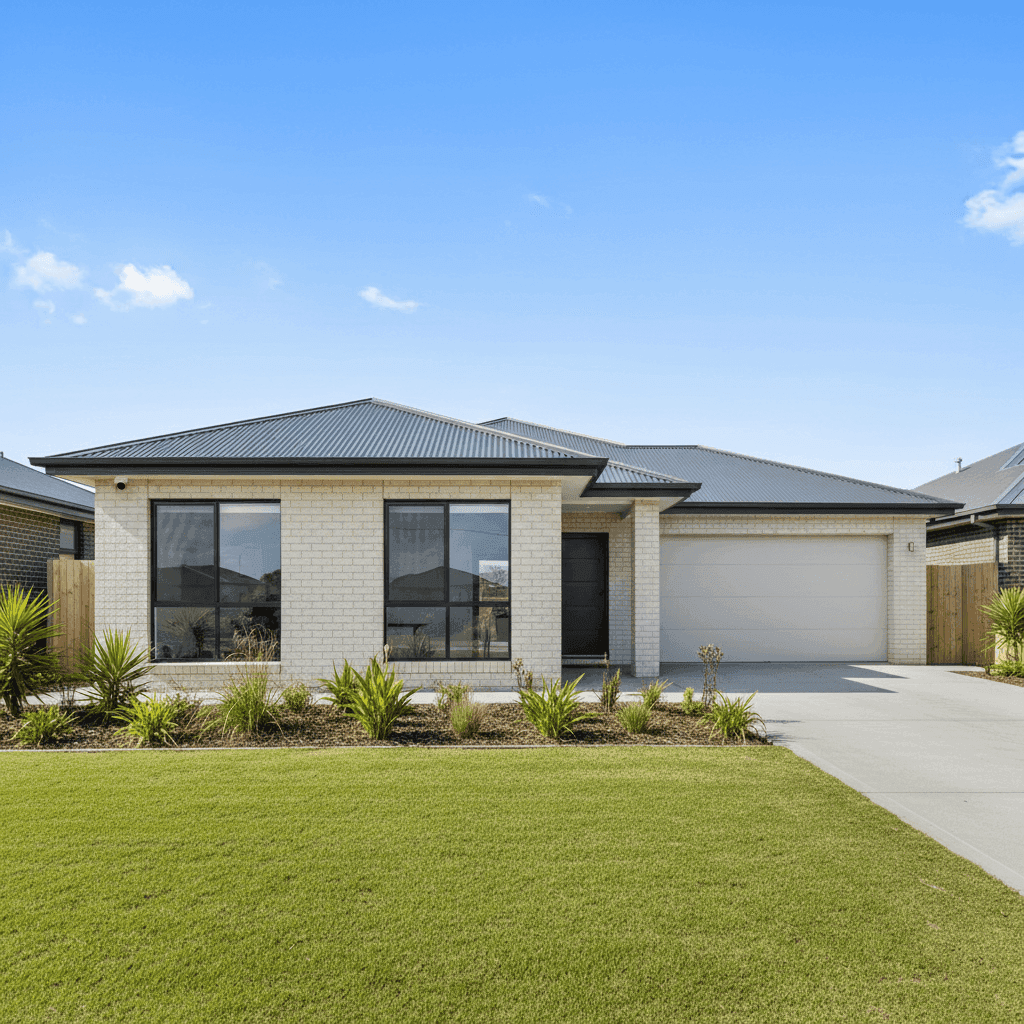
Torquay, nestled at the gateway to the Great Ocean Road on Victoria's Surf Coast, is one of regional Victoria's most sought-after places to live. With a thriving community, coastal lifestyle, and a steady stream of new residential developments, it's also a suburb where understanding your home insurance costs is well worth the effort. This article breaks down a real home and contents insurance quote for a four-bedroom free-standing home in Torquay (postcode 3228) — and puts it in context against local, state, and national benchmarks.
---
Is This Quote Fair?
The annual premium for this property came in at $1,332 per year (or roughly $128 per month), covering both building (sum insured: $663,000) and contents ($50,000), each with a $1,000 excess.
Our price rating for this quote is FAIR — Around Average, which is a reasonable outcome for a well-built, modern home in this area. Here's why:
Compared to the suburb average for Torquay of $1,583/year, this quote sits about $251 below the mean — a meaningful saving. Against the suburb median of $1,567/year, the saving is similar. This places the premium just above the 25th percentile ($1,248/year) for the area, meaning roughly three-quarters of comparable quotes in the suburb come in higher. That's a solid position to be in.
It's worth noting that "fair" doesn't mean you can't do better — it means the price is competitive relative to what most Torquay homeowners are paying, but there may still be room to shop around and find a lower premium without sacrificing cover.
---
How Torquay Compares
One of the most telling aspects of this quote is just how favourably Torquay stacks up against broader benchmarks.
| Benchmark | Average Premium |
|---|---|
| Torquay (suburb average) | $1,583/yr |
| Torquay (suburb median) | $1,567/yr |
| LGA — Surf Coast | $2,520/yr |
| Victoria (state average) | $3,000/yr |
| Victoria (state median) | $2,718/yr |
| National average | $5,347/yr |
| National median | $2,764/yr |
The contrast with Victoria's state average of $3,000/year is striking — Torquay homeowners are paying, on average, nearly half what Victorian homeowners pay statewide. And when compared to the national average of $5,347/year, the difference is even more dramatic.
It's important to understand why these broader averages are so much higher. State and national figures are heavily influenced by high-risk regions — areas prone to cyclones, floods, and bushfires — which drive premiums up significantly. Torquay benefits from a relatively benign risk profile: it's not in a cyclone zone, and while coastal, it sits outside many of the worst flood-affected corridors in Victoria.
That said, the LGA average for Surf Coast ($2,520/year) is notably higher than Torquay's suburb average, suggesting that other parts of the Surf Coast Shire carry more risk or attract pricier properties. Torquay itself — particularly newer builds — tends to attract more competitive pricing.
Our suburb stats page for Torquay (3228) is based on a sample of 40 quotes, which provides a reasonable snapshot of the local market.
---
Property Features That Affect Your Premium
Several characteristics of this particular property work in favour of a competitive premium:
New construction (built 2023): A home built in 2023 is subject to the latest Australian building codes, which include improved structural standards, better fire resistance, and more resilient design. Insurers reward newer builds with lower risk assessments, and this is reflected in the premium.
Brick veneer walls: Brick veneer is a popular and well-regarded construction type in Australia. It offers solid fire resistance and durability, which insurers view favourably compared to, say, weatherboard or timber-clad homes.
Steel/Colorbond roof: Colorbond roofing is highly regarded for its longevity, wind resistance, and low maintenance requirements. It's a premium choice that tends to attract better insurance pricing than older tile or terracotta roofs.
Concrete slab foundation: Slab-on-ground construction is inherently stable and reduces the risk of subsidence, pest ingress, and moisture-related damage — all factors that can push premiums higher in homes with suspended timber floors or pier foundations.
Slightly elevated (less than 1m): The modest elevation is unlikely to significantly affect the premium either way, but it does provide a small buffer against surface water ingress — a relevant consideration in a coastal environment.
No pool, no solar panels: While these features aren't necessarily negative from an insurance standpoint, their absence simplifies the risk profile and removes potential liability or equipment replacement costs from the equation.
Ducted climate control: The presence of ducted air conditioning is factored into the building sum insured, contributing to the $663,000 figure. It's a fixed asset that adds replacement value to the property.
Timber/laminate flooring with standard fittings: These are mid-range specifications that don't inflate the sum insured unnecessarily, helping keep the premium in check.
---
Tips for Homeowners in Torquay
1. Review your sum insured annually Building costs have risen sharply in recent years. A home built in 2023 for a certain price may cost significantly more to rebuild today due to labour and materials inflation. Make sure your $663,000 sum insured keeps pace — underinsurance is one of the most common and costly mistakes Australian homeowners make.
2. Consider your excess carefully Both the building and contents excess on this policy sit at $1,000. Opting for a higher excess (say, $2,000 or $2,500) can reduce your annual premium noticeably. If you have a solid emergency fund and are unlikely to make small claims, this trade-off often makes financial sense.
3. Bundle your building and contents cover This quote already combines building and contents insurance, which typically attracts a discount compared to holding separate policies with different providers. If you haven't already consolidated, it's worth exploring.
4. Shop around at renewal time Insurance loyalty rarely pays. Insurers often offer their best rates to new customers, and premiums can creep up at renewal without any change in your risk profile. Use a comparison platform like CoverClub to benchmark your renewal quote against the market — it only takes a few minutes and could save you hundreds of dollars.
---
Compare Your Own Quote
Whether you're a first-time buyer in Torquay or a long-time local reviewing your current cover, it pays to know where your premium stands. CoverClub makes it easy to compare home and contents insurance quotes from multiple insurers in one place — so you can see exactly how your price stacks up.
Get a home insurance quote today and find out if you're paying a fair price — or if there's a better deal waiting for you.