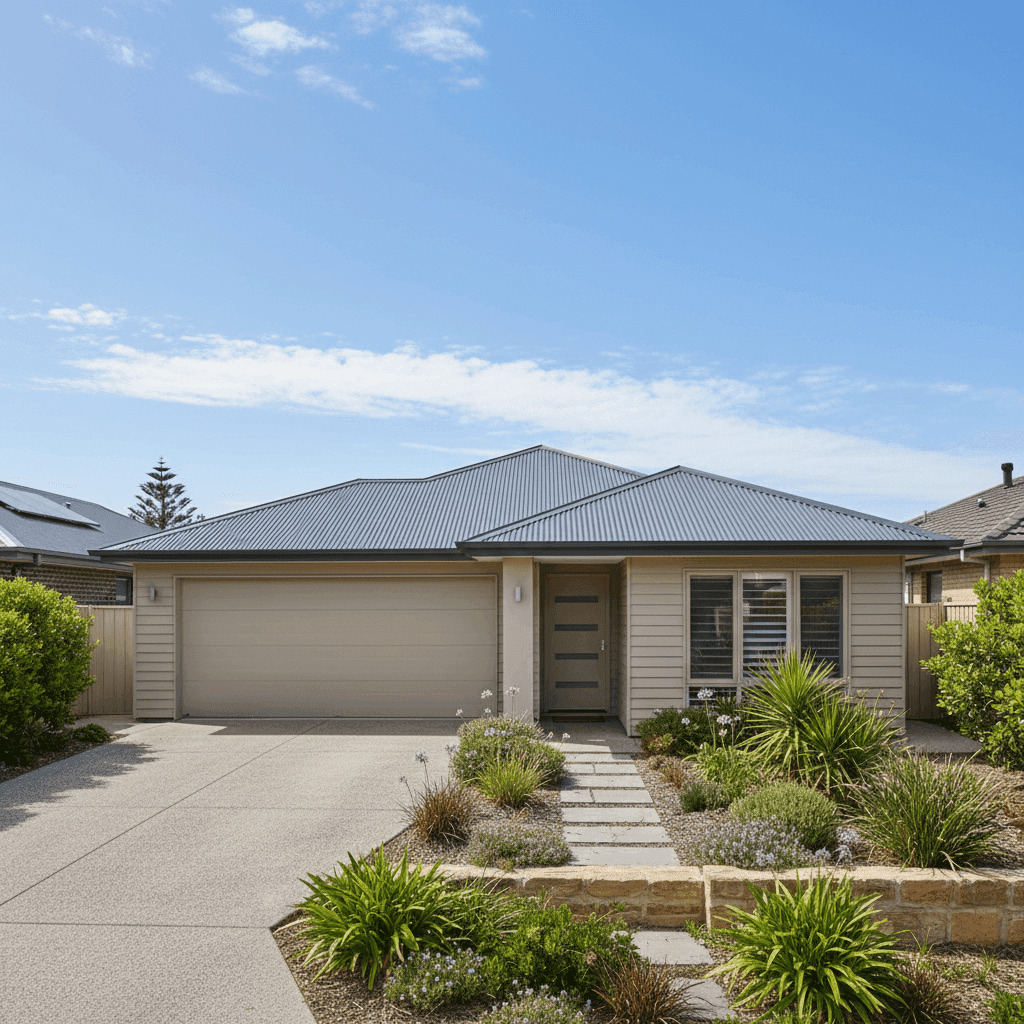
Torquay is one of Victoria's most sought-after coastal towns — a gateway to the Great Ocean Road, beloved by surfers, sea-changers, and growing families alike. With that lifestyle appeal comes real estate value, and with real estate value comes the need for solid home insurance. This article breaks down a recent home and contents insurance quote for a three-bedroom, free-standing home in Torquay (VIC 3228), rated Fair (Around Average), and puts it in context against local, state, and national benchmarks.
---
Is This Quote Fair?
The quote in question comes in at $1,575 per year (or approximately $151 per month) for combined home and contents cover. The building is insured for $615,000 and contents for $89,000, with a $2,000 excess applying to both building and contents claims.
The Fair rating is well-earned here. Based on a sample of 40 quotes across the Torquay suburb, the average annual premium sits at $1,583 and the median at $1,567 — meaning this quote lands almost exactly in the middle of the local market. It's marginally below the suburb average, which is a reassuring sign that the pricing is competitive without being an outlier in either direction.
For homeowners wondering whether they're overpaying, the answer here is: not really. You're not in the cheapest quarter of the market (the 25th percentile sits at $1,248/yr), but you're also well clear of the more expensive end, where premiums push past $1,903 per year at the 75th percentile. In short, this is a solidly mid-market quote that reflects the property's characteristics fairly.
---
How Torquay Compares
One of the most striking takeaways from this quote is just how affordable Torquay is relative to broader benchmarks — and that's worth understanding in detail.
| Benchmark | Average Premium |
|---|---|
| Torquay (3228) | $1,583/yr |
| Victoria (VIC) | $3,000/yr |
| National | $5,347/yr |
| Surf Coast LGA | $2,520/yr |
Torquay homeowners are paying, on average, 47% less than the Victorian state average and a remarkable 70% less than the national average. Even compared to the broader Surf Coast LGA average of $2,520 per year, Torquay sits well below — suggesting that within the region, Torquay itself carries relatively lower risk in the eyes of insurers.
The national average of $5,347 is heavily skewed by high-risk regions — particularly in Queensland, Western Australia, and the Northern Territory, where cyclone, flood, and storm surge risks drive premiums dramatically higher. Victoria's median of $2,718 is more representative of what most Victorians pay, and Torquay sits comfortably below even that figure.
For a coastal suburb, this is genuinely good news. Many beachside locations attract premium loading due to storm, erosion, or flood exposure, but Torquay's pricing suggests insurers view it as a comparatively low-risk coastal area.
---
Property Features That Affect Your Premium
Several characteristics of this property influence how insurers assess and price the risk.
Weatherboard timber cladding is one of the more notable factors. While weatherboard homes are charming and common in coastal Victoria, timber external walls carry a higher fire risk rating than brick veneer or rendered concrete. This can contribute to slightly elevated premiums compared to equivalent brick homes, though the impact varies by insurer.
Steel/Colorbond roofing is generally viewed favourably by insurers. Colorbond is durable, resistant to corrosion, and performs well in high-wind conditions — all positives for a coastal location like Torquay. It also tends to have lower maintenance costs and a longer lifespan than older tile roofs, which can reduce the likelihood of weather-related claims.
Concrete slab foundation provides structural stability and is typically associated with lower subsidence risk than pier-and-beam or strip footings, particularly relevant in areas with sandy or reactive soils near the coast.
Above-average fittings quality means the cost to rebuild or repair the home is higher than a standard-fit property. This is appropriately reflected in the $615,000 sum insured — a figure that needs to represent full replacement cost, not market value.
Ducted climate control adds to the contents and fixtures value of the home and is a meaningful inclusion in the overall sum insured. Systems like these can cost $8,000–$20,000 to replace, so ensuring they're adequately covered is important.
At 235 sqm, this is a mid-to-large home for three bedrooms, which also supports a higher-than-average sum insured relative to smaller properties in the area.
---
Tips for Homeowners in Torquay
1. Review your sum insured annually Building costs have risen significantly in recent years, and a sum insured set even two or three years ago may no longer reflect the true cost of rebuilding. Use a building cost calculator or speak with a quantity surveyor to validate your $615,000 figure each year at renewal.
2. Consider your excess strategically A $2,000 excess is on the higher end of typical home insurance excesses. While this helps keep premiums down, it means smaller claims may not be worth lodging. If you'd prefer more flexibility, compare quotes with a $1,000 excess — the premium difference may be less than you expect.
3. Maintain your weatherboard exterior Timber cladding requires regular upkeep — painting, sealing, and checking for rot or pest damage. Poorly maintained weatherboard can create coverage complications if damage is deemed to result from wear and neglect rather than a sudden insured event. Keeping maintenance records is a smart habit.
4. Compare quotes at renewal, not just once The insurance market shifts constantly. The fact that this quote is rated Fair today doesn't mean it will remain competitive at next year's renewal. Run a fresh comparison at CoverClub each year to ensure you're not drifting into the more expensive end of the market without realising it.
---
Ready to Compare?
Whether you're a current Torquay homeowner reviewing your existing cover or someone new to the area looking for their first policy, comparing quotes is the smartest first step. CoverClub makes it easy to see how your premium stacks up against real data from your suburb. Get a home insurance quote today and find out if you're getting a fair deal — or if there's room to do better.