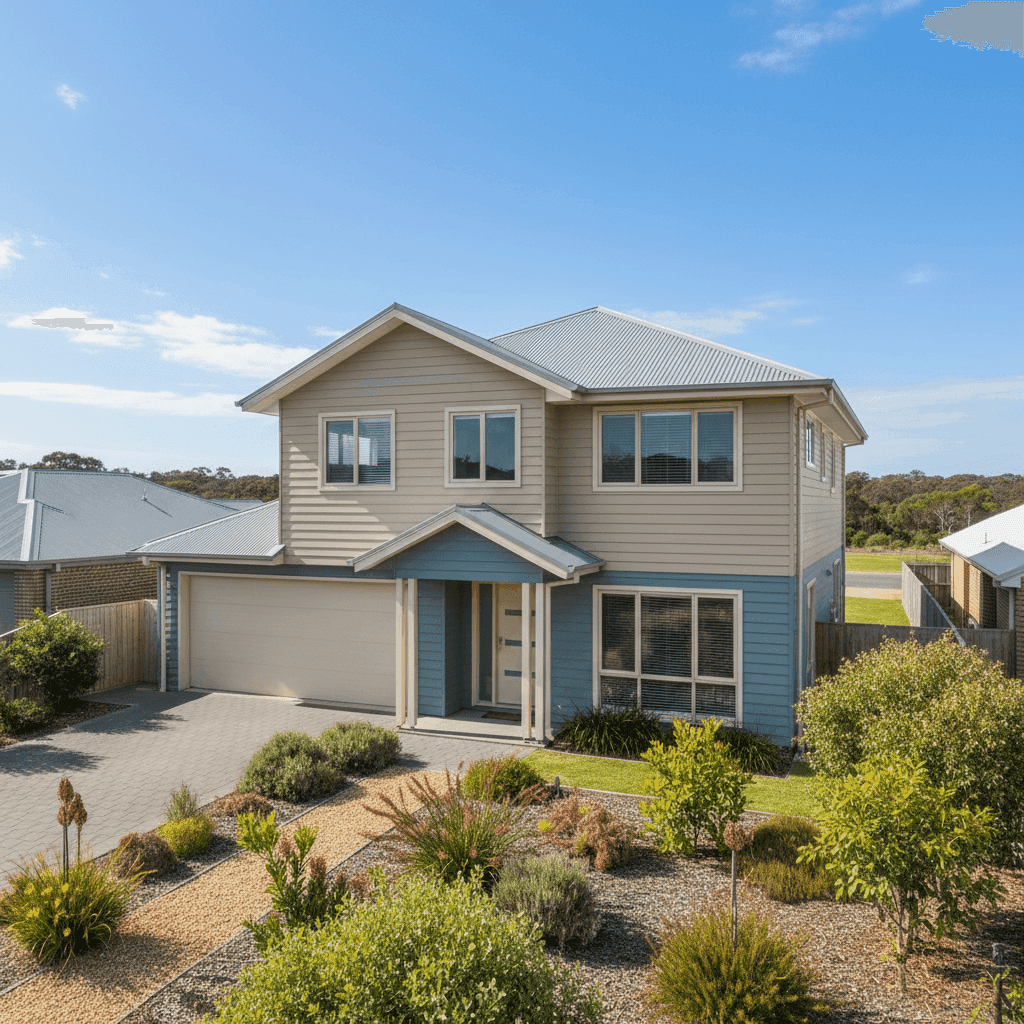
Torquay is one of Victoria's most sought-after coastal communities — a relaxed surf town at the gateway to the Great Ocean Road that attracts families, sea-changers, and investors alike. With that lifestyle appeal comes real estate value, and protecting it with the right home insurance is essential. This article breaks down a real home and contents insurance quote for a four-bedroom, free-standing home in Torquay (VIC 3228), examines whether the premium is competitive, and offers practical guidance for local homeowners.
---
Is This Quote Fair?
The quote in question comes in at $2,002 per year (or $195/month) for a combined home and contents policy. The building is insured for $852,000 with a $50,000 contents cover, and both the building and contents excess sit at $1,000.
Our pricing analysis rates this quote as Expensive — above average for the Torquay area. Based on a sample of 40 quotes for similar properties in postcode 3228, the suburb average annual premium is $1,583, and the median sits at $1,567. That means this quote is running approximately $419 above the suburb average — roughly 26% more than what many comparable Torquay homeowners are paying.
To be fair, context matters here. The building sum insured of $852,000 is substantial, and the property features — including above-average fittings quality, timber/laminate flooring, and ducted climate control — all contribute to a higher replacement cost estimate. Insurers price policies based on what it would cost to fully rebuild and refurnish a home, not its market value, so a well-appointed property like this will naturally attract a higher premium than a more modest dwelling.
That said, the gap between this quote and the suburb median is wide enough to suggest there may be better options available. Exploring alternatives is worthwhile.
---
How Torquay Compares
Understanding where Torquay sits in the broader insurance landscape is useful for putting any individual quote into perspective.
| Benchmark | Annual Premium |
|---|---|
| This Quote | $2,002 |
| Torquay (3228) Average | $1,583 |
| Torquay (3228) Median | $1,567 |
| Torquay 25th Percentile | $1,248 |
| Torquay 75th Percentile | $1,903 |
| LGA (Surf Coast) Average | $2,520 |
| VIC State Average | $3,000 |
| VIC State Median | $2,718 |
| National Average | $5,347 |
| National Median | $2,764 |
A few things stand out from this comparison. First, Torquay homeowners are actually paying well below the Victorian state average of $3,000/year — a meaningful difference that reflects the suburb's relatively benign risk profile. There's no cyclone risk, and while coastal proximity can sometimes elevate premiums, Torquay doesn't carry the same exposure as properties in far north Queensland or Western Australia's cyclone belt, which heavily skew the national average upward.
Second, the national average of $5,347 may look alarming, but it's pulled significantly higher by high-risk regions. The national median of $2,764 is a more representative figure, and this quote sits just below that — which is reassuring from a broader perspective.
For a deeper look at how premiums are trending in your area, visit the Torquay suburb insurance stats page, the Victoria state overview, or the national insurance statistics hub.
---
Property Features That Affect Your Premium
Several characteristics of this property have a direct bearing on the insurance premium calculated. Here's how each one plays a role:
Weatherboard timber cladding is one of the most significant factors. Timber-framed and clad homes are considered higher risk by most insurers due to their susceptibility to fire and moisture damage compared to brick veneer or full brick construction. Replacement costs for quality weatherboard homes are also higher per square metre, which flows through to the sum insured.
Steel/Colorbond roofing is generally viewed favourably by insurers. It's durable, low-maintenance, and performs well in high-wind conditions — a relevant consideration for a coastal location like Torquay.
Slab foundation is a neutral-to-positive factor. Concrete slab homes don't carry the subfloor risks associated with raised timber stumps (such as pest damage or moisture ingress), which can reduce certain claim exposures.
Above-average fittings quality means that in the event of a claim, the cost to repair or replace fixtures, fittings, and finishes will be higher than a standard home. Insurers account for this in their pricing.
Ducted climate control adds to the insured value of the building. Ducted systems are expensive to install and replace, and their inclusion in the building sum insured is appropriate — but it does push the premium up.
Timber and laminate flooring throughout the home adds to replacement costs. These materials are more expensive to reinstate than carpet, and water damage claims in particular can be costly with timber floors.
At 214 sqm on a 2009 build, this is a relatively modern, well-sized family home. Newer builds typically have better structural standards and are less prone to certain maintenance-related claims, which is a mild positive from an insurer's perspective.
---
Tips for Homeowners in Torquay
1. Shop around — seriously. With this quote sitting above the suburb average, comparing policies from multiple insurers could yield meaningful savings. Even a $300–$400 annual saving compounds significantly over time. Get a comparison quote at CoverClub to see what other insurers are offering for your specific property.
2. Review your sum insured carefully. Building sum insured is one of the biggest levers in your premium. Make sure your $852,000 figure reflects a realistic rebuild cost — not the market value of the property. Overinsuring unnecessarily inflates your premium, while underinsuring leaves you exposed. A quantity surveyor or your insurer's calculator can help you validate this figure.
3. Consider your excess level. Both excesses on this policy are set at $1,000. Opting for a higher voluntary excess (say, $1,500 or $2,000) can reduce your annual premium. If you're unlikely to make small claims, this trade-off often makes financial sense.
4. Maintain your home proactively. Insurers can reduce or deny claims where damage is attributed to poor maintenance. For a weatherboard home in a coastal environment, this means keeping external paintwork in good condition to prevent moisture penetration, checking roof flashings annually, and ensuring gutters are cleared regularly — especially heading into storm season.
---
Ready to Compare?
Whether you're renewing your policy or insuring a new purchase, it pays to compare. CoverClub makes it easy to see what home and contents insurance actually costs for properties like yours in Torquay and across Australia. Start your free quote today and find out if you're getting the best deal available.