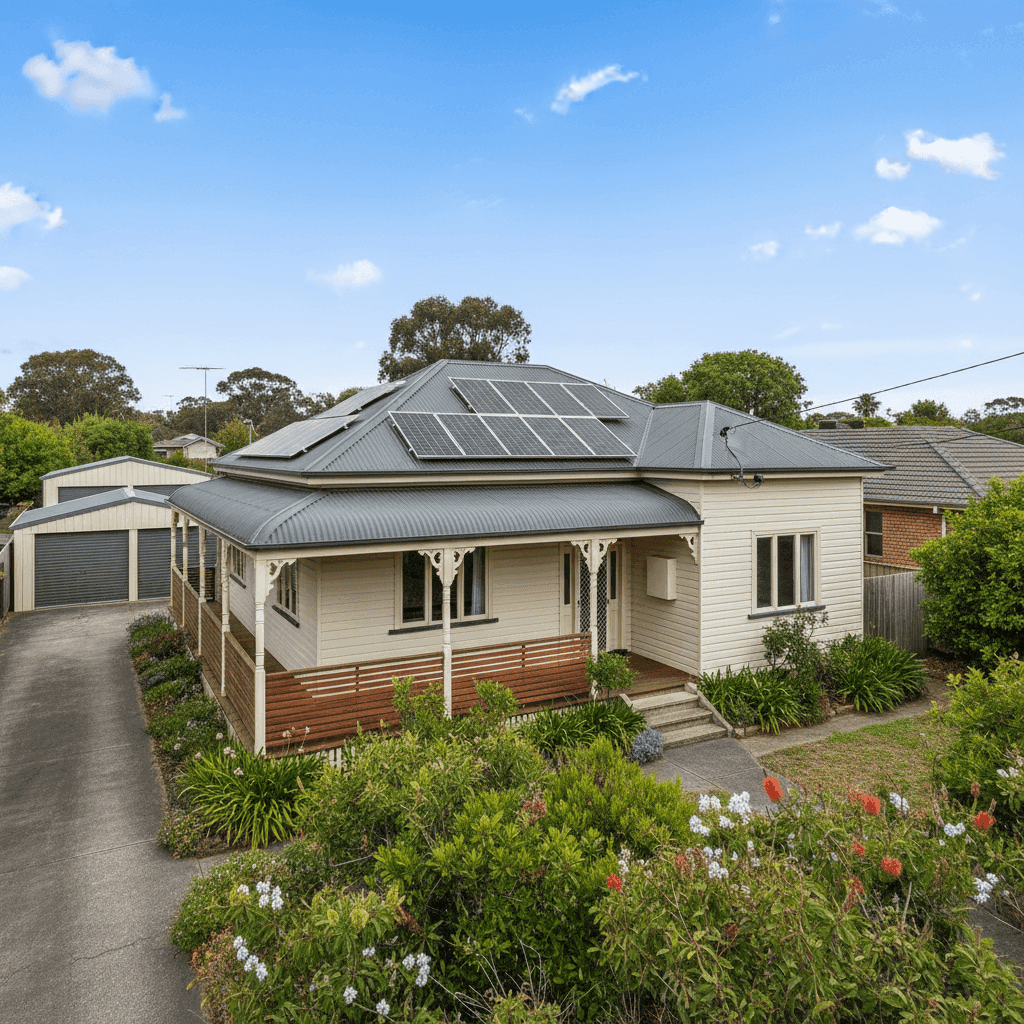
If you own a free standing home in Trafalgar, VIC 3824, you've probably wondered whether you're paying a fair price for home insurance — or whether there's room to do better. This article breaks down a real home and contents insurance quote for a four-bedroom, two-bathroom property in Trafalgar, comparing it against local, state, and national benchmarks so you can make a more informed decision at renewal time.
---
Is This Quote Fair?
The quote in question comes in at $2,984 per year (or roughly $292 per month) for combined home and contents cover. The building is insured for $648,000 and contents for $80,000, with a $1,000 excess applying to both building and contents claims.
Our price rating for this quote is FAIR — Around Average, and the data backs that up. The suburb average for Trafalgar sits at $3,199 per year, meaning this quote is roughly $215 below the local average — a modest but meaningful saving. It's also sitting just above the suburb median of $2,750, which means it's slightly pricier than what half of comparable Trafalgar quotes come in at, but still well within a reasonable range.
In short: this isn't a bargain, but it's not overpriced either. For a 1930s home with the features described, landing close to the middle of the market is a reasonable outcome.
---
How Trafalgar Compares
To put this quote in proper context, it helps to zoom out and look at the broader picture. You can explore the full data on the Trafalgar suburb insurance stats page, but here's a quick summary:
| Benchmark | Premium |
|---|---|
| This Quote | $2,984/yr |
| Trafalgar Suburb Average | $3,199/yr |
| Trafalgar Suburb Median | $2,750/yr |
| Trafalgar 25th Percentile | $2,028/yr |
| Trafalgar 75th Percentile | $3,809/yr |
| VIC State Average | $3,000/yr |
| VIC State Median | $2,718/yr |
| National Average | $5,347/yr |
| National Median | $2,764/yr |
| Latrobe LGA Average | $3,607/yr |
A few things stand out here. First, this quote is below both the VIC state average ($3,000) and the Latrobe LGA average ($3,607), which suggests Trafalgar is being treated relatively favourably compared to the broader region. The LGA average being notably higher than the suburb average is worth noting — it likely reflects higher-risk pockets elsewhere in the Latrobe council area.
Second, the national average of $5,347 is dramatically higher than what Trafalgar homeowners are paying. This is largely driven by high-risk regions in Queensland, Western Australia, and the Northern Territory, where cyclone, flood, and storm exposure push premiums sky-high. Trafalgar, sitting in the Gippsland region of Victoria, doesn't carry that kind of catastrophic risk profile. You can explore how Victoria stacks up on the VIC state insurance stats page or take a wider view on the national insurance stats page.
Based on 54 quotes sampled in the suburb, the spread from the 25th to 75th percentile is quite wide ($2,028 to $3,809), which tells us there's significant variation in what Trafalgar homeowners are paying. That variation is largely driven by property-specific factors — exactly the kind we'll look at next.
---
Property Features That Affect Your Premium
Several characteristics of this particular property have a meaningful influence on the quoted premium.
Age of construction (1930): A home built nearly a century ago introduces genuine underwriting complexity. Older properties may have ageing plumbing, wiring, or structural elements that increase the likelihood of a claim. Insurers typically price this risk into the premium, and some may apply exclusions around pre-existing wear and tear.
Hardiplank/Hardiflex cladding: This fibre cement cladding is a popular choice for older homes that have been renovated or re-clad. It's considered a reasonably good risk by most insurers — more fire-resistant than timber weatherboards and more durable than some alternatives. It generally doesn't attract a significant loading.
Steel/Colorbond roof: Colorbond is widely regarded as one of the better roofing materials from an insurance perspective. It's durable, low-maintenance, and performs well in both fire and storm conditions. This is likely a neutral-to-positive factor in the premium calculation.
Stump foundations: Homes on stumps are more common in older Victorian properties and can introduce some risk around subsidence, pest damage (particularly termites), and moisture-related issues. Insurers are generally familiar with this construction type in regional Victoria, but it's worth ensuring your policy covers the foundation itself.
Solar panels: The presence of solar panels adds replacement value to the property and can slightly increase the sum insured required. Some insurers include solar panels automatically under building cover; others may require them to be specifically noted. It's worth confirming this with your insurer.
Ducted climate control: A ducted system is a significant fixed asset and is generally covered under building insurance. It's a positive lifestyle feature but does contribute to the overall replacement cost of the home.
Building size (214 sqm): At 214 square metres, this is a comfortably sized four-bedroom home. The $648,000 sum insured works out to roughly $3,028 per square metre — a figure that sits within a plausible range for a fully rebuilt property in regional Victoria, though it's always worth getting an independent building replacement cost estimate to make sure you're not under-insured.
---
Tips for Homeowners in Trafalgar
1. Review your sum insured regularly. Construction costs have risen sharply over the past few years. If your building sum insured hasn't been updated recently, you may be under-insured without realising it. Use a building replacement cost calculator or speak to a quantity surveyor to get an accurate figure.
2. Confirm solar panel coverage. Not all policies automatically cover rooftop solar systems under building insurance. Check your Product Disclosure Statement (PDS) to confirm your panels are included — and at what value.
3. Consider the excess trade-off. This quote carries a $1,000 excess on both building and contents. Opting for a higher excess (say, $2,000) can reduce your annual premium, which may be worthwhile if you have a good claims history and are comfortable self-funding smaller losses.
4. Shop around before renewal. With a wide premium spread in Trafalgar (from $2,028 to $3,809 at the 25th and 75th percentiles), there's clearly room to find a better deal if you're willing to compare. Loyalty doesn't always pay — insurers often offer better rates to new customers than to those who simply roll over their policy each year.
---
Ready to Compare?
Whether you're reviewing an existing policy or shopping for the first time, comparing quotes is the single most effective way to make sure you're not overpaying. Get a home insurance quote at CoverClub and see how your premium stacks up against the market in seconds.