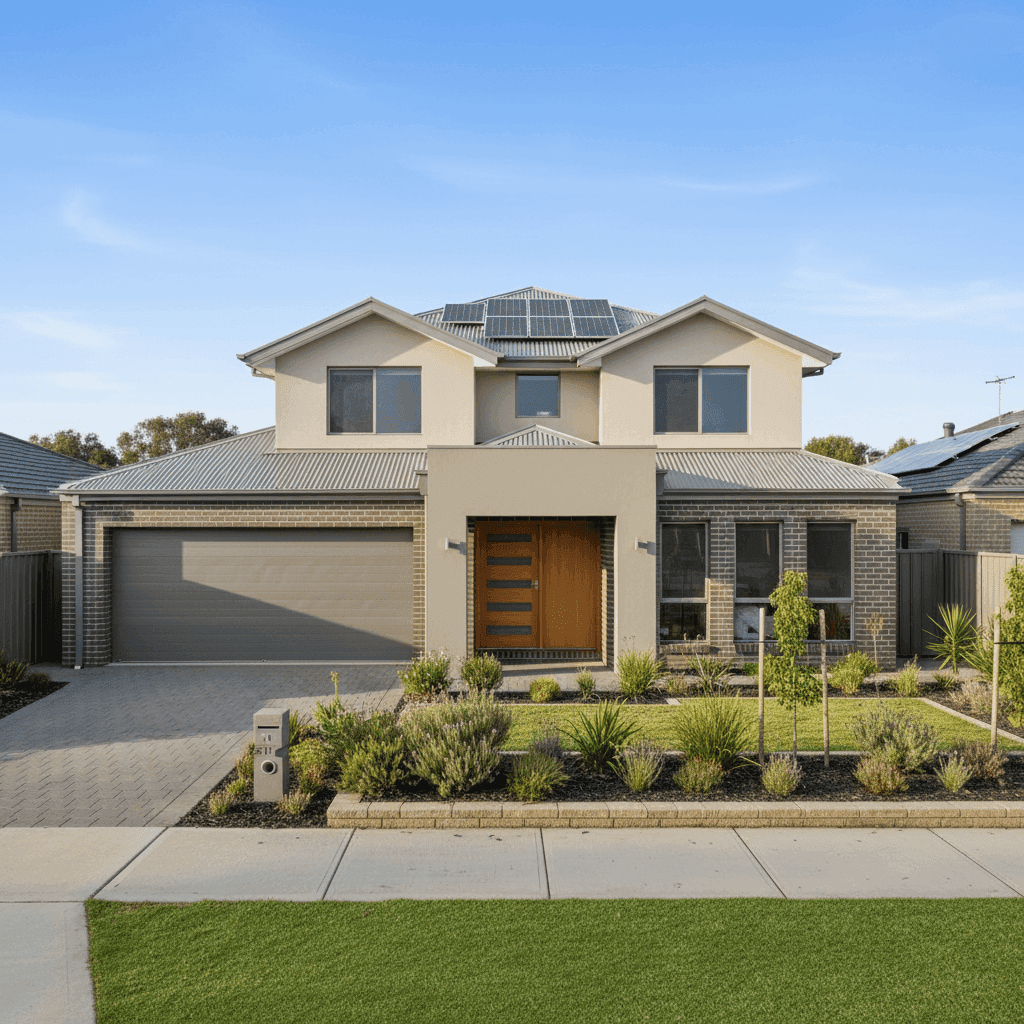
Tralee is a modern residential suburb on the southern fringe of Queanbeyan-Palerang, sitting just inside the NSW border near the ACT. It's a growth area characterised by newer builds, wide streets, and families putting down roots close to Canberra without the territory's price tag. If you own a free standing home here, understanding what you should be paying for home and contents insurance — and whether your current quote stacks up — is well worth your time.
This article breaks down a recent insurance quote for a 4-bedroom, 2-bathroom free standing home in Tralee, and benchmarks it against local, state, and national figures so you can judge for yourself whether it represents good value.
---
Is This Quote Fair?
The quote in question came in at $1,159 per year (or roughly $108 per month) for a combined home and contents policy, covering a building sum insured of $881,000 and contents valued at $50,000. The building excess is $4,000 and the contents excess is $1,000.
Our price rating for this quote is CHEAP — below average — and the numbers back that up convincingly. When you consider that the average home insurance premium across NSW sits at $3,801 per year, this quote is paying less than a third of the state norm. Even against the national average of $2,965 per year, the saving is substantial — around $1,800 annually.
For a property of this size and sum insured, landing a premium under $1,200 is genuinely impressive. It suggests the insurer has assessed the risk profile of this specific property favourably, which isn't surprising given several of its characteristics (more on those below).
---
How Tralee Compares
Zooming into the local picture, Tralee's suburb average premium is $1,989 per year, with a median of $1,981. That means this quote is coming in at roughly 42% below the suburb average — a meaningful difference that could translate to over $800 in annual savings compared to what neighbours might be paying.
Here's a quick snapshot of how the numbers line up:
| Benchmark | Annual Premium |
|---|---|
| This Quote | $1,159 |
| Tralee Suburb Average | $1,989 |
| Tralee Suburb Median | $1,981 |
| Snowy Monaro LGA Average | $3,224 |
| NSW State Average | $3,801 |
| National Average | $2,965 |
It's worth noting that the suburb sample size is relatively small (5 quotes), so the local averages should be treated as indicative rather than definitive. That said, even the most conservative comparison — against the suburb's own figures — shows this quote performing well below the going rate.
The Snowy Monaro LGA average of $3,224 is particularly telling. Many properties across this broader region attract higher premiums due to elevation, weather exposure, and bushfire risk. The fact that Tralee sits well below this figure likely reflects its position as a newer, lower-risk urban pocket within the LGA.
---
Property Features That Affect Your Premium
Several characteristics of this property work in its favour from an insurance pricing perspective:
Newer construction (2023) This is arguably the single biggest factor keeping the premium low. A home built in 2023 is constructed to modern Australian building codes, with up-to-date fire safety standards, electrical systems, and structural engineering. Insurers price newer homes more favourably because the likelihood of claims related to ageing infrastructure — faulty wiring, plumbing failures, structural deterioration — is significantly lower.
Brick veneer external walls Brick veneer is one of the most common and well-regarded wall materials in Australian residential construction. It offers solid fire resistance and durability, which insurers tend to reward with more competitive premiums compared to timber-framed or weatherboard exteriors.
Steel / Colorbond roof Colorbond steel roofing is highly regarded for its resilience against the elements — particularly wind, hail, and fire. It's low maintenance, long-lasting, and widely used in newer Australian builds. From an underwriting perspective, it's a preferred roofing material.
Slab foundation Concrete slab foundations are standard in modern construction and present minimal risk of subsidence or pest-related damage compared to older raised timber subfloor designs.
No pool Pools add liability exposure and maintenance risk to a property. The absence of one here removes a common premium driver.
Solar panels Interestingly, solar panels can slightly increase premiums in some cases due to the additional replacement cost they represent. However, in a newer home with a well-integrated system, the impact is typically modest. It's worth confirming with your insurer that your solar system is explicitly covered under your building sum insured.
Ducted climate control Ducted systems are a fixed building feature and should be factored into your building sum insured. At $881,000, the sum insured for this property appears to account for the above-average fittings quality and inclusions like the climate control system, which is important for avoiding underinsurance.
---
Tips for Homeowners in Tralee
1. Review your building sum insured annually Construction costs have risen sharply across Australia in recent years. A sum insured that was accurate at settlement may no longer reflect the full cost to rebuild your home. Use a building cost calculator or speak with a quantity surveyor to make sure your $881,000 cover keeps pace with current rebuild costs in the region.
2. Confirm your solar panels are covered Not all policies automatically extend full cover to rooftop solar systems. Check your Product Disclosure Statement (PDS) to confirm whether your panels are included under the building definition, and whether accidental damage to the system is covered.
3. Don't over-insure your contents A $50,000 contents value is on the modest side for a 4-bedroom home with above-average fittings, but it may be appropriate depending on what you own. Conduct a proper home inventory — room by room — to ensure your contents sum is neither too low (leaving you exposed) nor inflated unnecessarily.
4. Compare at renewal time This quote is priced well below average right now, but premiums can shift at renewal. Insurers sometimes increase premiums quietly year-on-year. Set a reminder to compare quotes before your policy renews — even a 15-minute comparison exercise could save you hundreds.
---
Find Your Best Rate with CoverClub
Whether you're a first-time buyer in Tralee or reassessing your existing cover, CoverClub makes it easy to compare home and contents insurance quotes side by side. With transparent pricing data and suburb-level benchmarks, you'll always know whether you're getting a fair deal. Get a quote today at CoverClub and see how your premium stacks up.