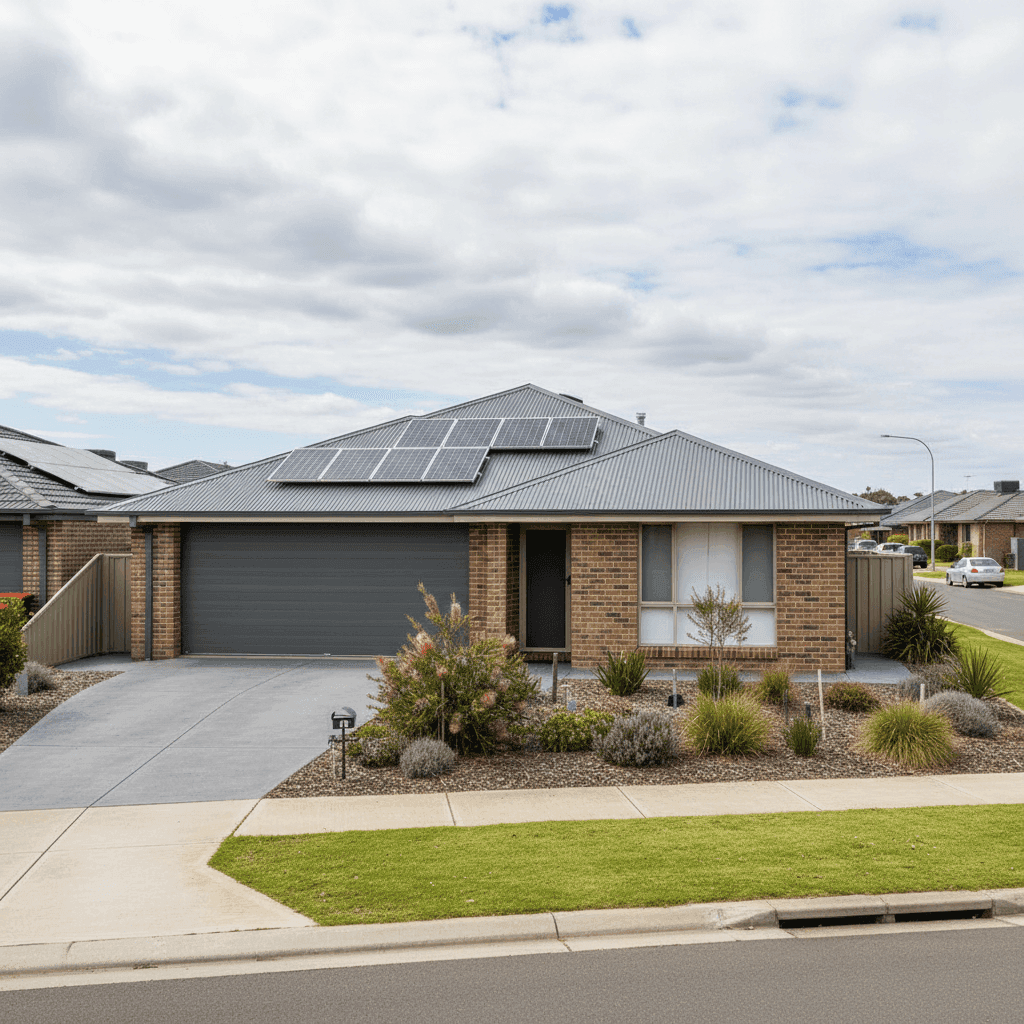
If you own a semi detached home in Traralgon South, VIC 3844, understanding what you should be paying for home and contents insurance is one of the smartest financial checks you can make. Traralgon South sits in the Latrobe Valley region of Gippsland — a beautiful part of Victoria, but one that comes with its own set of risk considerations that insurers factor into their pricing. This article breaks down a real quote for a four-bedroom, two-bathroom semi detached property in the area, and puts it into context against local, state, and national benchmarks.
---
Is This Quote Fair?
The quote in question comes in at $3,195 per year (or $306/month) for combined home and contents cover, with a building sum insured of $685,000 and contents valued at $125,000. Both the building and contents excess sit at $1,000 — a fairly standard arrangement.
Our price rating for this quote is CHEAP — Below Average, which is genuinely good news for the homeowner. To put that in perspective:
- The suburb average for Traralgon South is $6,246/year
- The suburb median sits even higher at $6,283/year
- This quote is roughly 49% below the suburb average
That's a substantial saving. Even accounting for the fact that our suburb sample size is nine quotes (a reasonably small dataset), the gap is significant enough to be meaningful. A quote this far below the local average suggests the insurer has assessed this particular property favourably — likely influenced by its construction type, location within the suburb, and the absence of certain high-risk features.
For broader context, you can explore Traralgon South insurance statistics on CoverClub to see how premiums in this postcode trend over time.
---
How Traralgon South Compares
It's worth zooming out to understand where Traralgon South sits relative to the rest of Victoria and the country.
| Benchmark | Average Premium | Median Premium |
|---|---|---|
| Traralgon South (suburb) | $6,246/yr | $6,283/yr |
| Wellington LGA | $4,409/yr | — |
| Victoria (state) | $3,000/yr | $2,718/yr |
| National | $5,347/yr | $2,764/yr |
A few things stand out here. The suburb average of $6,246 is notably higher than the Victorian state average of $3,000 — more than double, in fact. This tells us that Traralgon South carries elevated risk in the eyes of insurers compared to the broader Victorian average. The Wellington LGA average of $4,409 sits in between, suggesting that while the broader council area is pricier than the state norm, Traralgon South itself skews even higher within the LGA.
Nationally, the average premium of $5,347 is also well above the Victorian figure, which reflects the outsized influence of high-risk postcodes in Queensland, Western Australia, and Northern Australia on the national average — areas prone to cyclones, flooding, and other extreme weather events.
The quote we're analysing, at $3,195, sits comfortably below all of these benchmarks except the Victorian median ($2,718) — making it an excellent result by almost any measure. Browse Victoria-wide insurance data or national home insurance statistics to dig deeper into how your region compares.
---
Property Features That Affect Your Premium
Several characteristics of this property are worth examining through an insurance lens.
Brick Veneer Walls & Colorbond Roof Brick veneer is one of the most common wall types in Australian suburban homes, and insurers generally view it favourably. It offers solid fire resistance and structural durability. Paired with a steel Colorbond roof — a material known for its longevity, wind resistance, and low maintenance — this combination typically attracts competitive premiums. Colorbond roofing in particular holds up well in storm conditions, which is relevant given Gippsland's exposure to severe weather events.
Slab Foundation A concrete slab foundation is generally considered low-risk by underwriters. It eliminates the vulnerabilities associated with raised stumped or timber sub-floor constructions, such as subfloor moisture damage or pest ingress. For a 1995-built home, a slab is the expected construction method and signals a structurally sound base.
Solar Panels This property has solar panels installed, which is an increasingly common feature across Australian homes. It's important to confirm with your insurer that solar panels are explicitly covered under your building policy — some policies include them automatically, while others require them to be listed separately. Given the replacement cost of a modern solar system can easily reach $8,000–$15,000, it's not a detail to overlook.
Ducted Climate Control Ducted heating and cooling systems add value to a property and can also add complexity to an insurance claim if damaged. Ensure your sum insured accounts for the replacement cost of this system, as it forms part of the building's fixed infrastructure.
No Pool, No Cyclone Risk The absence of a swimming pool removes a source of liability and potential claim risk. And while Gippsland does experience storms, this property is not located in a designated cyclone risk area — a factor that keeps premiums lower than they might otherwise be in northern parts of Australia.
Building Size & Sum Insured At 214 sqm, this is a well-sized semi detached home. The building sum insured of $685,000 works out to roughly $3,200 per sqm — a reasonable figure for a brick veneer construction in regional Victoria, though homeowners should periodically review this against current construction costs, which have risen considerably in recent years.
---
Tips for Homeowners in Traralgon South
1. Review your sum insured annually Construction costs across Victoria have increased significantly since 2020. A sum insured set several years ago may no longer reflect the true cost of rebuilding your home from scratch. Use a building cost calculator or speak to a local builder to sense-check your coverage amount each year.
2. Confirm solar panel coverage in writing Don't assume your solar system is covered — ask your insurer directly and get confirmation in writing. Check whether the policy covers both the panels themselves and the inverter, and whether storm or hail damage is included.
3. Understand your bushfire and flood exposure Gippsland has experienced significant bushfire and flood events in recent years. Check whether your policy explicitly covers bushfire and flood, and review any exclusions carefully. Some insurers apply specific sub-limits or exclusions in elevated-risk areas.
4. Consider your excess strategically A $1,000 excess on both building and contents is standard, but increasing your excess can meaningfully reduce your annual premium. If you have a solid emergency fund and are unlikely to make small claims, a higher excess could save you money over the long term.
---
Ready to Compare?
Whether this quote represents your current policy or one you're considering, it's always worth seeing what else is available. Insurance pricing varies significantly between providers — even for identical properties — so a quick comparison could uncover meaningful savings or better coverage.
Get a home insurance quote at CoverClub and see how your premium stacks up in seconds.