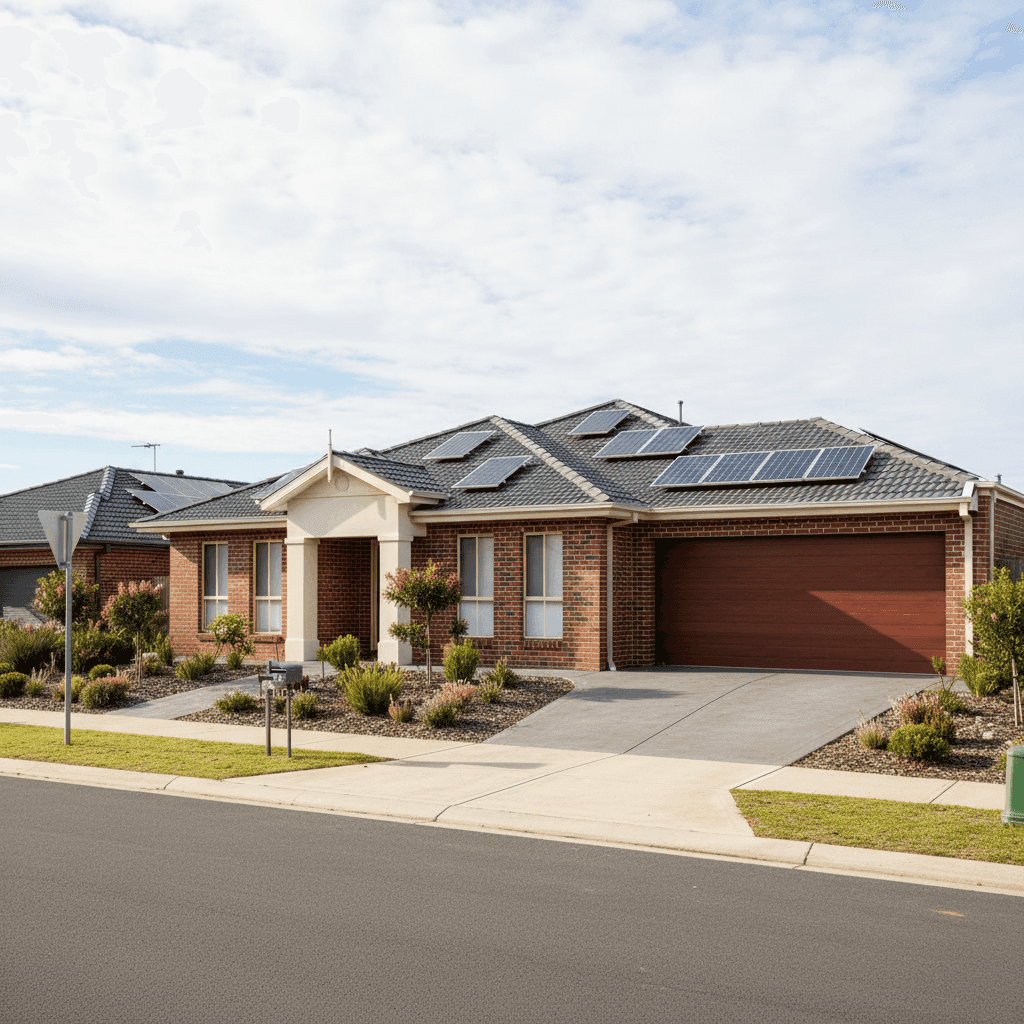
Traralgon, nestled in Victoria's Latrobe Valley, is a well-established regional hub with a mix of older and newer residential properties. If you own a free standing home in the area, understanding what you should expect to pay for home and contents insurance is an important step in protecting one of your most significant assets. This article breaks down a real insurance quote for a three-bedroom, two-bathroom brick veneer home in Traralgon (postcode 3844) and puts the numbers into context against local, state, and national benchmarks.
---
Is This Quote Fair?
The quote in question comes in at $2,135 per year (or around $205 per month) for combined home and contents cover, with a building sum insured of $445,000 and contents valued at $50,000. Both the building and contents excesses are set at $500 each — a fairly standard arrangement.
Our price rating for this quote is FAIR — Around Average, and the data backs that up. Based on 104 quotes collected for Traralgon (3844), the suburb average sits at $2,195 per year, meaning this quote comes in just $60 below the local average. It also falls comfortably within the interquartile range — between the 25th percentile of $1,661 and the 75th percentile of $2,383 — which confirms it's a reasonably competitive result, though not an exceptional bargain.
For homeowners who want to push toward the lower end of that range, there's clearly room to shop around. The cheapest quarter of quotes in this suburb come in under $1,661, suggesting that with the right insurer and policy structure, meaningful savings could be on the table.
---
How Traralgon Compares
One of the more striking takeaways from this data is just how favourably Traralgon stacks up against broader benchmarks.
| Benchmark | Average Premium | Median Premium |
|---|---|---|
| Traralgon (3844) | $2,195/yr | $2,006/yr |
| Victoria (VIC) | $3,000/yr | $2,718/yr |
| National | $5,347/yr | $2,764/yr |
| Wellington LGA | $4,409/yr | — |
Compared to the Victorian state average of $3,000 per year, Traralgon homeowners are paying roughly 27% less on average — a significant difference that reflects the suburb's relatively low-risk profile. The Wellington LGA average of $4,409 is considerably higher, which likely reflects the influence of more flood- or fire-prone rural and coastal properties within the broader local government area dragging that figure up.
At the national level, the average premium of $5,347 is more than double Traralgon's local average — largely driven by high-risk regions in Queensland, Western Australia, and the Northern Territory, where cyclone and flood exposure can send premiums soaring. By comparison, Traralgon is a relatively affordable place to insure a home.
That said, the national median of $2,764 is closer to Traralgon's figures and provides a more useful like-for-like comparison, as medians are less distorted by extreme outliers. Even on that measure, Traralgon's median of $2,006 comes out ahead.
---
Property Features That Affect Your Premium
Several characteristics of this particular property have a direct bearing on its insurance cost — for better and for worse.
Brick Veneer Construction & Tiled Roof Brick veneer walls and a tiled roof are among the most common and well-regarded construction types in Australian residential insurance. They're considered durable and relatively resistant to fire and storm damage compared to timber or metal cladding, which typically translates to more competitive premiums.
Slab Foundation A concrete slab foundation is generally viewed favourably by insurers. It reduces the risk of subsidence and pest-related structural damage compared to older pier-and-beam or strip footing foundations, which can be more vulnerable over time.
1985 Construction Year At around 40 years old, this home sits in a bracket where insurers begin to factor in the age of plumbing, electrical systems, and roofing materials. Homes of this era were built before some modern safety standards were introduced, so it's worth ensuring your policy covers gradual deterioration risks and that your sum insured reflects current rebuild costs — not just the original construction value.
Solar Panels The presence of solar panels adds a layer of complexity to home insurance. Panels need to be specifically covered under your building policy, and not all standard policies include them automatically. It's essential to confirm your insurer covers the panels as part of the building sum insured, including damage from storms, hail, or electrical faults.
Ducted Climate Control Ducted heating and cooling systems are a fixed installation and should be included in your building sum insured. These systems can be costly to repair or replace, so verifying they're adequately covered is worthwhile — particularly for a home of this age where the system may also be ageing.
Timber/Laminate Flooring Timber and laminate floors can be expensive to replace following water damage or fire. Ensuring your contents or building policy (depending on whether the flooring is fixed or floating) adequately accounts for this is a detail often overlooked at claim time.
---
Tips for Homeowners in Traralgon
1. Review your building sum insured regularly Construction costs have risen significantly in recent years. A 139 sqm brick veneer home built in 1985 may cost considerably more to rebuild today than the original sum insured reflects. Use a building cost calculator or speak with a quantity surveyor to ensure your $445,000 cover is still adequate — being underinsured at claim time can be a costly mistake.
2. Confirm solar panels are explicitly covered Ask your insurer directly whether your solar panel system is included in the building sum insured and what events are covered. Some policies exclude panels from storm or hail damage unless specifically noted. Given the investment solar represents, this is a non-negotiable check.
3. Shop around — the data shows there's room to move With the 25th percentile for Traralgon sitting at $1,661, there are clearly policies available well below the $2,135 quoted here. Comparing multiple insurers through a platform like CoverClub takes minutes and could save you hundreds of dollars annually without sacrificing cover quality.
4. Consider your excess strategically A $500 excess on both building and contents is fairly standard. If you're financially comfortable absorbing a higher out-of-pocket cost in the event of a claim, opting for a higher excess (say, $1,000 or $2,000) can meaningfully reduce your annual premium. Conversely, if cash flow is a concern, keeping the excess low provides peace of mind.
---
Compare Home Insurance Quotes in Traralgon
Whether you're renewing your existing policy or buying cover for the first time, it pays to compare. CoverClub makes it easy to see what multiple insurers would charge for your specific property — so you're not leaving money on the table. Get a personalised home insurance quote today and find out if you can do better than average.