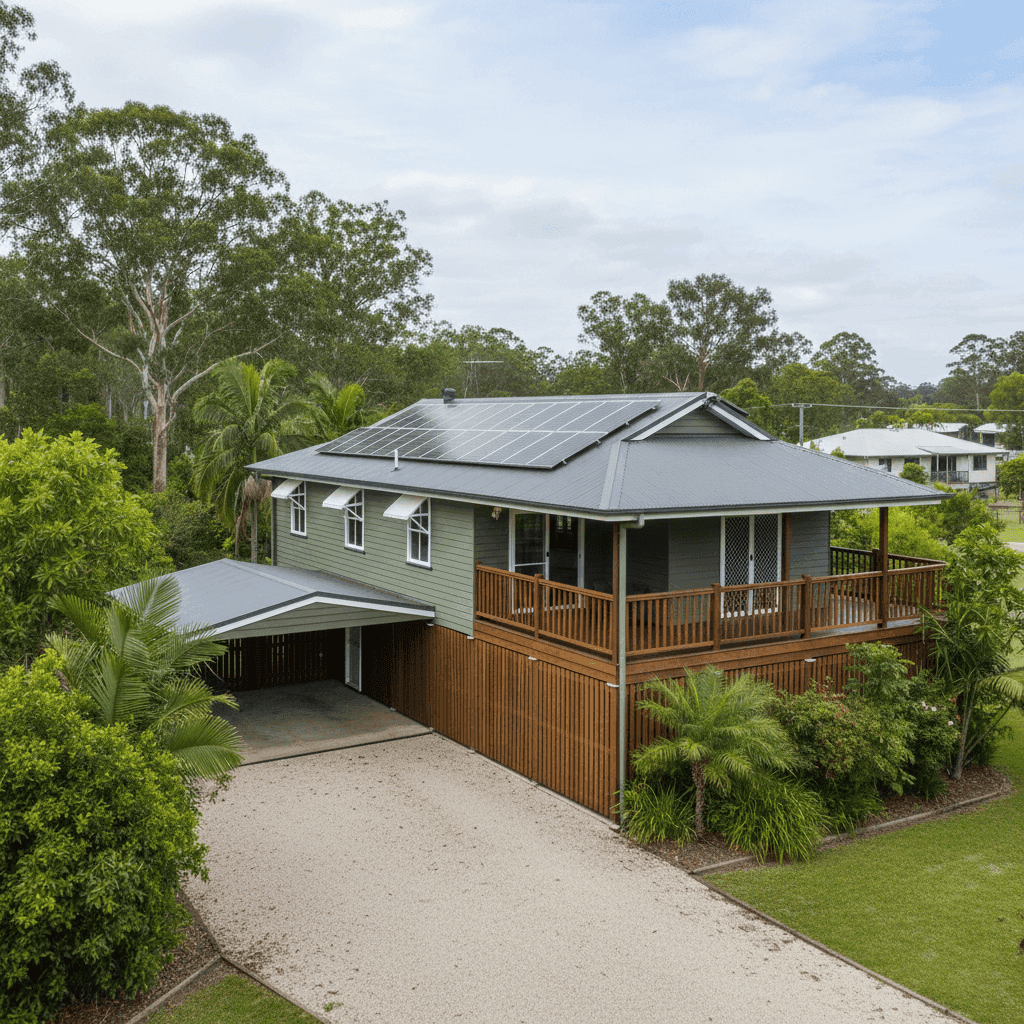
Traveston is a quiet rural locality in Queensland's Gympie Region, sitting within postcode 4570 and surrounded by the kind of lush, semi-rural landscape that makes it an appealing place to put down roots. But for homeowners with a free standing weatherboard property here, understanding what you should be paying for home and contents insurance — and why — can make a significant difference to your household budget.
This article breaks down a real insurance quote for a 4-bedroom, 2-bathroom free standing home in Traveston, compares it against local, state, and national benchmarks, and offers practical tips to help you get better value on your cover.
---
Is This Quote Fair?
The quote in question comes in at $6,765 per year (or $641/month) for combined home and contents insurance, covering a building sum insured of $812,000 and contents valued at $91,000. The building excess is $2,000 and the contents excess is $1,000.
Our price rating for this quote is EXPENSIVE — above average for the area.
To put that in perspective: the suburb average premium for Traveston sits at $4,589/year, and the median is $5,054/year. This quote lands well above both figures, and even clears the 75th percentile of $5,646/year — meaning it's pricier than at least three-quarters of comparable quotes in the area.
That said, context matters. The building sum insured of $812,000 is substantial, and a 214 sqm weatherboard home on stumps with solar panels and ducted climate control carries a higher replacement cost than a more modest dwelling. If your sum insured is accurately reflecting rebuild costs, a higher premium may simply be the price of being properly covered. The concern arises when a premium is elevated beyond what the risk and coverage level justify — and that's worth investigating through comparison.
---
How Traveston Compares
Here's how this quote stacks up across different benchmarks:
| Benchmark | Premium |
|---|---|
| This Quote | $6,765/yr |
| Traveston Suburb Average | $4,589/yr |
| Traveston Suburb Median | $5,054/yr |
| Traveston 75th Percentile | $5,646/yr |
| LGA (Fraser Coast) Average | $4,810/yr |
| QLD State Average | $9,129/yr |
| QLD State Median | $3,903/yr |
| National Average | $5,347/yr |
| National Median | $2,764/yr |
A few things stand out here. Queensland's state average of $9,129/year is dramatically higher than the national average, largely driven by cyclone-prone coastal and northern Queensland properties that attract very steep premiums. This skews the QLD average upward significantly, which is why the state median of $3,903 is a more reliable indicator of what most Queenslanders actually pay.
Against the national average of $5,347/year, this quote is about 26% higher. Against the suburb average, it's nearly 47% higher. You can explore more localised data on the Traveston suburb stats page, compare it against Queensland-wide insurance data, or see how it measures up against national home insurance benchmarks.
It's also worth noting that the suburb sample size here is 8 quotes — a relatively small dataset. As more quotes are recorded for Traveston, these averages will become more reliable, but the current figures still provide a useful directional guide.
---
Property Features That Affect Your Premium
Several characteristics of this property will be influencing the premium, some pushing it higher, others potentially keeping it in check.
Weatherboard timber walls are one of the most significant factors. Timber-clad homes are considered higher risk by insurers due to their susceptibility to fire, moisture damage, and general wear compared to brick or rendered masonry. Replacement and repair costs are also typically higher, which flows through to premiums.
Stump foundations are common in Queensland's older and semi-rural housing stock, and while they offer excellent ventilation and flood resilience in some scenarios, they can be a flag for insurers around structural movement, pest access (particularly termites), and the cost of subfloor repairs.
Timber and laminate flooring throughout the home adds to the contents and building replacement cost, particularly if the flooring is solid hardwood. This is a premium material that costs more to reinstate after a claim.
Solar panels are an increasingly common feature, but they do add to the insured value of the building. A quality solar system can add $8,000–$20,000 or more to a home's replacement cost, and insurers factor this in.
Ducted climate control is another high-value fixed asset. Ducted systems are expensive to install and repair, and their inclusion in the building sum insured is appropriate — but it does contribute to a higher premium.
On the positive side, this property is not in a cyclone risk area, which is a meaningful saving for a Queensland property. Cyclone cover can add hundreds — sometimes thousands — of dollars to annual premiums in affected zones, so Traveston's inland location works in the homeowner's favour here.
The 1999 construction year places the home in a relatively modern era of building standards, which is generally viewed more favourably than pre-1980s construction. However, a 25-year-old home will have ageing systems (roofing, plumbing, electrical) that insurers may factor into their risk assessment.
---
Tips for Homeowners in Traveston
1. Review your sum insured carefully A building sum insured of $812,000 is significant. Make sure this reflects the actual cost to rebuild — not the market value of the property. Over-insuring inflates your premium unnecessarily, while under-insuring can leave you badly exposed at claim time. Use a professional building estimator or your insurer's calculator to validate the figure.
2. Increase your excess to reduce your premium With a $2,000 building excess and $1,000 contents excess, there may be room to adjust. Opting for a higher voluntary excess — say, $2,500 or $3,000 on the building — can meaningfully reduce your annual premium, particularly if you have the financial buffer to cover a larger out-of-pocket cost in the event of a claim.
3. Maintain your timber home proactively Weatherboard homes benefit enormously from regular maintenance — repainting, re-sealing, and treating for termites. Some insurers will factor maintenance history into their assessment, and a well-maintained home may attract better terms at renewal. It also reduces the likelihood of a claim arising from gradual deterioration.
4. Compare quotes before renewing This is arguably the most impactful step. The home insurance market is competitive, and loyalty doesn't always pay. With this quote sitting above the suburb's 75th percentile, there's a reasonable chance that comparing alternatives could yield a materially lower premium for equivalent or better cover. Get a comparison quote at CoverClub to see what else is available for your property.
---
Find a Better Deal with CoverClub
If you're a homeowner in Traveston or the broader Gympie Region, you deserve to know whether you're paying a fair price for your insurance. CoverClub makes it easy to compare home and contents quotes side by side, so you can make an informed decision rather than simply rolling over your existing policy at renewal. Start your free quote comparison today and see how much you could save.