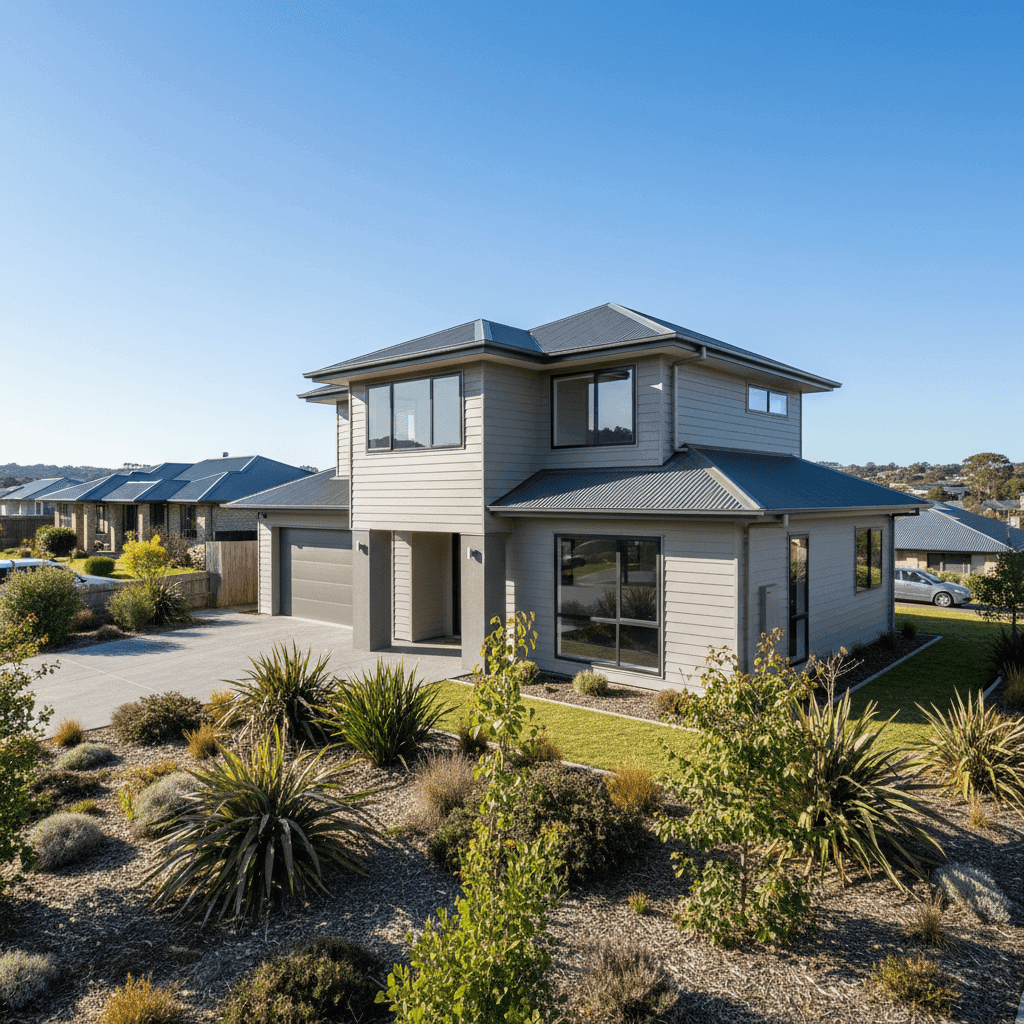
If you own a free standing home in Trevallyn, TAS 7250, you've probably wondered whether your home insurance premium is competitive — or whether you're quietly overpaying. Trevallyn is a well-established residential suburb on the western fringe of Launceston, known for its leafy streets, elevated blocks, and proximity to the Cataract Gorge Reserve. It's a desirable place to live, but like any suburb, insurance costs here are shaped by a unique mix of local risk factors, property characteristics, and market dynamics.
In this article, we break down a real home and contents insurance quote for a four-bedroom, two-bathroom free standing home in Trevallyn — and put it into context against suburb, state, and national benchmarks.
---
Is This Quote Fair?
The quote in question comes in at $1,855 per year (or $178/month) for combined home and contents cover, with a building sum insured of $700,000 and contents valued at $100,000. Both the building and contents excess are set at $2,000.
Our price rating for this quote is FAIR — Around Average, and the data backs that up. The suburb average premium for Trevallyn sits at $1,871/year, meaning this quote is tracking just $16 below what most comparable properties in the area are paying. It's comfortably within the typical range, falling between the 25th percentile ($1,443/yr) and the 75th percentile ($2,118/yr).
In short: this isn't a bargain, but it's not an overpriced outlier either. It reflects what a reasonably well-constructed, mid-sized home in this part of Launceston should expect to pay in the current market.
---
How Trevallyn Compares
One of the most telling ways to evaluate a quote is to zoom out and compare it against broader benchmarks. Here's how Trevallyn stacks up:
| Benchmark | Average Premium | Median Premium |
|---|---|---|
| Trevallyn (7250) | $1,871/yr | $1,787/yr |
| Tasmania (TAS) | $2,814/yr | $2,326/yr |
| National | $5,347/yr | $2,764/yr |
The picture is quite favourable for Trevallyn homeowners. This suburb's average premium is roughly 33% below the Tasmanian state average and dramatically lower than the national average — though it's worth noting that national figures are heavily influenced by high-risk zones in Queensland, Northern Territory, and Western Australia, where cyclone and flood exposure drives premiums sky-high.
Even compared to the broader Meander Valley LGA average of $2,039/year, Trevallyn comes out ahead, suggesting that properties within the 7250 postcode benefit from relatively contained local risk profiles.
You can explore the full picture on our Trevallyn suburb stats page, compare it against all of Tasmania, or view national home insurance data.
> Note: Our Trevallyn suburb sample includes 26 quotes, which provides a solid directional benchmark — though as more data is collected over time, these figures will continue to sharpen.
---
Property Features That Affect Your Premium
Every home is different, and insurers price risk based on a detailed picture of your property's construction, age, and features. Here's how the key characteristics of this particular home influence its premium:
Hardiplank / Hardiflex Cladding
Fibre cement cladding like Hardiplank and Hardiflex is generally viewed favourably by insurers. It's non-combustible, resistant to rot and termites, and holds up well in variable weather conditions — all of which contribute to a lower risk profile compared to timber weatherboard homes.
Steel / Colorbond Roof
A Colorbond steel roof is one of the most insurer-friendly roofing materials in Australia. It's durable, low-maintenance, and highly resistant to fire and strong winds. Homes with Colorbond roofing often attract more competitive premiums than those with terracotta tiles or ageing corrugated iron.
Slab Foundation
A concrete slab foundation is a stable, low-risk choice from an underwriting perspective. It reduces the likelihood of subsidence-related claims and is particularly well-suited to the relatively stable soil conditions found across much of northern Tasmania.
Construction Year: 1998
At around 27 years old, this home sits in a sweet spot — new enough to have been built to modern construction standards, but old enough that any early defects would have long since surfaced. Homes from this era typically don't attract age-related loading from insurers.
Ducted Climate Control
The presence of ducted climate control is worth noting. While it adds to the replacement value of the home (and is reflected in the $700,000 sum insured), it also represents a mechanical system that can be a source of claims if it fails or causes water damage. Ensuring this system is properly maintained is good practice.
No Pool, No Solar Panels
The absence of a swimming pool and solar panels simplifies the risk profile. Pools can add liability exposure, and solar panel systems — particularly older or poorly installed ones — can be a source of fire risk and claims complexity.
---
Tips for Homeowners in Trevallyn
Whether you're reviewing an existing policy or shopping for the first time, here are four practical steps worth taking:
1. Review your sum insured annually. Building costs in Tasmania have risen meaningfully over the past few years. A $700,000 sum insured may have been accurate at policy inception, but it's worth checking whether it still reflects the true cost to rebuild your home — not its market value. Underinsurance is one of the most common and costly mistakes homeowners make.
2. Consider your excess strategically. Both the building and contents excess on this quote are set at $2,000. A higher excess typically lowers your annual premium — but only makes sense if you can comfortably cover that amount out of pocket in the event of a claim. If cash flow is a concern, a lower excess may be worth the slightly higher premium.
3. Don't overlook contents valuation. A $100,000 contents sum insured is reasonable for a four-bedroom home, but it's easy to underestimate what you actually own. Walk through each room and consider electronics, furniture, clothing, appliances, and valuables. Many homeowners discover they're underinsured on contents when it's too late.
4. Compare quotes at renewal time. Even a "fair" premium can be beaten. Insurers regularly adjust their pricing models, and loyalty doesn't always pay — in fact, new customers often receive better rates than long-standing policyholders. Taking 10 minutes to compare quotes at renewal could save you hundreds of dollars a year.
---
Compare Your Home Insurance Today
Whether this quote reflects your own situation or you're simply curious what the market looks like for homes like yours, CoverClub makes it easy to see how your premium stacks up. Get a quote today at CoverClub and find out if you're getting the value you deserve — or if there's a better deal waiting for you.