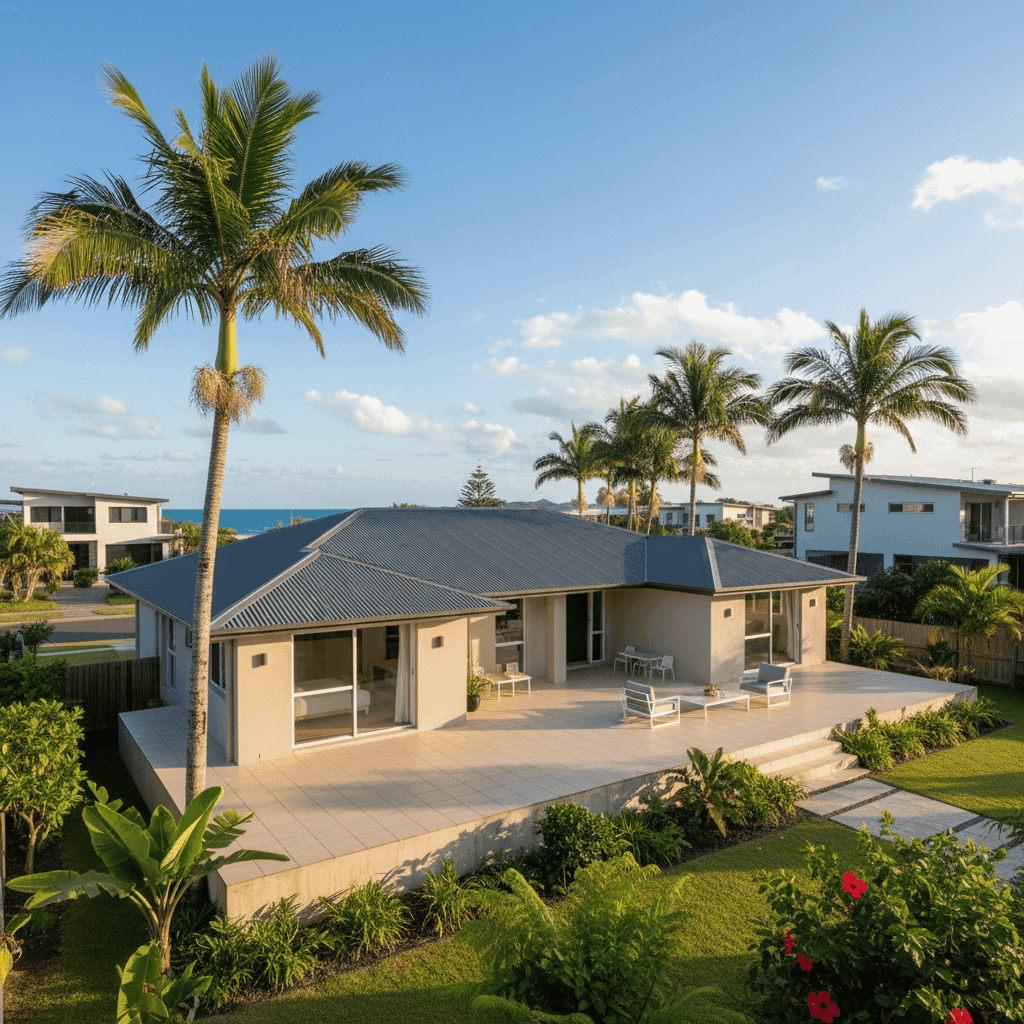
Trinity Beach is one of the Cairns region's most sought-after coastal communities — a relaxed beachside suburb sitting roughly 25 kilometres north of the Cairns CBD. It's a popular spot for families and sea-changers alike, offering that classic Far North Queensland lifestyle. But living close to the Coral Sea comes with its own set of insurance considerations, particularly when it comes to protecting a free standing home in a declared cyclone risk zone.
This article breaks down a real building insurance quote for a three-bedroom, two-bathroom free standing home in Trinity Beach (postcode 4879), examining whether the premium represents good value and what local homeowners should know before renewing or switching their cover.
---
Is This Quote Fair?
The quote in question comes in at $2,166 per year (or $217 per month) for building-only cover on a home with a sum insured of $597,000 and a building excess of $3,000.
Our price rating for this quote is CHEAP — Below Average, which is genuinely good news for the homeowner. To put that in perspective:
- The suburb average for Trinity Beach is $5,786/yr
- The suburb median sits at $5,204/yr
- Even the 25th percentile — meaning only 25% of quotes in the area are cheaper — is $3,641/yr
This quote lands well below even the cheapest quarter of premiums in the suburb, suggesting the insurer has priced this particular property favourably. Whether that's due to the construction materials, the age of the home, the specific insurer's risk appetite, or a combination of factors, the result is a premium that sits significantly under what most Trinity Beach homeowners are paying.
Compared to Queensland state averages ($4,547/yr average, $3,931/yr median) and national benchmarks ($2,965/yr average, $2,716/yr median), this quote is competitive even on a broader scale — sitting below the national average despite being located in a high-risk cyclone zone.
---
How Trinity Beach Compares
Insurance premiums in Trinity Beach are substantially higher than both state and national norms, which reflects the elevated natural hazard risk in the region. Here's how the numbers stack up:
| Benchmark | Average Premium | Median Premium |
|---|---|---|
| Trinity Beach (suburb) | $5,786/yr | $5,204/yr |
| Cairns LGA | $6,667/yr | — |
| Queensland (state) | $4,547/yr | $3,931/yr |
| National | $2,965/yr | $2,716/yr |
The Trinity Beach suburb data — drawn from a sample of 48 quotes — shows that premiums here run roughly 27% above the Queensland state average and nearly double the national median. The Cairns LGA average of $6,667/yr is even higher, reflecting the broader cyclone exposure across the region.
This context makes the $2,166/yr quote all the more notable. It's less than half the suburb average and represents a saving of over $3,600 per year compared to what a typical Trinity Beach homeowner might be paying for equivalent cover.
---
Property Features That Affect Your Premium
Several characteristics of this property likely contribute to its competitive premium. Understanding these factors can help homeowners make smarter decisions about their cover.
Construction Materials
The home features concrete external walls and a steel/Colorbond roof — both of which are highly regarded by insurers in cyclone-prone areas. Concrete construction offers superior wind resistance compared to timber or lightweight cladding, and Colorbond roofing is engineered to withstand high wind events. These materials align well with the building standards expected in a cyclone risk zone, which can translate directly into lower premiums.
Age of the Home
Built in 2018, this is a relatively modern property. Newer homes are generally constructed to more recent building codes, which in Queensland means compliance with updated cyclone-resilience standards introduced following reviews of past storm damage. Insurers typically view newer builds more favourably from a risk perspective.
Foundation and Flooring
The home sits on a concrete slab foundation with tile flooring throughout. Slab foundations are considered low-risk for flood and moisture ingress compared to raised or suspended timber floors, and tiles are durable and resistant to water damage — a practical choice in a tropical climate.
Building Size and Sum Insured
At 130 sqm with a sum insured of $597,000, the coverage rate works out to roughly $4,592 per square metre — a reasonable figure for a modern concrete construction in regional Queensland.
Cyclone Risk Area
Trinity Beach falls within a declared cyclone risk area, which ordinarily pushes premiums significantly higher. The fact that this quote remains competitive despite that designation is a strong indicator that the property's construction quality is working in the homeowner's favour.
No Additional Risk Features
The absence of a pool, solar panels, and ducted climate control keeps the risk profile straightforward. Each of these additions can introduce additional liability or replacement cost considerations that some insurers factor into their pricing.
---
Tips for Homeowners in Trinity Beach
Whether you're reviewing your current policy or shopping for new cover, here are four practical steps worth taking:
- Don't assume your renewal is competitive. Given that the suburb average is nearly $5,800/yr, there's clearly a wide spread in what insurers are charging for similar properties. Shopping around — even if you're happy with your current insurer — could reveal meaningful savings. Get a comparison quote at CoverClub to see what's available for your specific property.
- Review your sum insured annually. Construction costs in Far North Queensland have risen considerably in recent years. Make sure your building sum insured reflects current rebuild costs, not what you paid for the home or what it was worth when you first took out the policy. Underinsurance is a serious risk, particularly after a major weather event when demand for builders surges.
- Understand your cyclone excess. Many policies in cyclone-declared areas apply a separate, higher excess for cyclone-related claims. This is distinct from the standard building excess. Always read the Product Disclosure Statement (PDS) carefully so you're not caught off guard at claim time.
- Consider the value of building-only vs combined cover. This quote covers the building only. If you have significant contents — furniture, appliances, personal belongings — it's worth pricing a combined building and contents policy. In some cases, bundling cover with the same insurer can be more cost-effective than holding separate policies.
---
Compare Your Home Insurance Today
If you own a home in Trinity Beach or anywhere in the Cairns region, it pays to know where your premium sits relative to the market. CoverClub makes it easy to compare building and contents insurance quotes from multiple insurers in one place — so you can see whether you're getting a fair deal or paying more than you need to.
Start your free quote comparison at CoverClub and find out what your home should really be costing to insure.