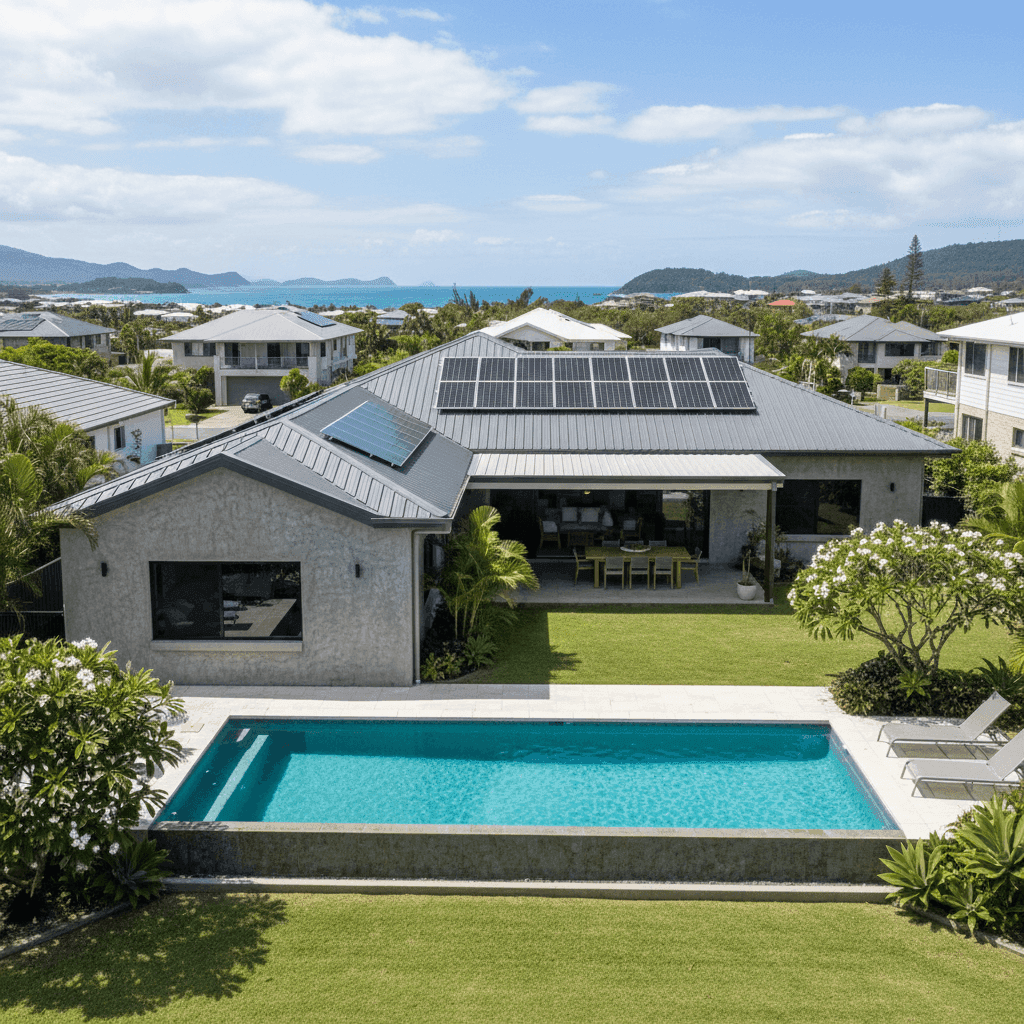
If you own a free standing home in Trinity Beach, QLD 4879, you already know that living on the doorstep of the Coral Sea comes with certain trade-offs — and home insurance costs are one of them. This article breaks down a real building insurance quote for a three-bedroom, two-bathroom home in the suburb, examines how it stacks up against local and national benchmarks, and offers practical advice for keeping your premiums in check.
---
Is This Quote Fair?
The quote in question sits at $6,652 per year (or $637 per month) for building-only cover on a free standing home with a sum insured of $800,000 and a building excess of $2,000.
Our price rating for this quote is EXPENSIVE — Above Average.
To put that in context, the suburb average for Trinity Beach currently sits at $5,148 per year, and the median is $4,612 per year. This quote lands well above both figures, and also clears the 75th percentile mark of $5,520 — meaning it is pricier than at least three-quarters of comparable quotes we've seen in the area.
That said, "expensive" doesn't necessarily mean "wrong." Several features of this particular property — which we'll unpack below — legitimately push the premium higher than what a more modest or lower-risk home in the same suburb might attract. The key question for any homeowner is whether the cover is appropriately calibrated for the risk, not simply whether it's cheap.
---
How Trinity Beach Compares
Understanding your premium means looking beyond your own street. Here's how Trinity Beach sits within the broader insurance landscape:
| Benchmark | Annual Premium |
|---|---|
| This quote | $6,652 |
| Trinity Beach suburb average | $5,148 |
| Trinity Beach suburb median | $4,612 |
| QLD state average | $9,129 |
| QLD state median | $3,903 |
| Cairns LGA average | $12,404 |
| National average | $5,347 |
| National median | $2,764 |
A few things stand out here. While this quote is above the Trinity Beach suburb average, it is significantly below the Cairns LGA average of $12,404 and well under the QLD state average of $9,129. The Queensland state average is heavily skewed by extreme-risk coastal and far-north properties — which is exactly the category Trinity Beach falls into — so the state median of $3,903 is arguably a more useful reference for typical Queensland homes overall.
Compared to the national average of $5,347, this quote is higher, but that's to be expected for a cyclone-prone coastal suburb in Far North Queensland. Homes in low-risk metropolitan areas like inner Melbourne or suburban Perth drag the national figure down considerably.
You can explore more local data on the Trinity Beach suburb stats page, compare it to QLD-wide insurance trends, or see where it sits against national home insurance benchmarks.
---
Property Features That Affect Your Premium
Several characteristics of this property have a meaningful impact on what insurers charge. Here's what's at play:
Cyclone Risk Zone
Trinity Beach sits within a designated cyclone risk area — and this is the single biggest driver of elevated premiums in the region. Insurers price cyclone cover carefully given the potential for catastrophic structural damage, and properties in Far North Queensland carry some of the highest base rates in the country as a result.
Construction: Concrete Walls & Colorbond Roof
The good news is that this home has a relatively resilient construction profile. Concrete external walls are regarded favourably by insurers — they're more resistant to wind, impact, and fire than timber weatherboard. A steel/Colorbond roof is also considered a solid choice in cyclone-prone areas, provided it's been installed and maintained to the relevant Australian Standards for wind uplift resistance.
Slab Foundation & Tiled Flooring
A concrete slab foundation is a standard and well-regarded base in Queensland's climate — it's less susceptible to termite damage and moisture issues than some alternatives. Tiled flooring is similarly practical and tends to attract neutral treatment from insurers.
Pool, Solar Panels & Ducted Climate Control
Each of these additions increases the insured value of the property and therefore the premium. A swimming pool introduces liability considerations and adds to the rebuild cost. Solar panels are now a common feature in Queensland, but they add replacement value and can complicate roof claims. Ducted climate control is a significant fixed asset that contributes to the overall sum insured.
Age of the Home
Built in 1985, this home is approaching 40 years old. Older homes can attract slightly higher premiums due to the cost of sourcing period-appropriate materials and the potential for aged wiring, plumbing, or roofing to require attention. Some insurers also apply loading for homes that predate modern building codes.
Sum Insured: $800,000
At $800,000, the building sum insured is substantial — and appropriate for a 139 sqm home in this location when factoring in demolition, removal of debris, and full rebuild costs in a regional area where labour and materials can be more expensive than in capital cities.
---
Tips for Homeowners in Trinity Beach
1. Review Your Sum Insured Annually
Building costs in regional Queensland have risen sharply in recent years. If your sum insured hasn't kept pace with actual rebuild costs, you could be underinsured — which is a risk that can leave you significantly out of pocket after a major claim. Use a quantity surveyor or your insurer's building cost calculator to sense-check your figure each year.
2. Check Your Cyclone Mitigation Measures
Some insurers offer discounts for homes with cyclone-rated shutters, reinforced garage doors, or roofing that meets higher wind-resistance standards. If you've invested in any of these upgrades, make sure your insurer knows about them — it could reduce your premium.
3. Compare Quotes — Seriously
With a premium above the suburb's 75th percentile, this is a clear case where shopping around is worthwhile. Insurers use different risk models, and the spread of quotes for cyclone-prone areas can be surprisingly wide. Even saving 10–15% on a $6,652 premium represents real money.
4. Consider a Higher Excess
The current building excess is $2,000. Opting for a higher voluntary excess — say $3,000 or $5,000 — can meaningfully reduce your annual premium. Just make sure you're comfortable covering that amount out of pocket in the event of a claim.
---
Ready to Compare?
Whether you're looking to benchmark your current policy or find a better deal, CoverClub makes it easy to compare home insurance quotes across Australia's leading insurers. Get a quote today and see what's available for your Trinity Beach home — you might be surprised at the difference a comparison can make.