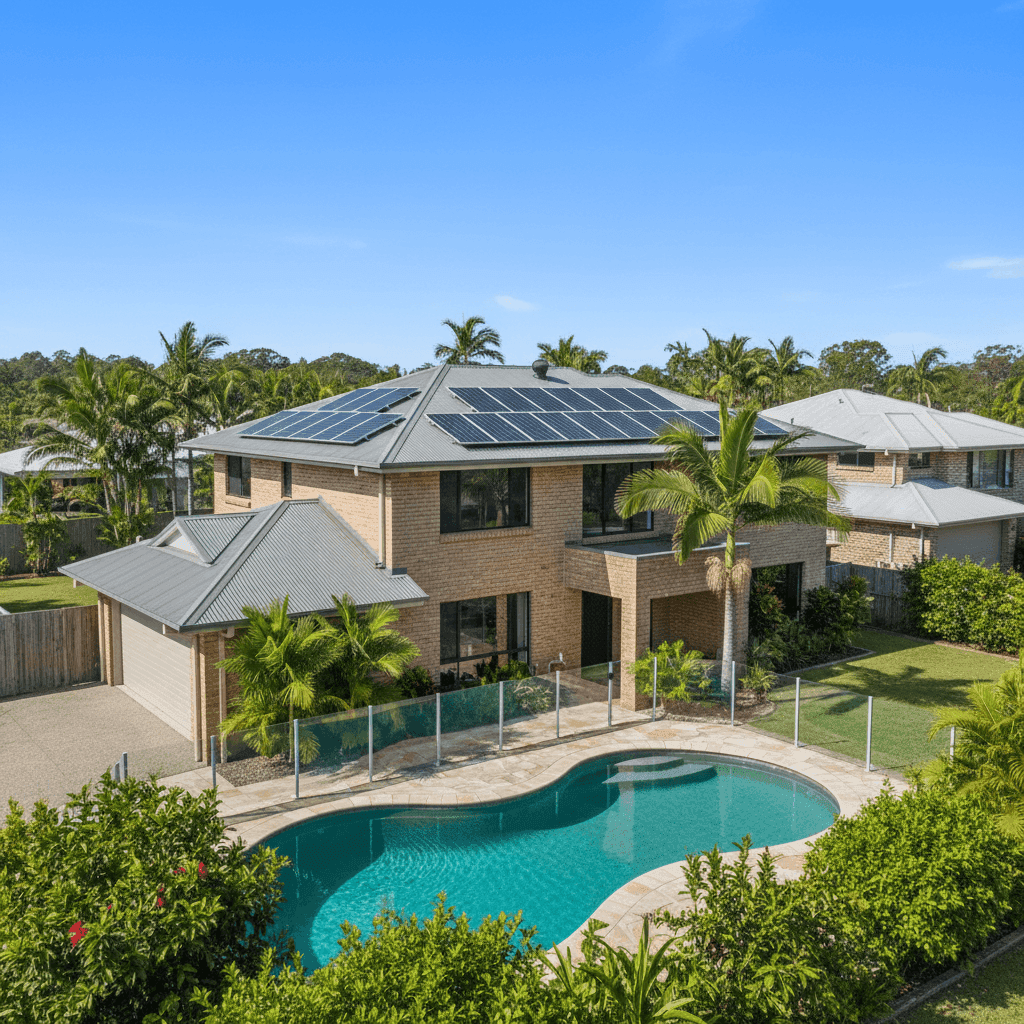
Trinity Park, nestled in the Cairns region of Far North Queensland, is a sought-after suburb known for its tropical lifestyle, proximity to the Coral Sea, and relaxed coastal atmosphere. It's also a suburb where home insurance premiums can carry a significant price tag — and for good reason. This article breaks down a real building-only insurance quote for a five-bedroom free-standing home in Trinity Park (postcode 4879), rated FAIR (Around Average), and puts the numbers into context so you can make a more informed decision about your own cover.
---
Is This Quote Fair?
The quoted annual premium for this property is $5,648 per year (or $541 per month), covering the building only with a $1,000 excess and a sum insured of $782,000. CoverClub's pricing engine has rated this quote as FAIR — Around Average, which is a meaningful result for a property in this part of Queensland.
To put that in perspective:
- The suburb average for Trinity Park is $8,275/yr, and the median sits at $6,741/yr
- This quote comes in below both, landing closer to the 25th percentile of $5,471/yr
- That means roughly 75% of comparable quotes in the area are more expensive
So while $5,648 might feel steep in absolute terms, it's actually a competitive result relative to what most Trinity Park homeowners are paying. The "Fair" rating reflects that it's not the cheapest quote on the market, but it's meaningfully below the suburb average — a solid position to be in.
---
How Trinity Park Compares
Understanding where Trinity Park sits within the broader insurance landscape helps explain why premiums here are elevated compared to many other parts of Australia.
| Benchmark | Average Premium | Median Premium |
|---|---|---|
| Trinity Park (suburb) | $8,275/yr | $6,741/yr |
| Queensland (state) | $9,129/yr | $3,903/yr |
| Australia (national) | $5,347/yr | $2,764/yr |
| Cairns LGA | $12,404/yr | — |
A few things stand out here. First, the Cairns LGA average of $12,404/yr is extraordinarily high — one of the most expensive local government areas in the country for home insurance. Trinity Park's suburb average of $8,275/yr is actually well below the broader LGA benchmark, suggesting it's a relatively more affordable pocket within the Cairns region.
Second, the wide gap between Queensland's average ($9,129) and median ($3,903) tells an important story: a relatively small number of very high-risk properties (many in cyclone-prone coastal areas like Cairns) are pulling the state average up dramatically. The median is a more representative figure for most Queenslanders, but for Far North Queensland homeowners, the higher end of that range is the norm.
Compared to the national median of $2,764/yr, Trinity Park premiums are substantially higher. This isn't surprising — Far North Queensland carries some of the most significant natural hazard risk in Australia, and insurers price accordingly.
You can explore more data on the Trinity Park suburb insurance stats page, the Queensland state overview, or the national insurance benchmarks.
---
Property Features That Affect Your Premium
Every property is different, and the specific characteristics of this home play a meaningful role in how insurers calculate risk and rebuild cost.
Cyclone Risk Area
This is the single biggest premium driver for this property. Trinity Park falls within a designated cyclone risk zone, which significantly increases the likelihood of a major claim. Insurers apply substantial loadings to properties in these areas, and it's the primary reason Far North Queensland premiums are so much higher than the national average.
Double Brick Construction
The double brick external walls are a positive factor. Brick is generally considered a more resilient building material than timber or lightweight cladding, particularly in high-wind events. This construction type can help moderate the premium compared to less robust alternatives.
Steel/Colorbond Roof
A Colorbond steel roof is a common and practical choice in tropical Queensland. It's durable, relatively resistant to wind uplift when properly installed, and performs well in heavy rainfall. Insurers generally view it favourably compared to older roofing materials.
Slab Foundation & Tile Flooring
A concrete slab foundation with tile flooring is well-suited to the Queensland climate and is considered low-risk from an insurer's perspective. Tiles are resistant to moisture damage and easy to replace, which keeps claim costs manageable.
Swimming Pool
The presence of a pool adds a modest premium loading, primarily due to liability considerations and the cost of repair or replacement in the event of storm or structural damage.
Solar Panels
Solar panels are increasingly common in Queensland, but they do add to the rebuild cost and can be damaged in cyclone events. Ensuring your sum insured accounts for the replacement value of your solar system is important — underinsurance is a real risk if panels aren't factored in.
Sum Insured: $782,000
For a 214 sqm double brick home with a pool and solar panels in a regional Queensland market, $782,000 as a sum insured is within a plausible range. However, it's worth periodically reviewing this figure — construction costs have risen significantly in recent years, and being underinsured in a total loss scenario can be financially devastating.
---
Tips for Homeowners in Trinity Park
1. Compare Quotes Annually
Insurance markets shift, and the quote that was competitive last year may not be the best available today. Given that the suburb average is $8,275/yr and this quote sits well below that, it's clear that significant variation exists between providers. Always shop around at renewal time.
2. Review Your Sum Insured Regularly
With rising construction costs across Queensland — particularly in regional areas where labour and materials attract a premium — it's easy to find yourself underinsured. Use a building cost calculator or speak with a quantity surveyor to validate your sum insured every couple of years.
3. Understand Your Cyclone Excess
Many policies in cyclone-declared areas include a separate cyclone excess that can be significantly higher than the standard excess. Read your Product Disclosure Statement (PDS) carefully to understand what you'd actually pay out of pocket in the event of a cyclone-related claim.
4. Don't Forget Your Solar and Pool in the Sum Insured
As noted above, solar panels and swimming pools add real value to your property. Make sure these are explicitly covered and that your sum insured reflects their full replacement cost — not just the base structure.
---
Ready to Compare?
Whether you're reviewing your current policy or insuring a property for the first time, CoverClub makes it easy to see how your quote stacks up. Get a home insurance quote today and benchmark it against real data from properties just like yours across Trinity Park and the broader Cairns region. A few minutes of comparison could save you thousands — and give you confidence that your home is properly protected.