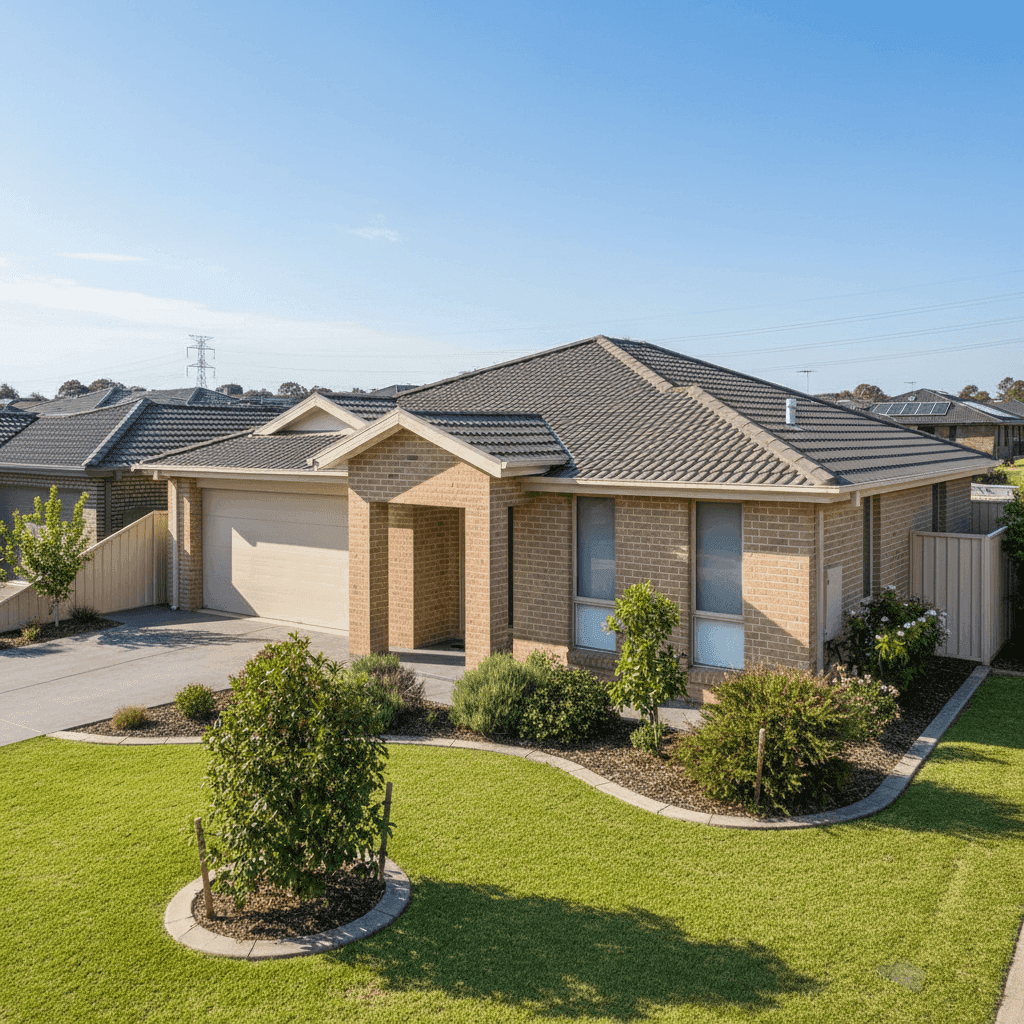
Truganina is one of Melbourne's fastest-growing suburbs, sitting in the City of Melton on the western fringe of the metropolitan area. With new estates continuing to spring up across the postcode, 4-bedroom free standing homes like this one are very much the norm — and understanding what you should be paying for home and contents insurance here is genuinely useful information for anyone in the area.
This article breaks down a real insurance quote for a brand-new, 4-bedroom, 3-bathroom free standing home in Truganina (VIC 3029), compares it against local, state, and national benchmarks, and offers practical advice for homeowners looking to get the most out of their cover.
---
Is This Quote Fair?
The quote in question comes in at $1,091 per year (or around $105/month) for combined home and contents insurance, covering a building sum insured of $1,000,000 and contents valued at $10,000. The building excess is $2,000 and the contents excess is $1,000.
Our price rating for this quote is FAIR — Around Average, and the data backs that up clearly.
Within Truganina itself, the suburb's 25th percentile sits at $1,088/yr — meaning this quote is right at the boundary between the cheaper quarter of the market and the middle of the pack. It comfortably beats the suburb average of $1,494/yr and the suburb median of $1,348/yr, which is a solid outcome. You're not getting the absolute cheapest deal available in the area, but you're well below what many Truganina homeowners are paying.
Put simply: for a brand-new, well-specified home in this postcode, this is a reasonable premium — and there's meaningful room to do worse if you simply go with the first insurer you find.
---
How Truganina Compares
One of the most striking things about this quote is just how favourably Truganina stacks up against broader benchmarks. Take a look:
| Benchmark | Average Premium |
|---|---|
| Truganina (3029) suburb average | $1,494/yr |
| Truganina (3029) suburb median | $1,348/yr |
| LGA average (City of Melton) | $1,803/yr |
| Victoria state average | $2,921/yr |
| National average | $2,965/yr |
The Truganina suburb average of $1,494/yr is already well below the Victorian state average of $2,921/yr — which is itself broadly in line with the national average of $2,965/yr. That's a significant difference, and it largely comes down to risk profile.
Truganina is not a cyclone zone, it has relatively low bushfire exposure compared to many parts of regional Victoria, and the suburb's housing stock is overwhelmingly modern — all factors that tend to keep premiums lower. Homeowners in parts of regional Victoria or coastal Queensland can easily pay double or triple what Truganina residents do, simply due to the elevated natural hazard risk in those areas.
Based on 86 quotes sampled in the 3029 postcode, the 75th percentile sits at $1,797/yr — so a meaningful chunk of local homeowners are paying considerably more than this quote. That's a useful reminder that shopping around genuinely matters.
---
Property Features That Affect Your Premium
Several characteristics of this particular property work in the homeowner's favour from an insurance pricing perspective:
Newly built (2025): A brand-new home is one of the strongest signals of lower risk for an insurer. Modern construction must comply with current building codes, which means better structural integrity, improved fire resistance, and up-to-date electrical and plumbing systems. Insurers price this in.
Brick veneer external walls: Brick veneer is one of the most common — and most insurer-friendly — wall materials in Australian suburban construction. It offers good fire resistance and durability, which typically attracts more competitive premiums compared to lightweight cladding or timber weatherboard.
Tiled roof: Like brick veneer walls, a tiled roof is viewed favourably by insurers. Tiles are durable, fire-resistant, and widely understood by assessors, making them a straightforward risk to price.
Concrete slab foundation: Slab foundations are the standard for new builds in Victoria's growth corridors and present minimal risk of subsidence or underfloor issues, keeping the structural risk profile clean.
No pool, no solar panels: Both pools and solar panels can add complexity (and cost) to a home insurance policy. The absence of both here simplifies the risk assessment and removes potential sources of liability or damage claims.
Ducted climate control: This is a higher-value fixture that's worth noting. Ducted systems are expensive to repair or replace, and their presence is factored into the building sum insured. At $1,000,000, the sum insured here is generous — which is appropriate for a 214 sqm home with quality fittings, but it's worth periodically reviewing whether that figure remains accurate as construction costs change.
---
Tips for Homeowners in Truganina
1. Review your building sum insured annually Construction costs in Australia have risen sharply in recent years. A sum insured that was accurate when you first took out your policy may no longer reflect the true cost of rebuilding your home. Use a building cost calculator (many insurers provide one) or consult a quantity surveyor to make sure you're not underinsured — especially important for a brand-new home where rebuild costs are fresh but labour and materials prices keep shifting.
2. Don't over-insure your contents The contents cover on this quote is set at $10,000, which is relatively modest. Before renewing, do a quick walkthrough of your home and estimate the replacement value of your furniture, appliances, electronics, clothing, and other belongings. Underinsuring contents is a common mistake, but so is paying for more cover than you actually need.
3. Compare quotes before every renewal The 86-quote sample from Truganina shows a wide spread — from $1,088/yr at the 25th percentile to $1,797/yr at the 75th percentile. That's nearly $700/yr difference for similar properties in the same suburb. Insurers reprice their books regularly, and loyalty doesn't always pay. Set a reminder to compare at least 2–3 quotes before your renewal date each year.
4. Consider your excess settings carefully This policy carries a $2,000 building excess and a $1,000 contents excess. Higher excesses generally reduce your premium, but make sure you could comfortably cover that amount out of pocket if you needed to make a claim. For a new home, the likelihood of a major claim in the first few years is low — but it's worth stress-testing that assumption against your financial position.
---
Ready to Compare Home Insurance in Truganina?
Whether you're a new homeowner in one of Truganina's many growing estates or you've been in the area for a few years, it pays to know what the market looks like. CoverClub makes it easy to see real quotes side by side so you can make an informed decision — not just go with whoever sent you a renewal notice.