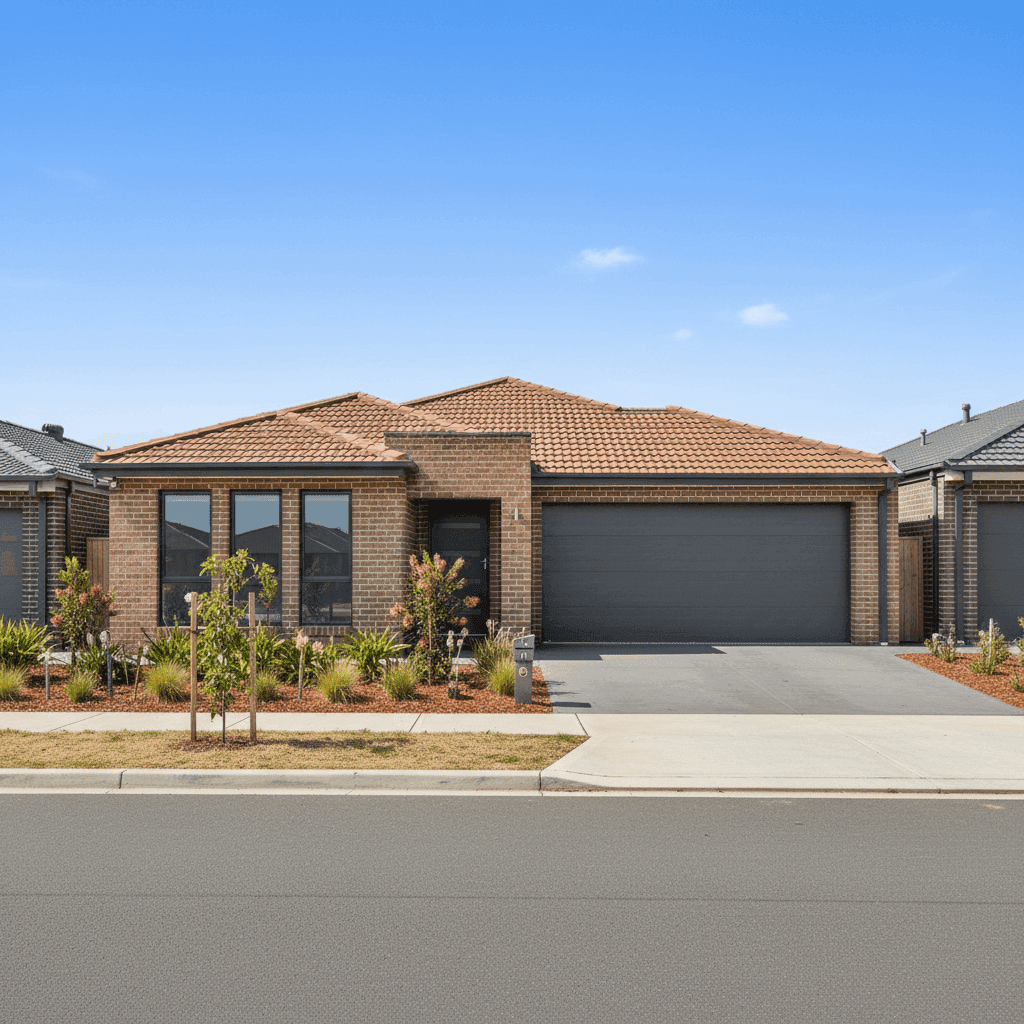
Truganina is one of Melbourne's fastest-growing outer-western suburbs, and with that growth comes a wave of relatively new, well-built homes — and plenty of homeowners trying to figure out whether they're getting a fair deal on their insurance. This article breaks down a real building insurance quote for a four-bedroom free standing home in Truganina (VIC 3029), rated Fair (Around Average), and puts it into context against local, state, and national benchmarks.
---
Is This Quote Fair?
The quote in question comes in at $1,284 per year (or about $125 per month) for building-only cover on a 214 sqm brick veneer home insured for $656,000, with a $1,000 building excess.
The Fair rating means this premium sits in a reasonable range — not the cheapest available, but certainly not overpriced. To understand what that means in practice, it helps to look at where $1,284 falls relative to what other Truganina homeowners are actually paying.
Based on 86 quotes collected for the Truganina area:
| Benchmark | Premium |
|---|---|
| 25th percentile (cheaper end) | $1,088/yr |
| This quote | $1,284/yr |
| Suburb median | $1,348/yr |
| Suburb average | $1,494/yr |
| 75th percentile (pricier end) | $1,797/yr |
This quote sits below the suburb median and well below the suburb average, which is a positive sign. It's comfortably inside the middle band of the market — above the cheapest 25% of quotes, but meaningfully lower than the top half. For a home of this size and construction quality, that's a solid result.
---
How Truganina Compares
Zooming out, the picture becomes even more encouraging. Truganina's suburb average of $1,494/yr is dramatically lower than both the Victorian and national benchmarks.
| Geography | Average Premium | Median Premium |
|---|---|---|
| Truganina (3029) | $1,494/yr | $1,348/yr |
| Melton LGA | $1,803/yr | — |
| Victoria | $2,921/yr | $2,694/yr |
| Australia (national) | $2,965/yr | $2,716/yr |
Compared to the Victorian state average of $2,921/yr, Truganina homeowners are paying roughly half as much on average. The national average of $2,965/yr tells a similar story — Truganina is a genuinely affordable suburb when it comes to home insurance costs.
This gap isn't surprising once you consider the risk profile of the area. Truganina is not in a cyclone zone, it sits on Melbourne's flat western plains (reducing flood and landslide exposure compared to hillside or coastal suburbs), and the housing stock is relatively modern. All of these factors push premiums down compared to higher-risk parts of Victoria and Australia.
---
Property Features That Affect Your Premium
Several characteristics of this particular property work in the homeowner's favour from an insurance pricing perspective.
Construction year (2011): A home built in 2011 benefits from modern building codes introduced after significant reforms in the late 2000s. Newer builds tend to be more structurally sound, which insurers reward with lower premiums compared to older homes that may have outdated wiring, plumbing, or roofing.
Brick veneer external walls: Brick veneer is one of the most common — and insurer-friendly — construction types in Australian suburbia. It offers good fire resistance and structural durability, which generally attracts more competitive premiums than lightweight cladding or weatherboard.
Tiled roof: Like brick veneer walls, a tiled roof is considered a low-risk roofing material by most insurers. Tiles are durable, fire-resistant, and widely understood by assessors, which helps keep costs predictable.
Concrete slab foundation: A slab foundation is standard for modern Melbourne homes and is generally viewed favourably by insurers. It reduces the risk of subsidence-related claims compared to older pier-and-beam foundations.
Ducted climate control: This is worth noting — ducted heating and cooling systems are a fixed asset that forms part of the building sum insured. At $656,000, the sum insured appears to account for this, which is important. Underinsuring a home with significant built-in systems is a common and costly mistake.
No pool, no solar panels: Both of these features can add complexity (and cost) to a policy. Their absence keeps the risk profile clean and the premium lower.
Standard fittings: High-end or bespoke fittings — think imported stone benchtops, custom joinery, or luxury bathrooms — can significantly increase rebuild costs and therefore premiums. Standard fittings keep the rebuild estimate more predictable.
---
Tips for Homeowners in Truganina
1. Review your sum insured regularly. Building costs in Melbourne's west have risen sharply over the past few years. A sum insured of $656,000 for a 214 sqm home works out to roughly $3,065 per sqm — which is a reasonable estimate, but construction costs fluctuate. It's worth checking your figure annually against current builder rates to avoid being underinsured after a total loss.
2. Consider bundling contents cover. This quote covers the building only. If your contents aren't separately insured, you could be exposed in the event of theft, fire, or water damage to your belongings. Many insurers offer discounts when you bundle building and contents, so the incremental cost of adding contents cover is often lower than taking out a standalone policy.
3. Compare before you renew. The insurance market in Truganina is competitive, with a meaningful spread between the 25th percentile ($1,088/yr) and the 75th percentile ($1,797/yr). That's a $709/yr gap — entirely for comparable cover on similar properties. Spending 15 minutes comparing quotes at renewal could easily save you hundreds.
4. Check your excess settings. This policy carries a $1,000 building excess. Opting for a higher excess (say, $2,000) can reduce your annual premium, which makes sense if you're unlikely to make small claims and prefer to self-insure minor damage. Just make sure the excess is an amount you could comfortably pay in an emergency.
---
Ready to Compare Home Insurance in Truganina?
Whether you're a new homeowner in Truganina or simply due for a renewal review, it pays to see what the market is offering. CoverClub aggregates real quotes so you can see exactly how your premium stacks up — not just against a single insurer, but across the broader market.