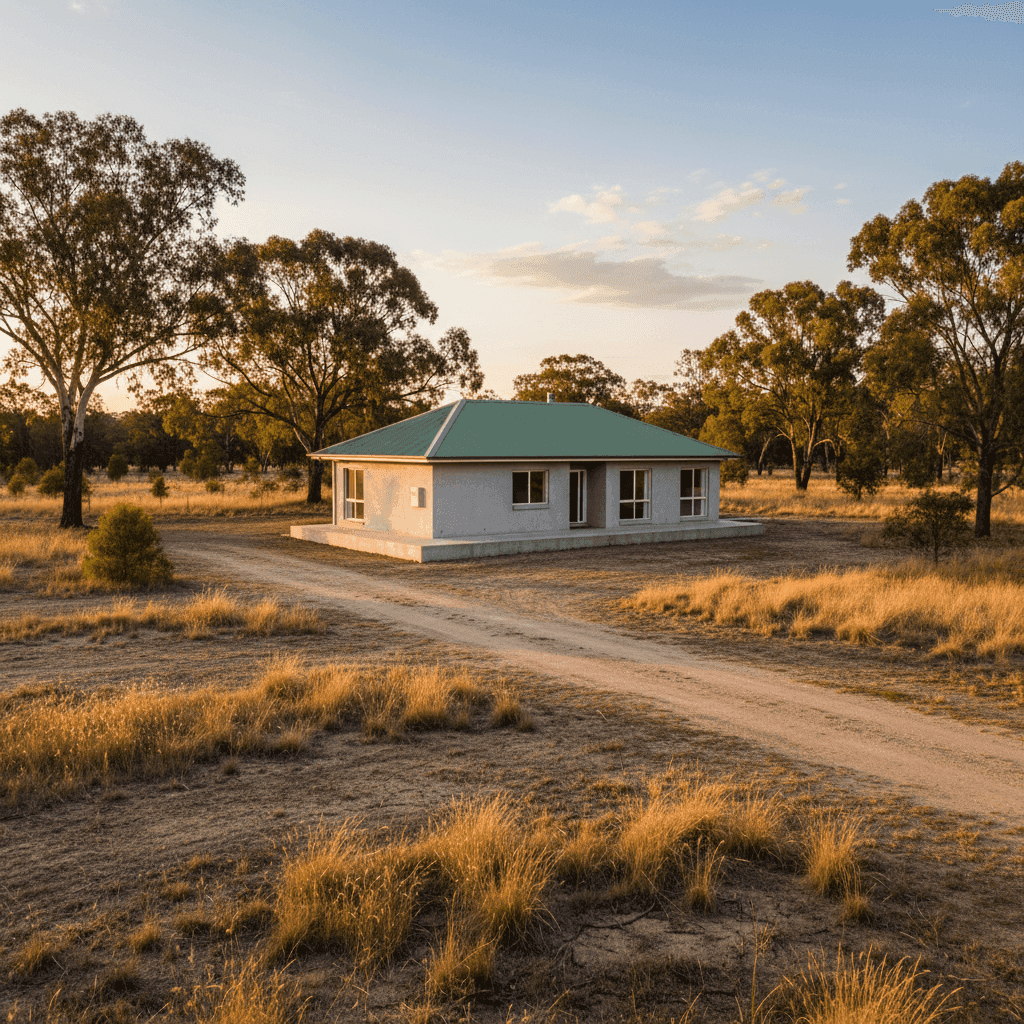
If you own a free standing home in Trunkey Creek, NSW 2795, you might be wondering whether your home insurance premium is competitive — or whether you're quietly overpaying. This article breaks down a real building insurance quote for a three-bedroom, two-bathroom home in Trunkey Creek and puts it into context against local, state, and national benchmarks. Whether you're a long-time local or a recent arrival to this quiet Central Tablelands village, understanding what drives your premium is the first step to making a smarter insurance decision.
---
Is This Quote Fair?
The quote in question comes in at $2,126 per year (or $223 per month) for building-only cover on a 130 sqm free standing home insured for $468,000, with a building excess of $4,000.
Our pricing analysis rates this quote as CHEAP — below the average for comparable properties. That's genuinely good news for the homeowner. In an era where insurance premiums have been climbing steadily across Australia, landing below the average benchmark is worth acknowledging.
To put it plainly: this quote is not just marginally cheaper — it sits well below both the NSW state average and the national average, as you'll see in the comparison below. For a home of this age, size, and construction type, that's a favourable outcome.
---
How Trunkey Creek Compares
While suburb-level data isn't available for Trunkey Creek specifically, we can draw meaningful comparisons using LGA, state, and national figures. Here's how this quote stacks up:
| Benchmark | Annual Premium |
|---|---|
| This Quote | $2,126 |
| LGA (Cabonne) Average | $3,163 |
| NSW State Average | $9,528 |
| NSW State Median | $3,770 |
| National Average | $5,347 |
| National Median | $2,764 |
A few things stand out immediately. The NSW state average of $9,528 is extraordinarily high — driven in large part by high-risk coastal and flood-prone areas across the state. The median of $3,770 is a more realistic benchmark for typical NSW homeowners, and even against that figure, this quote at $2,126 is a meaningful saving of roughly $1,644 per year.
Compared to the Cabonne LGA average of $3,163, this quote is about 33% cheaper — a significant difference that suggests either a favourable risk profile for this specific property, or that the insurer has priced this region competitively.
Against the national median of $2,764, the quote is also below average, reinforcing the "cheap" rating. You can explore more NSW home insurance statistics and national home insurance data on CoverClub to see how your own property compares.
For more localised data as it becomes available, keep an eye on the Trunkey Creek suburb stats page.
---
Property Features That Affect Your Premium
Insurers don't just look at your postcode — they assess a range of property characteristics to determine risk. Here's how the features of this particular home likely influence its premium:
Construction Year: 1961
At over 60 years old, this home predates many modern building codes. Older homes can attract higher premiums due to the potential for ageing infrastructure, outdated wiring, or plumbing. However, the concrete wall construction (see below) helps offset some of that concern.
External Walls: Concrete
Concrete is one of the most insurer-friendly wall materials available. It's highly resistant to fire, pests, and storm damage — all significant risk factors in regional NSW. This almost certainly works in the homeowner's favour when it comes to pricing.
Roof: Steel / Colorbond
Colorbond roofing is a popular and practical choice across regional Australia. It performs well in high-wind events and is resistant to ember attack — a relevant consideration given bushfire risk in parts of the Central Tablelands. Insurers generally view this material positively compared to older tile or fibrous cement roofing.
Foundation: Slab
Slab foundations are generally considered stable and low-risk, particularly in areas without significant soil movement or flood exposure. This is a neutral-to-positive factor for premium pricing.
Flooring: Timber / Laminate
Timber and laminate flooring can be costly to repair or replace following water damage, which may add a small amount to the risk assessment. That said, in a building-only policy, internal fittings like flooring are less of a driver than structural elements.
Elevation: Less Than 1 Metre
The property is slightly elevated, which can help with surface water runoff in heavy rain events. While the elevation is minimal, it's still a marginally positive factor compared to a ground-level slab in a flood-prone area.
No Pool, Solar Panels, or Ducted Climate Control
The absence of these features simplifies the risk profile. Pools, solar arrays, and ducted systems all add replacement cost and potential liability — so not having them keeps the insured sum and risk profile leaner.
---
Tips for Homeowners in Trunkey Creek
Whether you're happy with your current premium or looking to reduce it further, here are four practical steps worth considering:
- Review your sum insured annually. Construction costs in regional NSW have risen sharply in recent years. Make sure your $468,000 building sum insured still reflects what it would actually cost to rebuild your home from scratch — not just its market value. Underinsurance is one of the most common and costly mistakes Australian homeowners make.
- Consider a higher excess to lower your premium. This quote already carries a $4,000 building excess. If you have the financial buffer to absorb a larger out-of-pocket cost in the event of a claim, some insurers will offer a meaningful premium reduction in exchange for a higher excess.
- Maintain your roof and gutters. Colorbond roofs are durable, but regular maintenance — especially before bushfire season — can prevent small issues from becoming large claims. Insurers may also ask about maintenance history when assessing claims, so keeping records is worthwhile.
- Compare quotes at renewal time. Even if you're on a competitive rate now, the insurance market shifts regularly. Loyalty doesn't always pay in insurance — it's worth running a fresh comparison each year to ensure you're still getting a fair deal.
---
Compare Your Own Quote
Curious whether your own home insurance premium is competitive? CoverClub makes it easy to compare quotes from multiple Australian insurers in one place. Whether you're in Trunkey Creek or anywhere else across the country, you can get a home insurance quote in minutes and see exactly how your premium stacks up against local and national benchmarks. Don't set and forget — a few minutes of comparison could save you hundreds each year.