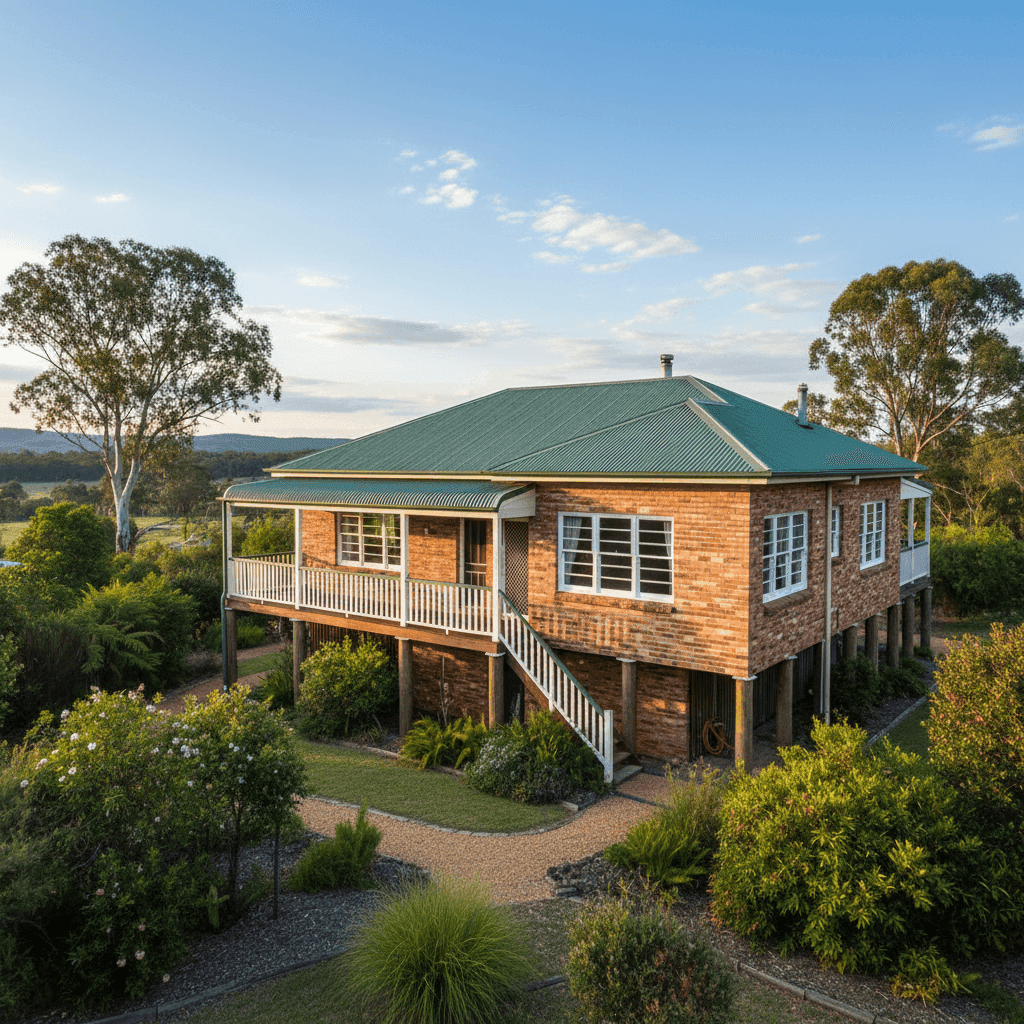
If you own a free standing home in Tucabia, NSW 2462, understanding what you should be paying for building insurance is one of the smartest financial moves you can make. Tucabia is a small rural locality in the Clarence Valley, a region known for its lush hinterland and proximity to the Clarence River — and like much of regional New South Wales, insurance pricing here can vary dramatically depending on a range of property and risk factors.
In this article, we break down a real building insurance quote for a 3-bedroom, 1-bathroom brick veneer home in Tucabia, assess whether the price stacks up, and share practical tips to help local homeowners get the best value cover.
---
Is This Quote Fair?
The quote in question comes in at $2,638 per year (or $246/month) for building-only cover, with a sum insured of $350,000 and a building excess of $2,000. Our price rating for this quote is CHEAP — below average — and the data strongly backs that up.
When you compare this figure against what other homeowners in Tucabia are paying, the difference is striking. The suburb average premium for Tucabia sits at $15,598 per year, with a median of $15,742. That means this particular quote is coming in at roughly 83% below the local average — a genuinely exceptional outcome for the homeowner.
Even at the lower end of the local market (the 25th percentile), premiums in Tucabia are running at $12,736/yr — still nearly five times the cost of this quote. At the upper end (75th percentile), homeowners are paying $18,195/yr or more.
It's worth noting that the Tucabia sample size in our dataset is six quotes, so while the directional story is clear, the suburb-level figures should be interpreted as indicative rather than definitive. That said, the gap between this quote and local benchmarks is too large to dismiss.
---
How Tucabia Compares
Zooming out to a broader geographic lens helps put things in perspective. Here's how Tucabia stacks up:
| Benchmark | Average Premium | Median Premium |
|---|---|---|
| Tucabia (2462) | $15,598/yr | $15,742/yr |
| NSW | $9,528/yr | $3,770/yr |
| National | $5,347/yr | $2,764/yr |
| Clarence Valley LGA | $31,244/yr | — |
A few things stand out here. First, the NSW state average of $9,528/yr is itself well above the national average of $5,347/yr, reflecting the elevated risk profile of many parts of New South Wales — particularly flood-prone and storm-exposed regions. Second, the Clarence Valley LGA average of $31,244/yr is remarkably high, suggesting that flood and water-related risks are significantly priced into policies across the broader region.
The wide gap between NSW's mean ($9,528) and median ($3,770) is also telling — it indicates a skewed distribution where a subset of properties attract very high premiums, pulling the average upward. The national median of $2,764/yr is actually quite close to this quote's $2,638/yr, suggesting the property's risk profile aligns more closely with a typical Australian home than with the elevated-risk properties that dominate the Clarence Valley averages.
---
Property Features That Affect Your Premium
Several characteristics of this particular home work in the homeowner's favour when it comes to insurance pricing.
Brick Veneer Walls Brick veneer is one of the most common and well-regarded external wall materials in Australia. It offers solid fire resistance and structural durability, both of which insurers view favourably. Compared to weatherboard or other timber-clad homes, brick veneer typically attracts lower premiums.
Steel / Colorbond Roof A Colorbond steel roof is another tick in the right column. It's durable, fire-resistant, and performs well in high-wind conditions. Insurers generally price this material more competitively than older tile roofs or, particularly, corrugated iron in poor condition.
Stump Foundation (Elevated Less Than 1m) The home sits on stumps and is elevated by less than one metre. This is a nuanced factor — elevated homes can offer some protection against minor flooding and moisture ingress, but the degree of elevation matters significantly. At under 1m, the benefit is modest compared to a fully raised Queenslander-style home. In a flood-adjacent region like the Clarence Valley, insurers may still factor in inundation risk, which likely contributes to the elevated suburb averages seen locally.
Tile Flooring Tiles are a practical and durable flooring choice that holds up well in the event of water damage — a relevant consideration in this part of NSW. They're also less susceptible to warping or mould compared to carpet or timber, which can reduce the severity of claims.
Ducted Climate Control The presence of ducted climate control adds some value to the insured building, but it's a standard inclusion in many modern Australian homes and is unlikely to be a major premium driver at the standard fittings quality level noted here.
No Pool, No Solar Panels The absence of a swimming pool and solar panels simplifies the risk profile and removes two common sources of additional premium loading. Pools introduce liability and maintenance risk; solar panels add replacement cost and roof-penetration risk. Neither applies here.
---
Tips for Homeowners in Tucabia
1. Don't assume your current insurer is offering the best rate The gap between this quote and the suburb average is a reminder that premiums can vary enormously between providers for the same property. Even if you've been with your insurer for years, it's worth running a comparison — loyalty doesn't always translate to competitive pricing.
2. Review your sum insured annually Building costs in regional NSW have risen significantly in recent years due to labour shortages and material price increases. A sum insured of $350,000 for a 130 sqm home may be appropriate today, but it's worth recalculating your rebuild cost each year to ensure you're not underinsured. CoverClub recommends using a professional building cost estimator or checking with your insurer.
3. Understand your flood cover position Given Tucabia's location in the Clarence Valley — a region with a significant flood history — it's critical to confirm whether your policy includes flood cover and what the specific definition of "flood" is. Some policies distinguish between riverine flooding, flash flooding, and storm surge. Read the Product Disclosure Statement (PDS) carefully.
4. Consider your excess strategically This quote carries a $2,000 building excess. Opting for a higher excess is one of the most effective ways to reduce your premium, but make sure the excess is an amount you could comfortably pay out of pocket in the event of a claim. If $2,000 would be a stretch, it may be worth paying a slightly higher premium for a lower excess.
---
Compare Your Home Insurance with CoverClub
Whether you're a first-time buyer or a long-term Tucabia homeowner, comparing quotes is the single best thing you can do to ensure you're not overpaying. CoverClub makes it easy to see real quotes from multiple insurers side by side, with transparent pricing and no hidden fees.
Get a home insurance quote for your Tucabia property today — it takes just a few minutes and could save you thousands.