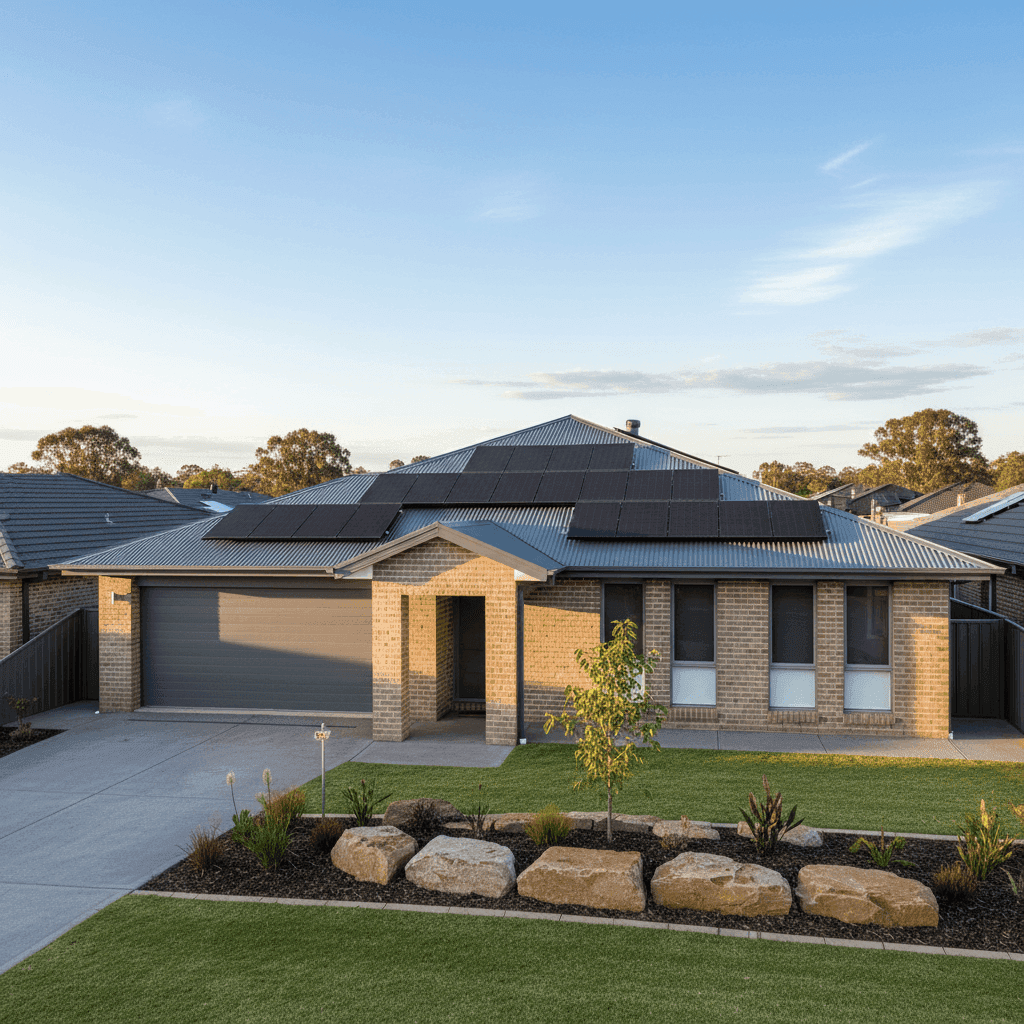
Tuggerawong is a quiet residential suburb on the New South Wales Central Coast, sitting within the postcode 2259 and known for its relaxed lakeside lifestyle. For owners of a free standing home in this area, understanding what drives your insurance premium — and whether you're paying a fair price — can make a real difference to your household budget. This article breaks down a recent home and contents insurance quote for a five-bedroom property in Tuggerawong and puts the numbers into context against local, state, and national benchmarks.
---
Is This Quote Fair?
The quote in question comes in at $5,017 per year (or $474 per month), covering both building and contents for a five-bedroom, three-bathroom free standing home. The building is insured for $1,000,000, with contents covered at $50,000, and both the building and contents excess are set at $1,000.
Our price rating for this quote is Expensive — Above Average. That assessment is based on how this premium stacks up against other quotes we've seen for comparable properties in the Tuggerawong area.
The suburb average sits at $4,242 per year, meaning this quote is roughly $775 above the local average — an 18% premium over what many neighbours might be paying. Even against the suburb's 75th percentile of $4,576, this quote is still notably higher, placing it well above the upper range of typical local pricing.
That said, it's worth keeping perspective. The NSW state average for home and contents insurance is a striking $9,528 per year, though the state median tells a more balanced story at $3,770. Similarly, the national average is $5,347 per year, with a median of $2,764. Against the national average, this quote is actually slightly below — which is a meaningful data point when assessing value on a broader scale.
The key takeaway: this quote is on the higher end for Tuggerawong specifically, but it's not out of step with national norms. Whether it represents good value depends heavily on the property's individual characteristics and the level of cover provided.
---
How Tuggerawong Compares
To give this quote proper context, here's how Tuggerawong stacks up against broader benchmarks:
| Benchmark | Average Premium | Median Premium |
|---|---|---|
| Tuggerawong (2259) | $4,242/yr | $2,840/yr |
| NSW State | $9,528/yr | $3,770/yr |
| National | $5,347/yr | $2,764/yr |
| Cessnock LGA | $2,462/yr | — |
A few things stand out here. First, the gap between the NSW average ($9,528) and median ($3,770) is enormous — a sign that a small number of very high-risk or high-value properties are pulling the average up significantly. This is common in states with exposure to extreme weather events, bushfire zones, and flood-prone coastal areas.
Second, the Cessnock LGA average of $2,462 is notably lower than the Tuggerawong suburb average of $4,242, suggesting that properties within the 2259 postcode may carry slightly elevated risk profiles compared to the broader LGA.
You can explore the full picture for this postcode at our Tuggerawong suburb stats page, compare across the state on our NSW insurance stats page, or see how your area measures up nationally at our national stats page.
---
Property Features That Affect Your Premium
Several characteristics of this property are likely influencing the premium — some pushing it higher, others potentially keeping it in check.
Building size and bedroom count At 315 square metres with five bedrooms and three bathrooms, this is a substantial home. Larger homes cost more to rebuild, which directly increases the sum insured and, in turn, the premium. A $1,000,000 building sum insured reflects the scale of this property and is appropriate for a home of this size in regional NSW.
Brick veneer construction Brick veneer walls are generally viewed favourably by insurers. They offer solid fire resistance and structural durability compared to lightweight cladding materials. This construction type can contribute to more competitive premiums relative to timber-framed or fibre cement alternatives.
Steel/Colorbond roof A Colorbond steel roof is another positive from an insurer's perspective. It's durable, fire-resistant, and performs well in high-wind conditions — all factors that reduce the likelihood of a significant claim. This is a common and well-regarded roofing choice across coastal NSW.
Slab foundation A concrete slab foundation is generally low-risk from an insurance standpoint. It doesn't carry the same vulnerability to subsidence or pest damage that some other foundation types might, which can help moderate premiums.
Timber and laminate flooring While attractive, timber and laminate flooring can be more expensive to replace than tiles or carpet. In the event of a water damage claim, for instance, floor replacement costs can escalate quickly — a factor some insurers price into their assessments.
Solar panels and ducted climate control Both of these features add value to the home and increase the cost of reinstatement. Solar panel systems can be damaged by hail, storms, or fire, and replacing a ducted climate control system is a significant expense. These inclusions can nudge premiums upward, even if they're not always explicitly itemised.
No pool, no cyclone risk The absence of a pool removes a liability and maintenance risk that insurers often price in. Being outside a designated cyclone risk area also keeps premiums lower than they'd be for equivalent properties in northern Queensland or parts of WA.
---
Tips for Homeowners in Tuggerawong
1. Review your sum insured carefully A $1,000,000 building sum insured is significant. Make sure this figure reflects the actual cost to rebuild your home — not its market value. Overinsuring can mean unnecessarily high premiums, while underinsuring leaves you exposed. Tools like the Cordell Sum Sure calculator can help you arrive at a more accurate estimate.
2. Consider increasing your excess Both the building and contents excess on this policy are set at $1,000. Opting for a higher excess — say $2,000 or $2,500 — can reduce your annual premium noticeably. If you're unlikely to make small claims, this trade-off often makes financial sense.
3. Shop around at renewal time Insurers rarely reward loyalty with their best pricing. With a sample of 16 quotes in the Tuggerawong area showing a wide range — from around $2,511 at the 25th percentile to $4,576 at the 75th — there's clearly significant variation in the market. Comparing quotes annually can save hundreds of dollars.
4. Bundle your cover thoughtfully Home and contents insurance is bundled in this quote, which is common and often convenient. However, it's worth checking whether separate policies from different providers might offer better value, particularly if your contents value is modest relative to your building cover.
---
Ready to Find a Better Rate?
Whether you're renewing an existing policy or insuring a new property, comparing quotes is the single most effective way to make sure you're not overpaying. At CoverClub, we make it easy to see how your premium stacks up and find competitive options for your home.
Get a home insurance quote today and see how much you could save.