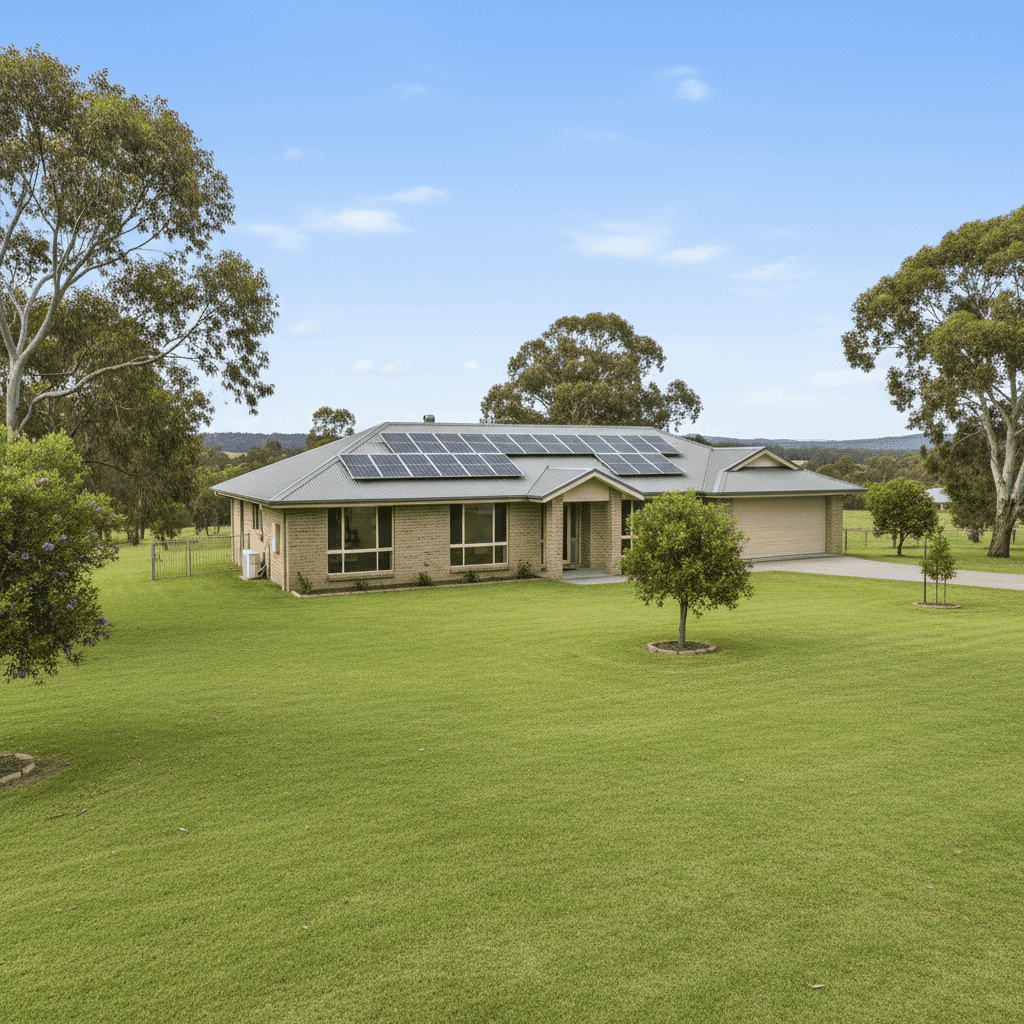
If you own a free standing home in Tullera, NSW 2480, you're likely paying close attention to the cost of home insurance — and with good reason. Premiums across Australia have been climbing steadily, and regional NSW properties can attract some surprising price tags depending on the insurer. In this article, we analyse a real home and contents insurance quote for a four-bedroom, double brick home in Tullera, breaking down what's driving the cost and whether there's room to save.
---
Is This Quote Fair?
The quote in question comes in at $5,142 per year (or $468/month) for combined home and contents cover, with a building sum insured of $909,000 and contents valued at $50,000. The building excess is $3,000 and the contents excess is $500.
Our price rating for this quote is Expensive — above average for the area.
To put that in context: the average home insurance premium among quotes we've collected for Tullera sits at $3,134 per year, with a median of $3,270. This quote lands roughly 64% above the local average — a significant gap that's worth investigating before renewing or accepting the policy as-is.
That said, it's worth noting the suburb sample size is relatively small (6 quotes), so local averages can shift as more data comes in. Still, the premium is elevated enough that shopping around is strongly advisable.
---
How Tullera Compares
Understanding where your premium sits relative to broader benchmarks helps put the number in perspective. Here's how Tullera stacks up:
| Benchmark | Annual Premium |
|---|---|
| This Quote | $5,142 |
| Tullera Suburb Average | $3,134 |
| Tullera Suburb Median | $3,270 |
| Tullera 25th Percentile | $2,574 |
| Tullera 75th Percentile | $3,471 |
| NSW State Average | $9,528 |
| NSW State Median | $3,770 |
| National Average | $5,347 |
| National Median | $2,764 |
| Ballina LGA Average | $23,241 |
A few things stand out here. First, the NSW state average of $9,528 is heavily skewed upward — likely driven by high-risk coastal and flood-prone areas pulling the mean well above what most homeowners actually pay. The NSW median of $3,770 is a more useful comparison, and this quote exceeds even that.
Compared to the national average of $5,347, this quote is actually just below — a small consolation. However, the national median of $2,764 tells a different story, suggesting many Australian homeowners are paying considerably less.
The Ballina LGA average of $23,241 is extraordinarily high and reflects the significant flood and weather risk exposure across parts of the broader region. Tullera itself sits within the Ballina LGA, and while this property doesn't fall in a cyclone risk zone, the LGA's risk profile can still influence how insurers price individual properties in the area.
For a full breakdown of local pricing trends, visit our Tullera suburb stats page, or explore NSW home insurance data and national benchmarks.
---
Property Features That Affect Your Premium
Several characteristics of this property will be influencing the quote — some favourably, others less so.
Double Brick Construction Double brick is generally regarded as one of the more resilient wall types, offering strong resistance to fire, wind, and impact. Insurers typically view it positively, which can help moderate premiums compared to timber-framed homes.
Steel / Colorbond Roof Colorbond steel roofing is durable, low-maintenance, and performs well in harsh Australian conditions. It's resistant to fire embers and less prone to storm damage than some alternatives, which is a plus from an underwriting perspective.
Slab Foundation & Tile Flooring A concrete slab foundation is a stable base that reduces the risk of subsidence-related claims. Combined with tile flooring throughout, this home has a construction profile that many insurers consider lower risk for certain types of damage.
Solar Panels The presence of solar panels adds value to the property and can increase the cost to rebuild or repair — which may contribute to a higher building sum insured and, in turn, a higher premium. It's important to ensure your solar system is explicitly covered under your policy.
Building Size & Sum Insured At 214 sqm and a building sum insured of $909,000, this is a well-appointed home. The high sum insured is a significant driver of the premium — and it's worth reviewing whether that figure accurately reflects the cost to rebuild (not the market value) of the property. Overinsurance is a common issue that can quietly inflate premiums.
No Pool, No Ducted Climate Control The absence of a swimming pool removes a common liability risk factor. No ducted climate control also means fewer complex mechanical systems that could fail and lead to claims.
---
Tips for Homeowners in Tullera
1. Review Your Sum Insured $909,000 is a substantial building sum insured. If this figure hasn't been independently verified against current construction costs, it may be higher than necessary. Consider using a professional building replacement cost estimator to confirm the right amount — overinsuring can cost you hundreds of dollars a year in unnecessary premium.
2. Increase Your Excess Strategically The building excess on this policy is $3,000, which is already on the higher side. However, if you're financially comfortable absorbing a larger out-of-pocket cost in the event of a claim, some insurers will offer a meaningful premium reduction for a higher voluntary excess. Crunch the numbers to see if it makes sense for your situation.
3. Compare Multiple Insurers This quote is rated expensive relative to local benchmarks. The single most effective thing you can do is compare quotes from multiple insurers. Pricing varies enormously between providers for the same property — sometimes by thousands of dollars. Get a comparison quote through CoverClub to see what else is available.
4. Check What's Included for Solar Not all home insurance policies automatically cover solar panel systems to the same standard. Before committing to a policy, confirm whether your panels are covered for accidental damage, storm damage, and theft — and whether inverter replacement is included. Some insurers treat solar as an optional add-on.
---
Compare Your Options with CoverClub
Whether you're renewing your current policy or shopping around for the first time, comparing quotes is the smartest move you can make. CoverClub makes it easy to see how your premium stacks up and find better value cover for your Tullera home. Start your comparison today — it takes just a few minutes and could save you a significant amount each year.