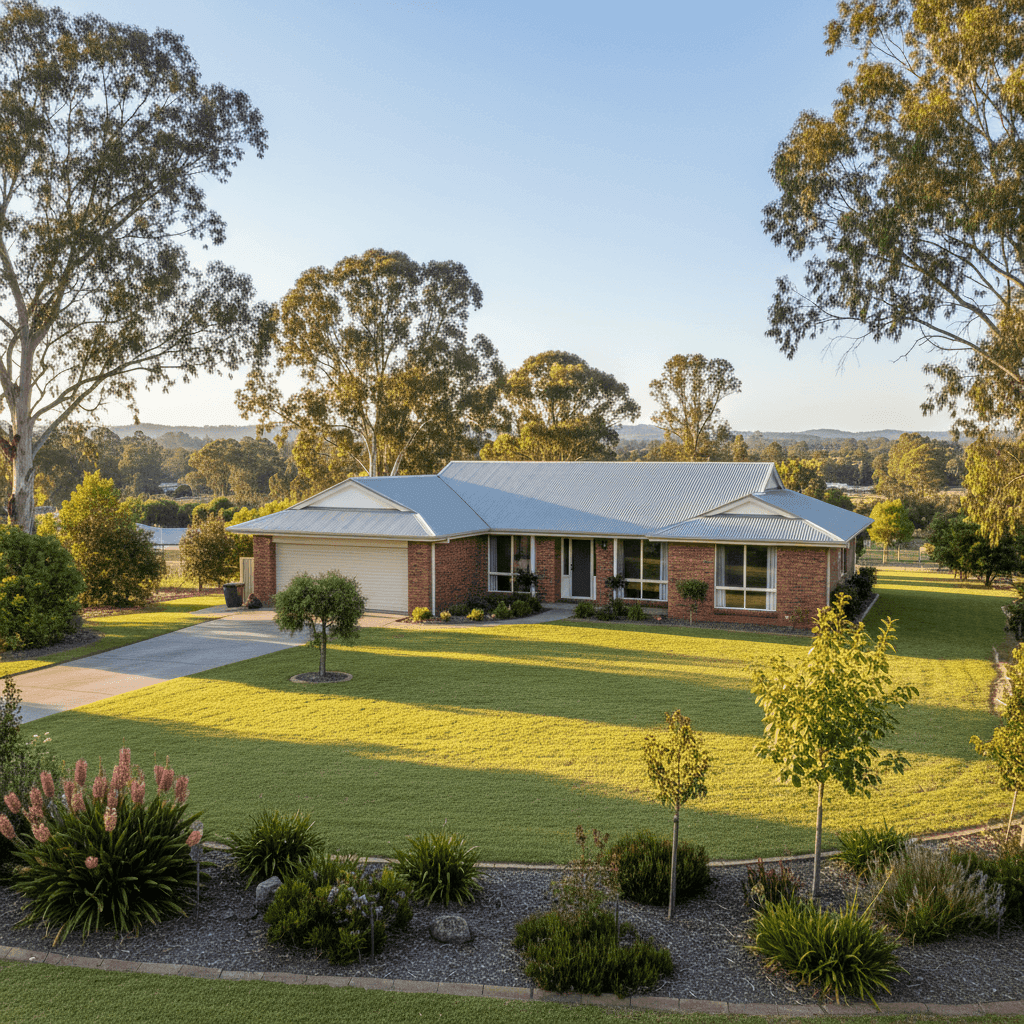
If you own a free standing home in Tullera, NSW 2480, you're likely no stranger to the question of whether your home insurance premium is reasonable. Nestled in the Northern Rivers region of New South Wales, Tullera is a quiet rural locality where property values — and insurance costs — can vary considerably. This article breaks down a recent building-only insurance quote for a five-bedroom home in the area, benchmarks it against local, state, and national data, and offers practical tips to help you make a more informed decision at renewal time.
---
Is This Quote Fair?
The quote in question sits at $3,615 per year (or $354/month) for building-only cover on a five-bedroom free standing home insured for $700,000, with a $1,000 building excess.
Our price rating for this quote is EXPENSIVE — above average for the Tullera area.
To put that in context, the suburb average premium sits at $3,134/yr, and the median comes in at $3,270/yr. This quote lands above both of those benchmarks and also above the suburb's 75th percentile of $3,471/yr — meaning it's pricier than at least three-quarters of comparable quotes we've seen in the postcode. That's a meaningful gap, and one worth investigating before simply accepting the renewal.
It's worth noting, however, that a $700,000 sum insured for a 244 sqm home is on the higher end, and the insurer's assessment of risk will factor in the full replacement cost, not just the market value. Still, the price differential suggests there may be room to shop around.
---
How Tullera Compares
Understanding where your premium sits relative to broader benchmarks can be eye-opening. Here's how Tullera stacks up:
| Benchmark | Premium |
|---|---|
| This Quote | $3,615/yr |
| Tullera Suburb Average | $3,134/yr |
| Tullera Suburb Median | $3,270/yr |
| Tullera 25th Percentile | $2,574/yr |
| Tullera 75th Percentile | $3,471/yr |
| NSW State Average | $9,528/yr |
| NSW State Median | $3,770/yr |
| National Average | $5,347/yr |
| National Median | $2,764/yr |
| Ballina LGA Average | $23,241/yr |
A few things stand out here. First, this quote is notably cheaper than both the NSW state average of $9,528/yr and the national average of $5,347/yr — both of which are heavily skewed upward by high-risk coastal and cyclone-prone areas. When you compare against the state median of $3,770/yr, this quote actually comes in slightly below that mark, which paints a somewhat more favourable picture.
Second, the Ballina LGA average of $23,241/yr is strikingly high. This figure is almost certainly driven by coastal properties in flood and storm surge zones within the broader local government area. Tullera, being an inland locality, benefits from a more moderate risk profile — which is reflected in its comparatively lower premiums.
For a deeper look at how premiums trend across the postcode, visit the Tullera suburb stats page.
> Note: The Tullera sample size used in this comparison is six quotes, so while the data is directionally useful, a larger sample would give even greater confidence in these benchmarks.
---
Property Features That Affect Your Premium
Every insurer prices risk differently, but certain property characteristics consistently influence what you'll pay. Here's how the features of this particular home are likely playing into the quote:
Brick Veneer Walls Brick veneer is generally viewed favourably by insurers. It offers solid fire resistance and structural durability compared to weatherboard or lightweight cladding, which can help keep premiums in check.
Steel/Colorbond Roof Colorbond roofing is one of the more insurer-friendly roof types in Australia. It's durable, low-maintenance, and performs well in high-wind events. This is a genuine positive for your premium.
Slab Foundation A concrete slab foundation is considered a stable and low-risk base. It's less susceptible to movement and pest damage compared to older timber subfloor systems, which is another tick in the right column.
Construction Year: 1976 A home built in 1976 is approaching 50 years old. While well-maintained older homes can be perfectly insurable, ageing properties sometimes attract higher premiums due to the increased likelihood of wear to plumbing, electrical systems, and roofing components. Insurers may price in the cost of bringing these elements up to current building codes after a claim.
Ducted Climate Control The presence of ducted climate control is worth noting. These systems add to the overall replacement cost of the home and can be a factor in setting an appropriate sum insured. At $700,000, the sum insured here appears to account for this.
No Pool, No Solar The absence of a pool and solar panels simplifies the risk profile. Pools introduce liability considerations, while solar panel systems can complicate roof-related claims. Neither applies here, which is a modest positive.
Carpet Flooring Carpet throughout is standard for this style of home and doesn't significantly move the needle on premium pricing, though it's worth factoring into your contents cover if you have a separate policy.
---
Tips for Homeowners in Tullera
1. Shop around at renewal — every year The fact that this quote sits above the suburb's 75th percentile is a clear signal that better pricing may be available. Insurers regularly adjust their risk models and pricing, so a quote that was competitive two years ago may no longer be. Run a fresh comparison at CoverClub before your next renewal.
2. Review your sum insured carefully A $700,000 sum insured on a 244 sqm home works out to roughly $2,868 per square metre — which is on the higher end for a standard-finish property. While it's always better to be adequately insured than underinsured, it's worth using a building cost calculator to confirm your figure is accurate. Overinsuring can unnecessarily inflate your premium.
3. Consider your excess This policy carries a $1,000 building excess. Opting for a higher excess — say, $2,000 or $2,500 — can meaningfully reduce your annual premium. If you have the financial buffer to cover a larger out-of-pocket cost in the event of a claim, this can be a smart trade-off.
4. Maintain your property proactively For a home built in 1976, staying on top of maintenance is both a financial and an insurance-related priority. Insurers can decline or reduce claims where damage is attributed to gradual wear and neglect. Keeping your roof, gutters, plumbing, and electrical systems in good condition protects your claim eligibility and can support better pricing at renewal.
---
Compare Your Home Insurance Today
Whether you're renewing your current policy or shopping for the first time, comparing quotes is the single most effective way to make sure you're not overpaying. CoverClub makes it easy to see multiple options side by side, tailored to your property and location.