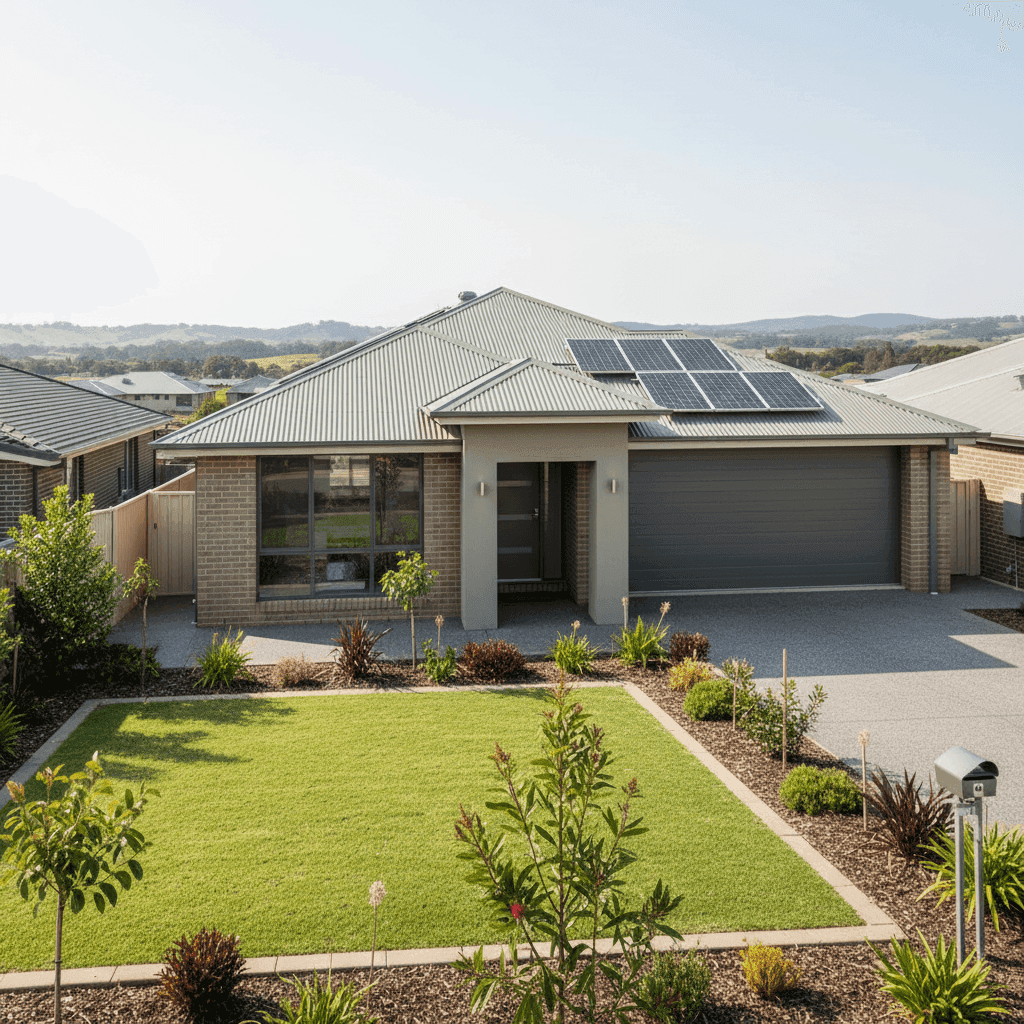
If you own a free standing home in Tullimbar, NSW 2527, you're probably wondering whether your home insurance premium is competitive — or whether you're quietly overpaying. Tullimbar is a relatively modern residential suburb in the Kiama local government area on the NSW South Coast, and like many growing communities, insurance costs here can vary quite a bit depending on your property's features and the level of cover you choose.
This article breaks down a real home and contents insurance quote for a 4-bedroom, 2-bathroom free standing home in Tullimbar, compares it against local, state, and national benchmarks, and offers practical tips to help you get better value on your policy.
---
Is This Quote Fair?
The quote in question comes in at $2,394 per year (or $229/month) for combined home and contents cover, with a building sum insured of $700,000 and contents valued at $80,000. Both the building and contents excess are set at $1,000.
Our pricing engine rates this quote as FAIR — Around Average, and the data backs that up. The quote sits just below the suburb average of $2,485/yr and slightly below the suburb median of $2,415/yr for Tullimbar. That means you're paying a touch less than what most comparable properties in the area are being quoted, which is a reasonable outcome.
It's worth noting that the suburb's interquartile range runs from $2,027/yr (25th percentile) to $2,803/yr (75th percentile), meaning this quote falls comfortably within the middle band of what Tullimbar homeowners are typically paying. You're not getting a bargain, but you're certainly not being overcharged either.
---
How Tullimbar Compares
To put this quote in proper context, it helps to zoom out and look at the broader picture. You can explore the full data on the Tullimbar suburb stats page, the NSW state stats page, and the national stats page.
| Benchmark | Average Premium | Median Premium |
|---|---|---|
| Tullimbar (suburb) | $2,485/yr | $2,415/yr |
| Kiama LGA | $3,332/yr | — |
| NSW (state) | $9,528/yr | $3,770/yr |
| National | $5,347/yr | $2,764/yr |
A few things stand out here. The NSW state average of $9,528/yr is extraordinarily high compared to the median of $3,770/yr — a clear sign that a small number of very expensive properties or high-risk locations (think flood zones and bushfire-prone areas) are pulling the average upward significantly. The median is a far more reliable benchmark for typical NSW homeowners.
Compared to the national median of $2,764/yr, this Tullimbar quote of $2,394/yr is actually slightly below average — a positive sign. Against the Kiama LGA average of $3,332/yr, the quote looks even more competitive, sitting roughly $938/yr below what the broader LGA averages.
The suburb sample size of 6 quotes is relatively small, so treat the Tullimbar-specific figures as a useful guide rather than a definitive benchmark. As more data is collected, these figures will become increasingly reliable.
---
Property Features That Affect Your Premium
Insurance premiums aren't calculated in a vacuum — every feature of your property plays a role. Here's how the specifics of this home factor in:
Brick Veneer Walls & Colorbond Roof Brick veneer is one of the most common construction types in Australian suburban homes and is generally viewed favourably by insurers. It offers solid fire resistance and durability. The steel Colorbond roof is similarly well-regarded — it's lightweight, resistant to corrosion, and performs well in most weather conditions. Together, these materials typically attract mid-range premiums rather than the higher rates associated with older or more vulnerable construction types.
Slab Foundation A concrete slab foundation is standard for homes built in this era and region. It's structurally stable and less susceptible to subsidence or pest-related damage than older stumped or timber-framed foundations, which can help keep premiums in check.
Construction Year: 2016 At just under a decade old, this is a relatively modern home. Newer builds generally comply with current Australian building standards, which means better structural integrity, improved fire safety features, and more resilient materials overall. Insurers tend to reward this with more competitive pricing.
Solar Panels The presence of solar panels adds value to the property and must be factored into the building sum insured. Panels can be damaged by hail, storms, or fire, and replacement costs add up quickly. It's important to confirm with your insurer that solar panels are explicitly covered under your policy — not all standard policies include them automatically.
Ducted Climate Control Ducted air conditioning systems are a significant fixture and are typically covered under building insurance rather than contents. As with solar panels, it's worth checking your policy wording to ensure these systems are included in your sum insured calculation.
No Pool, No Cyclone Risk The absence of a pool removes a common liability and premium loading factor. Tullimbar is also outside designated cyclone risk areas, which is a meaningful saving compared to properties in Queensland or northern WA where cyclone loading can substantially increase premiums.
Tiles Flooring & Standard Fittings Tiled flooring is durable and cost-effective to replace compared to hardwood or engineered timber. Standard fittings (rather than premium or luxury) also keep the rebuild cost estimate more moderate, which flows through to a more reasonable building sum insured.
---
Tips for Homeowners in Tullimbar
1. Review your building sum insured regularly With construction costs rising across NSW, the cost to rebuild your home may have increased since you last reviewed your policy. Make sure your $700,000 sum insured reflects current labour and material costs in the Illawarra region — underinsurance is one of the most common and costly mistakes homeowners make.
2. Confirm solar panel and ducted AC coverage As mentioned above, these are high-value fixtures that aren't always automatically included in standard building cover. Read your Product Disclosure Statement (PDS) carefully and ask your insurer directly if you're unsure.
3. Consider your excess strategically Both the building and contents excess on this policy are set at $1,000. Opting for a higher excess (say, $2,000) can meaningfully reduce your annual premium. If you have a solid emergency fund and are unlikely to make small claims, this is often a smart trade-off.
4. Compare quotes at renewal time Insurance loyalty rarely pays off in Australia. Insurers frequently offer better rates to new customers than to those who simply auto-renew. Use a comparison tool like CoverClub to benchmark your renewal quote before accepting it — even a saving of $200–$300 per year adds up significantly over time.
---
Ready to Compare?
Whether you're reviewing an existing policy or shopping for cover for the first time, CoverClub makes it easy to see how your quote stacks up. Enter your address and get started — it takes just a few minutes and could save you hundreds of dollars a year.