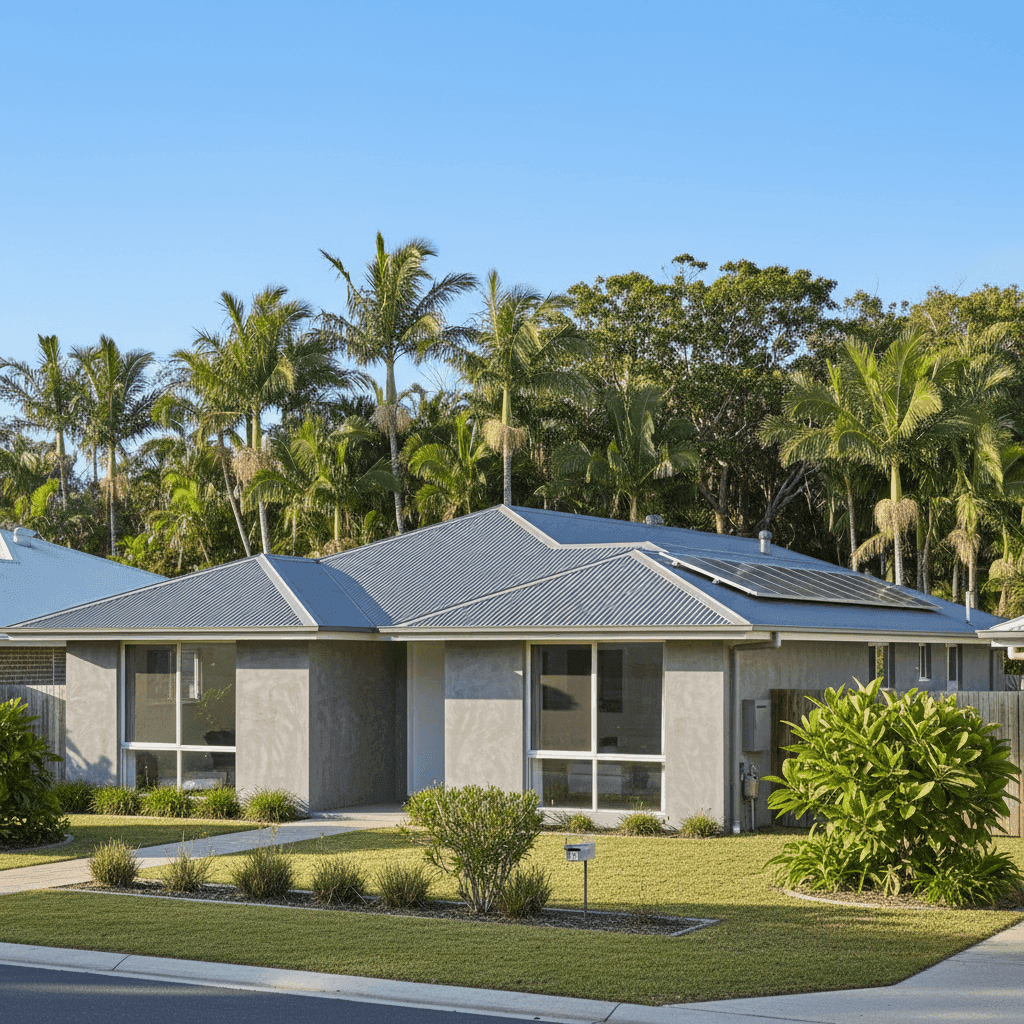
Tully Heads is a small coastal community in Far North Queensland, nestled within the Cassowary Coast region — one of Australia's most scenic but weather-exposed stretches of coastline. For owners of free standing homes in this postcode, understanding what drives home insurance costs can make a meaningful difference to your hip pocket. This article breaks down a real building insurance quote for a three-bedroom, one-bathroom home in Tully Heads (QLD 4854), benchmarks it against local, state, and national data, and offers practical guidance for getting the best value cover.
---
Is This Quote Fair?
The quote in question comes in at $3,852 per year (or $369/month) for building-only cover on a home insured for $550,000, with a $1,000 building excess. Our price rating for this quote is FAIR — Around Average.
That rating reflects a nuanced picture. Within the Tully Heads suburb itself, the 25th percentile of quotes sits at $3,639/yr, meaning roughly a quarter of comparable properties are quoted below that figure. At $3,852, this premium is just slightly above the cheapest quarter of the market — not the lowest you'll find, but well within a reasonable range. The suburb average is $5,931/yr and the median is $4,971/yr, so this quote is actually meaningfully below both the average and median for the area. That's an encouraging sign.
In short: while there may be cheaper options available, this quote is performing solidly relative to what most Tully Heads homeowners are paying. A "Fair" rating here should be read as a positive — it means you're not being overcharged, and you're comfortably below what the typical local homeowner is quoted.
---
How Tully Heads Compares
To put this quote in proper context, it helps to zoom out and look at the broader pricing landscape. You can explore the full data on the Tully Heads suburb stats page, the QLD state stats page, and national home insurance stats.
| Benchmark | Average Premium | Median Premium |
|---|---|---|
| Tully Heads (suburb) | $5,931/yr | $4,971/yr |
| Cassowary Coast (LGA) | $5,573/yr | — |
| Queensland (state) | $9,129/yr | $3,903/yr |
| Australia (national) | $5,347/yr | $2,764/yr |
A few things stand out here. Queensland's average premium of $9,129/yr is extraordinarily high — driven by a relatively small number of very expensive policies, particularly in high-risk flood and cyclone zones across the state. The QLD median of $3,903/yr tells a more grounded story, and this quote at $3,852 sits just below that midpoint.
Nationally, the average is $5,347/yr, and the median is $2,764/yr. The fact that this quote sits above the national median but below the national average is consistent with what you'd expect for a coastal Queensland property — there's an inherent risk loading that pushes premiums higher than the typical Australian home, but this property's features appear to be mitigating some of that exposure.
The Cassowary Coast LGA average of $5,573/yr also provides useful context — this quote is roughly $1,700 below the LGA average, suggesting the property's characteristics are working in the owner's favour.
---
Property Features That Affect Your Premium
Several attributes of this home are likely influencing the premium — some favourably, others less so.
Concrete external walls are a significant positive. Concrete construction is highly resistant to wind, impact, and fire, and insurers typically reward this with lower premiums compared to timber-framed homes. In a coastal Queensland environment where storms and cyclonic winds are a seasonal reality, this is a meaningful risk-reduction factor.
Steel/Colorbond roofing is another strong feature. Colorbond is purpose-built for Australian conditions — it's lightweight, corrosion-resistant, and performs well in high-wind environments. Insurers generally view it more favourably than older roofing materials like terracotta tiles or fibrous cement sheeting.
Slab foundation and tiled flooring contribute to the home's overall resilience profile. Slab construction is less susceptible to subfloor flooding and pest damage, while tiles are durable and easy to restore after a water event.
Solar panels add some complexity. While they're an asset, solar installations represent an additional replacement cost and can complicate roof-related claims. It's worth confirming with your insurer that your solar system is adequately covered under your building policy — some policies include it automatically, others require a specific endorsement.
Ducted climate control is another feature that adds to the overall replacement cost of the building. Ducted systems involve significant infrastructure (compressors, ductwork, ceiling vents) that can be expensive to repair or replace, which is reflected in the sum insured.
The home was built in 1999, which places it in a relatively modern era of construction — post the significant building code reforms of the 1990s that improved cyclone and wind resistance standards in Queensland. This vintage is generally viewed more favourably than pre-1980s construction.
Notably, this property is not rated as a cyclone risk area, which is a meaningful premium advantage for a Far North Queensland coastal property. That designation alone can dramatically reduce what insurers charge.
---
Tips for Homeowners in Tully Heads
1. Review your sum insured annually At $550,000, the building sum insured needs to reflect the true cost of rebuilding — not the market value of the property. Construction costs in regional Queensland have risen sharply in recent years. Use a building calculator or speak with a quantity surveyor to ensure you're not underinsured, which can leave you significantly out of pocket after a claim.
2. Confirm solar panel coverage With solar panels on the roof, check the fine print of your policy. Ask your insurer directly: are the panels covered under the building policy, and up to what value? If not, you may need to add them as a specified item or seek a policy that includes them by default.
3. Shop around — but compare apples with apples This quote is performing well relative to the local market, but that doesn't mean it's the best available. When comparing quotes, ensure you're matching the same sum insured, excess level, and inclusions. A cheaper premium with a higher excess or fewer inclusions may not represent better value. Get a comparison quote at CoverClub to see what else is available for your property.
4. Consider a higher excess to reduce your premium If you have a financial buffer to cover unexpected costs, increasing your excess from $1,000 to $2,500 or more can reduce your annual premium noticeably. This strategy works best for homeowners who are unlikely to make small claims and want to optimise for lower ongoing costs.
---
Compare Home Insurance for Your Tully Heads Property
Whether you're reviewing an existing policy or shopping for cover for the first time, having accurate benchmarks makes all the difference. CoverClub aggregates real quote data from across Australia so you can see exactly how your premium stacks up — not just against national averages, but against homes like yours in your own suburb.
Get a home insurance quote for your Tully Heads property and find out if you're getting a fair deal — or if there's a better option waiting for you.