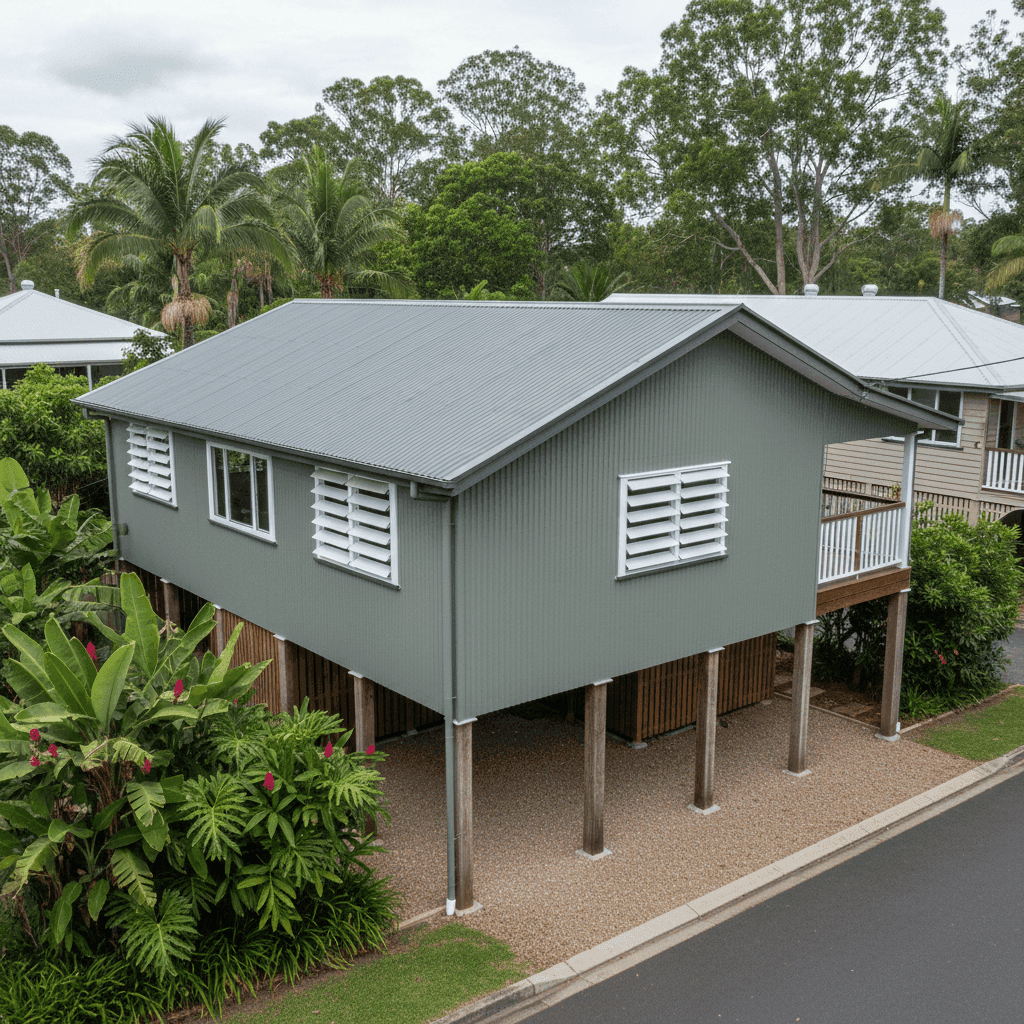
If you own a free standing home in Tully, QLD 4854, you already know that insurance isn't cheap — but just how much should you expect to pay? This article breaks down a real home and contents insurance quote for a 3-bedroom property in Tully, compares it against local, state, and national benchmarks, and explains the key factors driving the cost. Whether you're renewing your policy or shopping around for the first time, this analysis will help you make a more informed decision.
---
Is This Quote Fair?
The quote in question comes in at $13,614 per year (or $1,335/month) for combined home and contents cover, with a building sum insured of $401,000 and contents valued at $50,000. The building excess is $3,000 and the contents excess is $1,000.
Our price rating for this quote is Expensive — Above Average.
To put that in perspective, the suburb average premium in Tully sits at $5,401 per year, with a median of $4,409. This quote is more than 2.5 times the suburb average and over 3 times the suburb median — a significant gap that warrants a closer look.
That said, it's important to understand why a quote might land well above the average. Premiums are calculated based on a combination of property-specific risk factors and location-based hazards, and as we'll explore below, this particular property has several characteristics that push it firmly into higher-risk territory.
---
How Tully Compares
Tully is one of the more expensive areas in Queensland for home insurance, and the data backs that up clearly.
| Benchmark | Annual Premium |
|---|---|
| This Quote | $13,614 |
| Tully Suburb Average | $5,401 |
| Tully Suburb Median | $4,409 |
| Tully 75th Percentile | $6,990 |
| QLD State Average | $4,547 |
| QLD State Median | $3,931 |
| National Average | $2,965 |
| National Median | $2,716 |
| Cassowary Coast LGA Average | $6,165 |
Even compared to the QLD state average of $4,547, this quote is roughly three times higher. And against the national average of $2,965, it's nearly five times the cost.
It's worth noting that even the Cassowary Coast LGA average — which includes higher-risk coastal and tropical properties — sits at $6,165 per year. This quote still exceeds that figure by more than $7,000, which suggests a combination of property-specific factors are compounding the already elevated regional risk.
For context, based on 50 quotes sampled in the Tully postcode, only the top end of the market (75th percentile and above) approaches even half of this premium. That places this quote firmly in the upper tier of what Tully homeowners are paying.
---
Property Features That Affect Your Premium
Several characteristics of this property are likely contributing to the elevated premium. Here's a breakdown of the most significant factors:
📍 Cyclone Risk Area
Tully sits in Far North Queensland and is designated as a cyclone risk area — one of the most impactful rating factors for home insurance in Australia. Insurers apply significant loadings to properties in cyclone-prone regions due to the potential for catastrophic wind and storm damage. This single factor alone can multiply a base premium several times over.
🏠 Construction Year: 1955
At nearly 70 years old, this home predates modern building codes by decades. Older homes are statistically more likely to suffer structural damage, electrical issues, and water ingress — all of which increase the likelihood of a claim. Insurers typically apply age loadings to homes built before the 1980s.
🏗️ Elevated on Stumps
The property is elevated by at least 1 metre on stumps — a classic Queenslander-style construction. While elevation can offer some protection against flooding, stump foundations introduce their own risks, including subfloor movement, rot, and termite damage. Insurers may price this differently depending on the specific foundation condition.
🧱 Non-Standard External Walls
The external walls are listed as "Other" — meaning they fall outside the standard brick or weatherboard categories. Non-standard construction materials can be more expensive to repair or replace, and some insurers apply loadings or may limit cover for certain wall types.
🏠 High Sum Insured
At $401,000 for the building alone, the sum insured is substantial. The higher the rebuild cost, the higher the premium — regardless of location. For a 130 sqm home, this reflects the elevated cost of construction in regional Queensland, where labour and materials are typically more expensive than in metropolitan areas.
🌧️ Tully's Rainfall Record
It's worth mentioning that Tully is famously one of the wettest towns in Australia, receiving over 4,000mm of rain annually on average. This persistent moisture exposure increases the risk of water damage, mould, and structural deterioration — factors that insurers account for when pricing policies in the region.
---
Tips for Homeowners in Tully
Given the elevated cost of insurance in this area, here are some practical steps you can take to manage your premiums without leaving yourself underinsured:
1. Review Your Sum Insured Carefully
Make sure your building sum insured reflects the actual cost to rebuild your home — not its market value. Overinsuring can inflate your premium unnecessarily. Use a professional quantity surveyor or your insurer's rebuild calculator to get an accurate figure.
2. Consider Cyclone Mitigation Improvements
Some insurers offer premium discounts for homes that have been cyclone-proofed — for example, by installing cyclone shutters, upgrading roof fixings, or reinforcing garage doors. Check with your insurer whether any mitigation works could reduce your loading.
3. Increase Your Excess Strategically
This quote already carries a $3,000 building excess. If you're comfortable with a higher out-of-pocket cost in the event of a claim, opting for an even higher excess can meaningfully reduce your annual premium. Just make sure it's an amount you could genuinely afford to pay.
4. Compare Multiple Quotes Every Year
Insurance pricing in cyclone zones can vary dramatically between providers. What one insurer charges $13,000+ for, another might price more competitively — especially if they have a different appetite for risk in Far North Queensland. Use CoverClub to compare quotes and ensure you're not overpaying for equivalent cover.
---
Ready to Compare?
If you're a homeowner in Tully or anywhere in Far North Queensland, it pays to shop around. Premiums in cyclone-risk areas vary significantly between insurers, and the difference can amount to thousands of dollars per year. Head to CoverClub to compare home and contents quotes tailored to your property — it's free, fast, and could save you a substantial amount on your next renewal.