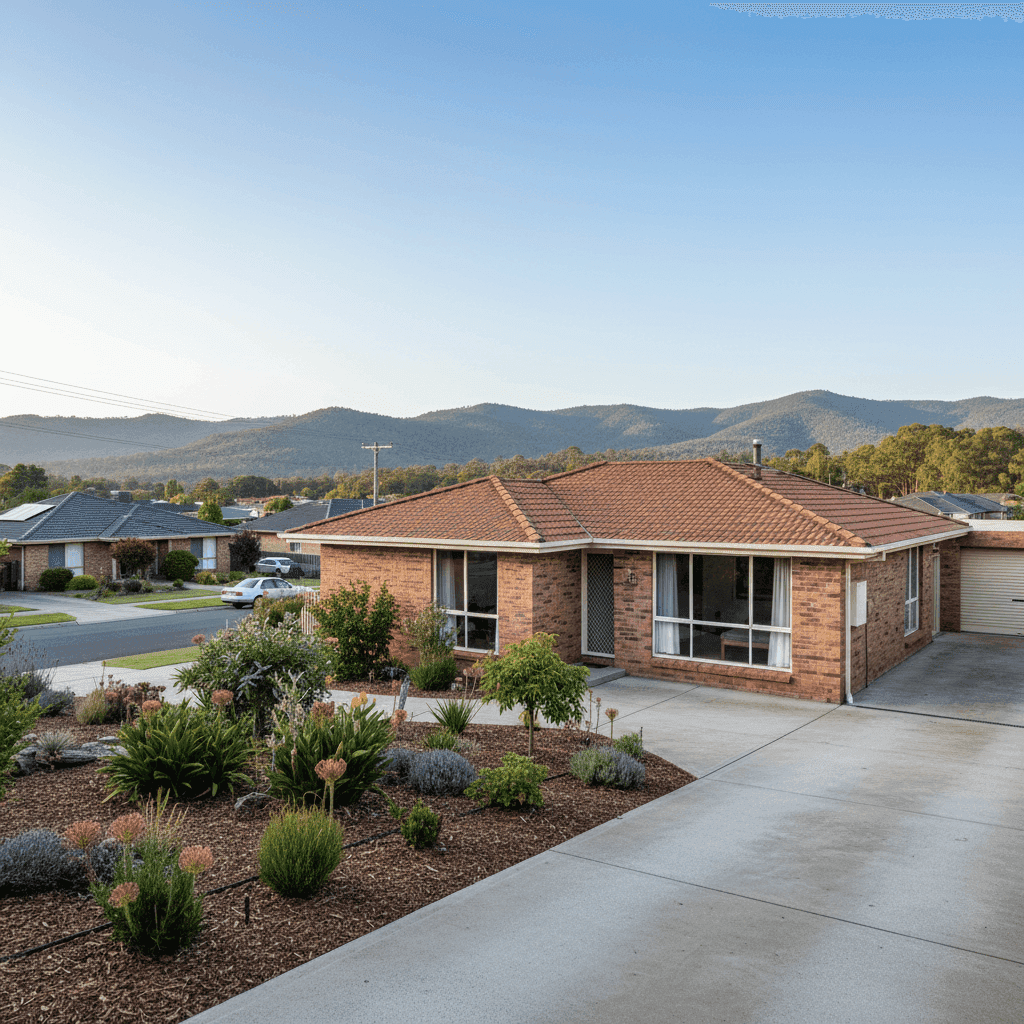
If you own a free standing home in Tumut, NSW 2720, you're likely wondering whether you're paying a fair price for home and contents insurance — or whether there's room to do better. Nestled in the foothills of the Snowy Mountains within the Snowy Valleys local government area, Tumut is a picturesque regional town that comes with its own unique set of insurance considerations. This article breaks down a real quote for a 3-bedroom, 2-bathroom brick veneer home in the area, and puts it in context against local, state, and national benchmarks.
---
Is This Quote Fair?
The quote in question comes in at $1,458 per year (or $149/month) for combined home and contents cover, with a building sum insured of $500,000 and contents valued at $140,000. The building excess is set at $3,000, while the contents excess sits at $500.
Our price rating for this quote is FAIR — Around Average.
That assessment is based on comparing the quote against other premiums we've seen for similar properties in the Tumut area. At $1,458/yr, this quote sits just above the suburb's 25th percentile of $1,423/yr, meaning it's on the more affordable end of the local range — but not quite in the cheapest bracket. The suburb's average premium is $1,871/yr and the median is $1,886/yr, so this quote is notably below both the average and median for the postcode. That's a reasonable outcome.
It's worth noting that the higher building excess of $3,000 does play a role in keeping the premium down. A lower excess would likely push the annual cost up. Homeowners should weigh whether that trade-off suits their financial situation — particularly if they'd struggle to cover a $3,000 out-of-pocket cost in the event of a claim.
---
How Tumut Compares
To put this quote in proper perspective, it helps to zoom out and look at the broader picture. Here's how premiums in Tumut stack up against state and national figures:
| Benchmark | Average Premium | Median Premium |
|---|---|---|
| Tumut (2720) | $1,871/yr | $1,886/yr |
| Snowy Valleys LGA | $2,858/yr | — |
| NSW | $9,528/yr | $3,770/yr |
| National | $5,347/yr | $2,764/yr |
(Based on [Tumut suburb data](https://coverclub.com.au/stats/NSW/2720/tumut), [NSW state data](https://coverclub.com.au/stats/NSW), and [national data](https://coverclub.com.au/stats/national).)
A few things stand out here. The NSW state average of $9,528/yr is dramatically higher than what Tumut homeowners typically pay — though this is heavily skewed by expensive coastal and high-risk properties across the state. The median of $3,770/yr is a more useful comparison, and Tumut's median of $1,886/yr is well below that figure.
Interestingly, the Snowy Valleys LGA average of $2,858/yr is noticeably higher than Tumut's suburb average of $1,871/yr, suggesting that some surrounding areas within the same council region carry greater risk profiles. This could reflect bushfire exposure, flood-prone land, or simply a different mix of property types across the LGA.
Against the national median of $2,764/yr, Tumut again comes out looking relatively affordable — which is good news for local homeowners. That said, with only 14 quotes in our suburb sample, these figures should be treated as a useful guide rather than a definitive market rate.
---
Property Features That Affect Your Premium
The characteristics of this particular property have a meaningful influence on what insurers charge. Here's a breakdown of the key features and how they typically impact pricing:
Brick Veneer Walls Brick veneer is one of the more common and well-regarded construction types in Australia. It offers solid fire resistance compared to timber-framed weatherboard homes, which generally translates to more competitive premiums. Insurers tend to view brick veneer favourably.
Tiled Roof A tiled roof is another positive from an insurance perspective. Tiles are durable, fire-resistant, and long-lasting — particularly compared to older corrugated iron or asbestos sheeting. At 130 sqm, this is a modest-sized home, which also helps keep the replacement cost — and therefore the premium — in check.
Slab Foundation Concrete slab foundations are standard in many Australian homes of this era and are generally considered low-risk by insurers. There's no raised subfloor that could be susceptible to moisture, pests, or collapse.
Construction Year: 1986 Homes built in the mid-1980s are well-established but not so old as to raise major concerns about outdated wiring or plumbing. That said, a property of this age may benefit from periodic inspections to ensure electrical and plumbing systems remain in good condition — which can also support insurance eligibility and claims.
Ducted Climate Control The presence of ducted climate control is worth flagging. While it adds to the home's value and liveability, it also represents a significant asset that should be factored into the building sum insured. Replacement costs for ducted systems can run into the tens of thousands of dollars.
No Pool, No Solar Panels The absence of a swimming pool and solar panels simplifies the risk profile and removes two common sources of additional premium loading. Both features can add meaningful cost to a policy when present.
Standard Fittings Standard-quality fittings mean the home doesn't attract the premium uplift associated with high-end or luxury finishes. This keeps the rebuild cost estimate more straightforward and predictable.
---
Tips for Homeowners in Tumut
Whether you're renewing your policy or shopping around for the first time, here are some practical steps to make sure you're getting the best value:
- Review your sum insured carefully. At $500,000 for a 130 sqm brick veneer home, the building sum insured appears reasonable — but construction costs vary and can change year to year. Use an independent building cost calculator to verify that your coverage would genuinely cover a full rebuild, including demolition, site clearance, and professional fees.
- Consider your excess settings. The $3,000 building excess on this quote is on the higher side. If you have the savings to cover that comfortably, it's a smart way to reduce your premium. If not, it may be worth exploring quotes with a lower excess, even if the annual cost rises slightly.
- Check your contents value annually. $140,000 in contents cover is a solid starting point, but it's easy to underestimate how quickly household goods accumulate in value. Do a room-by-room audit once a year — especially after major purchases — to make sure you wouldn't be left short after a claim.
- Be aware of bushfire risk in the region. Tumut and the broader Snowy Valleys area sit in a region with real bushfire exposure. Ensure your policy explicitly covers bushfire damage, and consider whether any additional mitigation measures (such as ember guards or cleared vegetation) might help reduce your risk — and potentially your premium at renewal.
---
Compare Your Options at CoverClub
Whether this quote is the right fit depends on your individual circumstances, risk tolerance, and budget. The best way to know for certain is to compare multiple quotes side by side. At CoverClub, you can enter your property details and see how different insurers price your home — giving you the confidence that you're not overpaying. It takes just a few minutes and could save you hundreds of dollars a year.