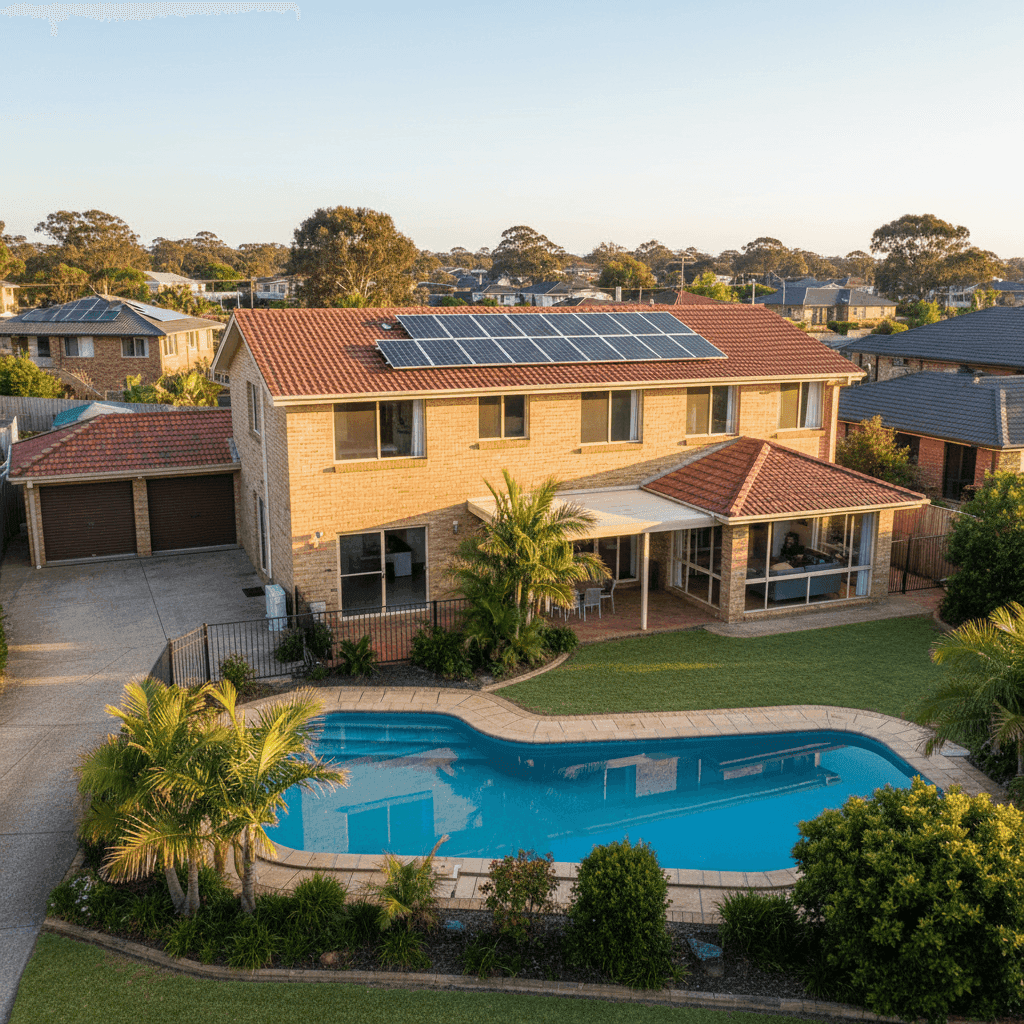
Tuncurry is a coastal town on the Mid-North Coast of New South Wales, sitting at the mouth of Wallis Lake and offering the kind of laid-back lifestyle that draws families and retirees alike. It's also a suburb where home insurance premiums can vary significantly — making it all the more important to understand what you're paying and whether your quote stacks up. This article breaks down a recent home and contents insurance quote for a four-bedroom, three-bathroom free standing home in Tuncurry, and puts the numbers in context against local, state, and national benchmarks.
---
Is This Quote Fair?
The annual premium on this quote comes in at $6,682 per year (or $640/month), covering a building sum insured of $969,000 and $98,000 worth of contents. Both the building and contents excess are set at $5,000.
Our pricing analysis rates this quote as CHEAP — below average for the area. That's a meaningful finding. Based on data collected from quotes in the Tuncurry area, the suburb average sits at $11,768/year, and the median is $11,212/year. This quote comes in at roughly 43% below the suburb average — a substantial saving that's well worth paying attention to.
Even the 25th percentile of Tuncurry quotes — meaning the cheapest quarter of results — sits at $10,327/year. This quote undercuts even that figure by a significant margin, placing it in genuinely competitive territory for a well-appointed coastal property of this size.
---
How Tuncurry Compares
To fully appreciate this quote's value, it helps to zoom out and look at the broader pricing landscape.
| Benchmark | Annual Premium |
|---|---|
| This Quote | $6,682 |
| Tuncurry Suburb Average | $11,768 |
| Tuncurry Suburb Median | $11,212 |
| NSW State Average | $9,528 |
| NSW State Median | $3,770 |
| Mid-Coast LGA Average | $5,840 |
| National Average | $5,347 |
| National Median | $2,764 |
A few things stand out here. First, Tuncurry premiums are notably elevated compared to both the NSW state average and the national average. The suburb average of $11,768 is more than double the national average of $5,347 — reflecting the elevated risk profile that coastal NSW properties typically carry, including exposure to storm surge, flooding, and severe weather events.
Second, the Mid-Coast LGA average of $5,840/year provides a useful middle-ground comparison. This quote, at $6,682, sits slightly above the LGA average — but remains dramatically below the suburb-specific figures for Tuncurry. It's worth noting that suburb-level data can be influenced by the specific mix of properties and cover levels in the sample, and Tuncurry's waterfront and near-water properties may be pushing those local averages higher.
The wide gap between the NSW state average ($9,528) and the state median ($3,770) is also telling — it suggests a skewed distribution where a subset of high-risk or high-value properties is pulling the average up considerably. Tuncurry sits firmly in that elevated-risk cohort.
---
Property Features That Affect Your Premium
Several characteristics of this property are likely influencing the premium — some favourably, some less so.
Double brick construction is generally viewed positively by insurers. It offers strong resistance to fire, wind, and impact damage, and tends to be more durable than brick veneer or timber-framed alternatives. Combined with a tiled roof, which is considered a lower-risk roofing material compared to Colorbond or corrugated iron in some contexts, this home has a solid structural profile.
The slab foundation is standard for the era and region, and doesn't typically attract a loading on its own. However, the 1980 construction year is worth noting — homes of this age may have older electrical wiring, plumbing, or roofing components that some insurers factor into their risk assessment, particularly when it comes to escape of liquid or fire claims.
The swimming pool adds both value and liability exposure. Pools can increase the risk of accidental damage claims and may require specific disclosure to your insurer. Similarly, solar panels are now a common feature on Australian homes but can affect claims related to storm damage or roof work — it's important to confirm your policy explicitly covers them.
Ducted climate control is a higher-end fixture that contributes to the above-average fittings quality noted for this property. Insurers typically factor in the cost of replacing these systems when assessing building sum insured adequacy — and at $969,000, this building cover figure reflects the true replacement cost of a well-appointed 169 sqm home.
At roughly $5,734 per square metre, the building sum insured is on the higher end but appropriate given the above-average fittings, double brick construction, and the current cost of building materials and labour in regional NSW.
---
Tips for Homeowners in Tuncurry
1. Don't underinsure — especially in a coastal town Building costs in regional NSW have risen sharply in recent years. A sum insured of $969,000 for a 169 sqm double brick home with quality fittings is well-considered, but it's worth reviewing this figure annually. Underinsurance is one of the most common issues Australian homeowners face after a major claim.
2. Check your pool and solar panel coverage explicitly Both features add complexity to a home insurance policy. Ask your insurer whether your solar panels are covered under the building section, what happens if storm damage affects the panels and the roof simultaneously, and whether your pool equipment (pump, filter, heating) is included in your contents or building cover.
3. Consider the impact of your excess Both the building and contents excess on this policy are set at $5,000. While a higher excess typically reduces your premium, it's important to ensure you could comfortably cover that amount out of pocket in the event of a claim. For a coastal property exposed to storm risk, this is a realistic scenario to plan for.
4. Shop around — the data shows it pays off in Tuncurry The spread between the cheapest and most expensive quotes in Tuncurry is enormous. With a suburb average of $11,768 and quotes available well below that, comparing multiple insurers could save thousands of dollars annually without sacrificing cover quality. Don't auto-renew without checking the market first.
---
Get a Better Deal on Home Insurance
Whether you're a long-time Tuncurry local or new to the area, the data is clear — there's a wide range of premiums on offer, and the difference between the best and worst quotes can be staggering. CoverClub makes it easy to compare home and contents insurance quotes side by side, so you can see exactly what you're getting and what you're paying for. Start comparing quotes today and find out if your current policy is still competitive.