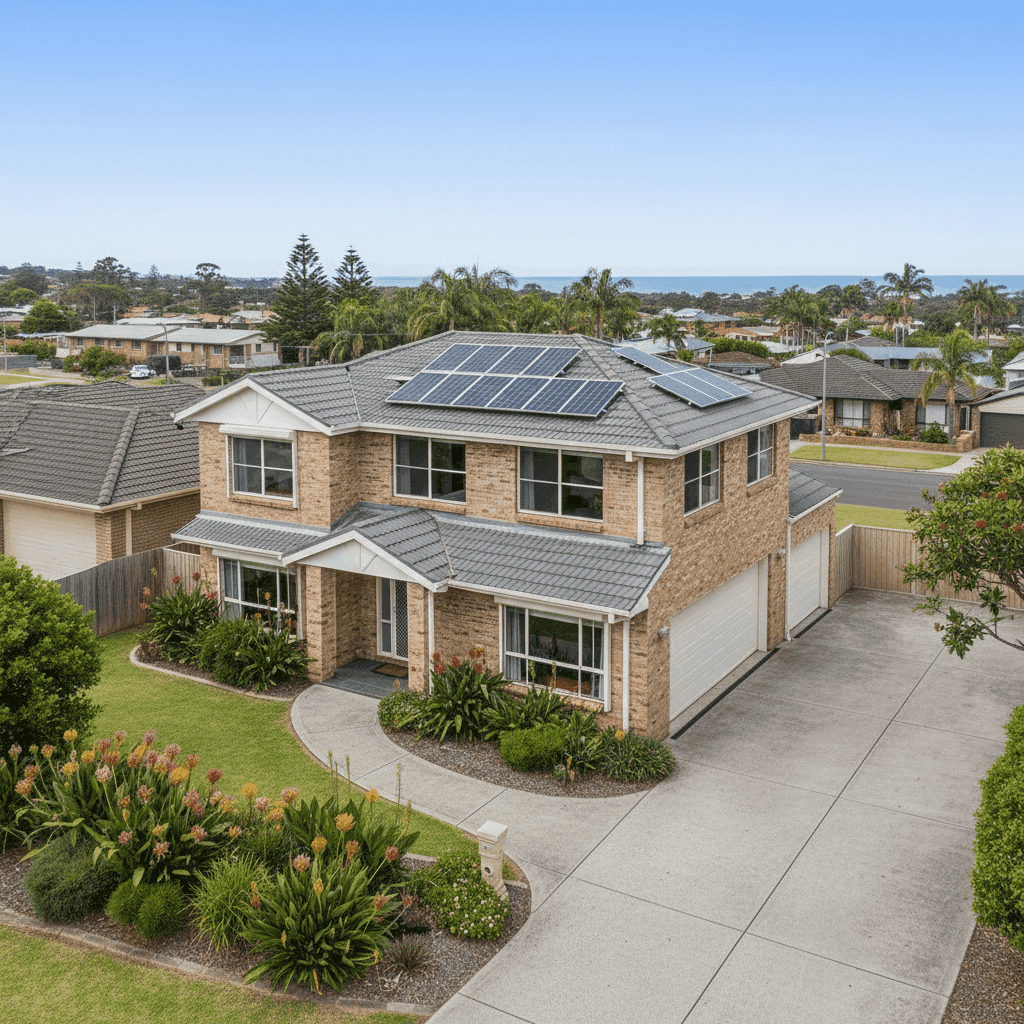
If you own a free standing home in Tuncurry, NSW 2428, you already know this coastal Mid-Coast town offers a relaxed lifestyle — but home insurance in the area can come with some surprises. This article breaks down a real home and contents insurance quote for a five-bedroom brick veneer property in Tuncurry, comparing the premium against local, state, and national benchmarks so you can judge whether you're getting a fair deal.
---
Is This Quote Fair?
The annual premium on this quote comes in at $10,156 per year (or $973/month), covering a building sum insured of $936,000 and contents valued at $86,000, each with a $1,000 excess.
Based on CoverClub's pricing data, this quote is rated CHEAP — below the suburb average. That's a meaningful distinction. With Tuncurry suburb averages sitting at $11,768/yr, this quote comes in roughly $1,612 below what most homeowners in the area are paying. It also sits below the suburb median of $11,212 and even below the 25th percentile of $10,327 — meaning it's cheaper than at least three-quarters of comparable quotes in the postcode.
In practical terms, a homeowner who secures this rate instead of the suburb average would save over $1,600 annually — that's real money back in your pocket each year.
---
How Tuncurry Compares
To put this quote in broader context, here's how Tuncurry stacks up against the rest of NSW and the nation:
| Benchmark | Average Premium |
|---|---|
| This Quote | $10,156/yr |
| Tuncurry (suburb average) | $11,768/yr |
| Tuncurry (suburb median) | $11,212/yr |
| Mid-Coast LGA average | $5,840/yr |
| NSW state average | $9,528/yr |
| NSW state median | $3,770/yr |
| National average | $5,347/yr |
| National median | $2,764/yr |
A few things stand out here. While this quote beats the local suburb average, it is noticeably higher than both NSW and national averages. The NSW state average of $9,528/yr already sits above the national average of $5,347/yr, which tells us that NSW homeowners — particularly in coastal and regional areas — tend to face elevated premiums compared to much of the country.
The gap between the suburb average ($11,768) and the Mid-Coast LGA average ($5,840) is also striking. This suggests that Tuncurry-specific risks or property characteristics (such as the higher building sums insured typical of larger homes) are pushing premiums well above the broader LGA norm. For a five-bedroom home with a $936,000 building sum insured, that elevated figure is not unexpected.
It's worth noting that median figures across NSW and nationally are significantly lower than the averages, which indicates a skewed distribution — a smaller number of high-value or high-risk properties are pulling the averages up considerably.
---
Property Features That Affect Your Premium
Several characteristics of this particular property have a direct bearing on what insurers charge. Here's what's likely at play:
Size and Sum Insured
At five bedrooms and two bathrooms, this is a substantial family home. The building sum insured of $936,000 reflects the cost to fully rebuild, and larger homes naturally attract higher premiums due to greater replacement liability.
Construction: Brick Veneer Walls and Concrete Roof
Brick veneer construction is generally viewed favourably by insurers — it's durable, fire-resistant, and widely used across Australian suburbs. A concrete tile roof similarly offers solid weather resistance and longevity compared to materials like iron or fibrous cement sheeting. Together, these materials typically support more competitive premiums.
Slab Foundation
A concrete slab foundation is standard for Australian homes of this era and is generally considered low-risk by underwriters, with minimal exposure to subsidence or moisture-related issues common in older stumped homes.
Age of Property: Built in 1983
At over 40 years old, this home sits in a bracket where insurers may factor in the age of plumbing, electrical systems, and roofing. Older homes can attract slightly higher premiums due to maintenance risk, though the solid construction materials help offset this.
Solar Panels
The presence of solar panels adds a modest layer of complexity for insurers — panels can be damaged by hail, high winds, or fire, and they represent a meaningful replacement cost. Some policies cover solar panels automatically under building insurance; others require you to check the fine print.
Ducted Climate Control
Ducted air conditioning systems are generally covered under building insurance as a fixed installation. Their presence adds to the overall replacement value of the home and is reflected in the sum insured.
Vinyl Flooring and Standard Fittings
Vinyl flooring and standard-quality fittings keep the contents and internal replacement costs more predictable, which can work in your favour when calculating premiums compared to homes with high-end finishes.
---
Tips for Homeowners in Tuncurry
Whether you're reviewing an existing policy or shopping for a new one, here are some practical steps to make sure you're getting the best value:
- Review your building sum insured regularly. Construction costs have risen sharply in recent years. Make sure your $936,000 sum insured still reflects what it would genuinely cost to rebuild your home today — being underinsured can be just as costly as overpaying on premiums.
- Ask specifically about solar panel coverage. Not all policies treat rooftop solar the same way. Confirm whether your panels are covered under the building section, whether there are sub-limits, and how a claim for panel damage would be handled.
- Compare quotes at renewal time — every year. The fact that this quote beats the suburb average is great, but insurance markets shift. Loyalty doesn't always pay; running a fresh comparison at renewal can reveal meaningfully cheaper options.
- Consider your excess strategically. Both the building and contents excess on this policy sit at $1,000. Opting for a higher voluntary excess can reduce your annual premium, which may make sense if you have a strong financial buffer and are unlikely to make small claims.
---
Ready to Compare?
Whether this quote is yours or you're simply benchmarking what home insurance should cost in Tuncurry, the best way to know you're not overpaying is to compare. Get a home insurance quote at CoverClub and see how multiple insurers price your specific property — it takes just a few minutes and could save you hundreds each year.
For more local pricing data, explore the Tuncurry suburb insurance stats or browse the full NSW home insurance overview.