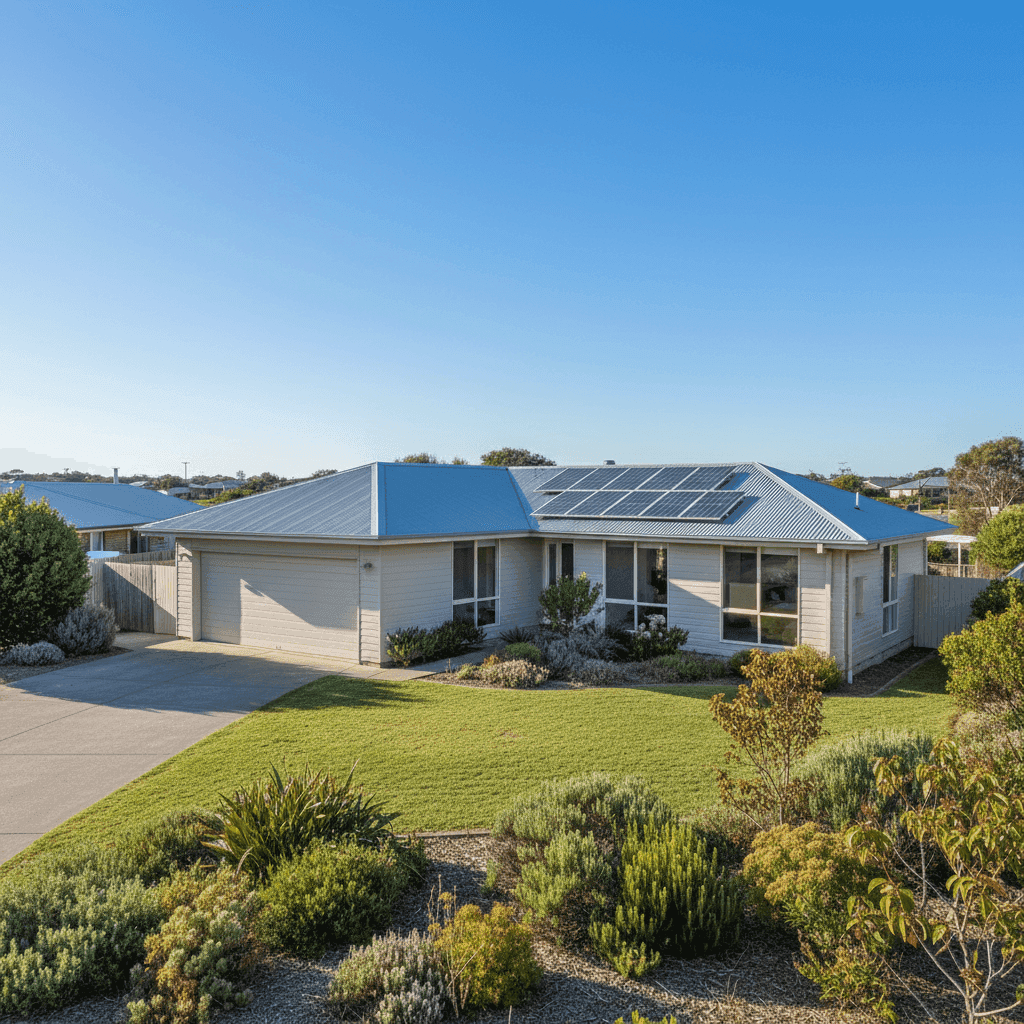
Tuross Head is a quiet coastal village on the NSW South Coast, nestled within the Eurobodalla Shire roughly halfway between Batemans Bay and Narooma. It's the kind of place where the estuary meets the sea and weekenders become permanent residents — but its coastal charm doesn't exempt homeowners from the realities of insurance pricing. If you own a free standing home here, understanding what you're paying and why is an important part of protecting your investment.
This article takes a close look at a recent home and contents insurance quote for a four-bedroom, three-bathroom free standing home in Tuross Head (postcode 2537), and puts the numbers in context against local, state, and national benchmarks.
---
Is This Quote Fair?
The quote in question comes in at $2,339 per year (or about $227 per month), covering a building sum insured of $1,057,000 and $20,000 in contents. The building excess is $5,000 and the contents excess is $1,000.
Our pricing analysis rates this quote as FAIR — Around Average. That's a reasonable outcome for a property of this size and specification in a coastal NSW location. It's not the cheapest quote you'll find in the suburb, but it's comfortably below the local average and well under the NSW state average, which suggests the pricing reflects the property's characteristics without any obvious red flags.
For a home with a $1,057,000 building sum insured — which is realistic for a well-maintained four-bedroom home on the South Coast — this premium works out to roughly 0.22% of the insured value per year. That's a useful benchmark to keep in mind when comparing policies.
---
How Tuross Head Compares
To put this quote in proper perspective, here's how it sits against available pricing data:
| Benchmark | Premium |
|---|---|
| This quote | $2,339/yr |
| Tuross Head suburb average | $2,807/yr |
| Tuross Head suburb median | $2,531/yr |
| Tuross Head 25th percentile | $1,561/yr |
| Tuross Head 75th percentile | $4,136/yr |
| Eurobodalla LGA average | $3,032/yr |
| NSW state average | $3,801/yr |
| NSW state median | $3,410/yr |
| National average | $2,965/yr |
| National median | $2,716/yr |
(Based on a sample of 20 quotes in the Tuross Head area. [View full suburb stats →](https://coverclub.com.au/stats/NSW/2537/tuross-head))
This quote sits $192 below the suburb median and $468 below the suburb average, which is a meaningful saving. Compared to the broader NSW state average of $3,801, it's nearly $1,500 cheaper per year — a significant difference that reflects both the property's characteristics and the insurer's assessment of risk in this particular location.
Even against the national average of $2,965, this quote comes in roughly $626 lower. The wide spread in Tuross Head pricing (from $1,561 at the 25th percentile to $4,136 at the 75th percentile) highlights just how much individual property factors and insurer appetite can influence the final number.
---
Property Features That Affect Your Premium
Several characteristics of this property play a meaningful role in how insurers price the risk.
Hardiplank/Hardiflex Cladding
The external walls are clad in Hardiplank (also known as Hardiflex) — a fibre cement product that's popular in coastal areas for good reason. It resists moisture, won't rot, and holds up well against the salt-laden air that can accelerate deterioration in beachside suburbs. Insurers generally view fibre cement cladding favourably compared to weatherboard or older asbestos-containing materials, and it can contribute to a more competitive premium.
Steel/Colorbond Roof
A Colorbond steel roof is one of the most insurer-friendly roofing choices in Australia. It's durable, fire-resistant, and performs well in high-wind events — all factors that reduce the likelihood of a claim. For a coastal property in NSW, this is a genuine advantage at renewal time.
Solar Panels
The property has solar panels installed, which adds a layer of complexity to the insurance picture. Solar systems need to be accounted for in the building sum insured, as replacing panels and associated inverter equipment can be costly. It's worth confirming with your insurer that the solar system is explicitly covered under the building policy and that the sum insured reflects its replacement value.
Concrete Slab Foundation
A slab-on-ground foundation is standard for homes of this era and construction type. It's generally considered low-risk from an insurance perspective — there's no subfloor space to harbour moisture or pests, and slab homes tend to perform well structurally over time.
1987 Construction
Homes built in the late 1980s sit in an interesting position for insurers. They're old enough that some components (plumbing, electrical, roofing) may be approaching the end of their serviceable life, but not so old that they carry the same concerns as pre-war or early post-war dwellings. Keeping up with maintenance is key to avoiding claim disputes related to wear and tear.
Building Size and Sum Insured
At 153 sqm, this is a comfortably sized four-bedroom home. The $1,057,000 building sum insured works out to approximately $6,908 per sqm — broadly in line with current construction costs for a comparable rebuild in regional NSW, particularly when factoring in site access, demolition, and coastal construction premiums.
---
Tips for Homeowners in Tuross Head
1. Review your building sum insured annually Construction costs have risen sharply in recent years, and what was adequate two years ago may leave you underinsured today. Use a quantity surveyor estimate or an online rebuild calculator to sense-check your sum insured each renewal cycle.
2. Confirm solar panel coverage explicitly Don't assume your solar system is automatically covered to its full replacement value. Ask your insurer directly whether panels, inverters, and associated wiring are included under the building definition — and if there are any sub-limits that apply.
3. Consider your excess strategy carefully This quote carries a $5,000 building excess, which is on the higher side. A higher excess typically reduces your premium, but it means you'll need to fund the first $5,000 of any building claim yourself. Make sure you're comfortable with that trade-off and that you have the liquidity to cover it if needed.
4. Don't overlook contents coverage A $20,000 contents sum insured is relatively modest for a four-bedroom, three-bathroom home. Take the time to do a proper room-by-room inventory — furniture, appliances, clothing, electronics, and valuables all add up quickly. Being underinsured on contents is one of the most common and costly mistakes homeowners make.
---
Compare Quotes and Find a Better Deal
Whether you're renewing an existing policy or shopping for the first time, it pays to compare. Insurers price risk differently, and the spread of quotes available in Tuross Head — from under $1,600 to over $4,100 — shows just how much variation exists in the market.
Get a home insurance quote at CoverClub and see how your property stacks up. It takes just a few minutes, and you might be surprised by what's available.