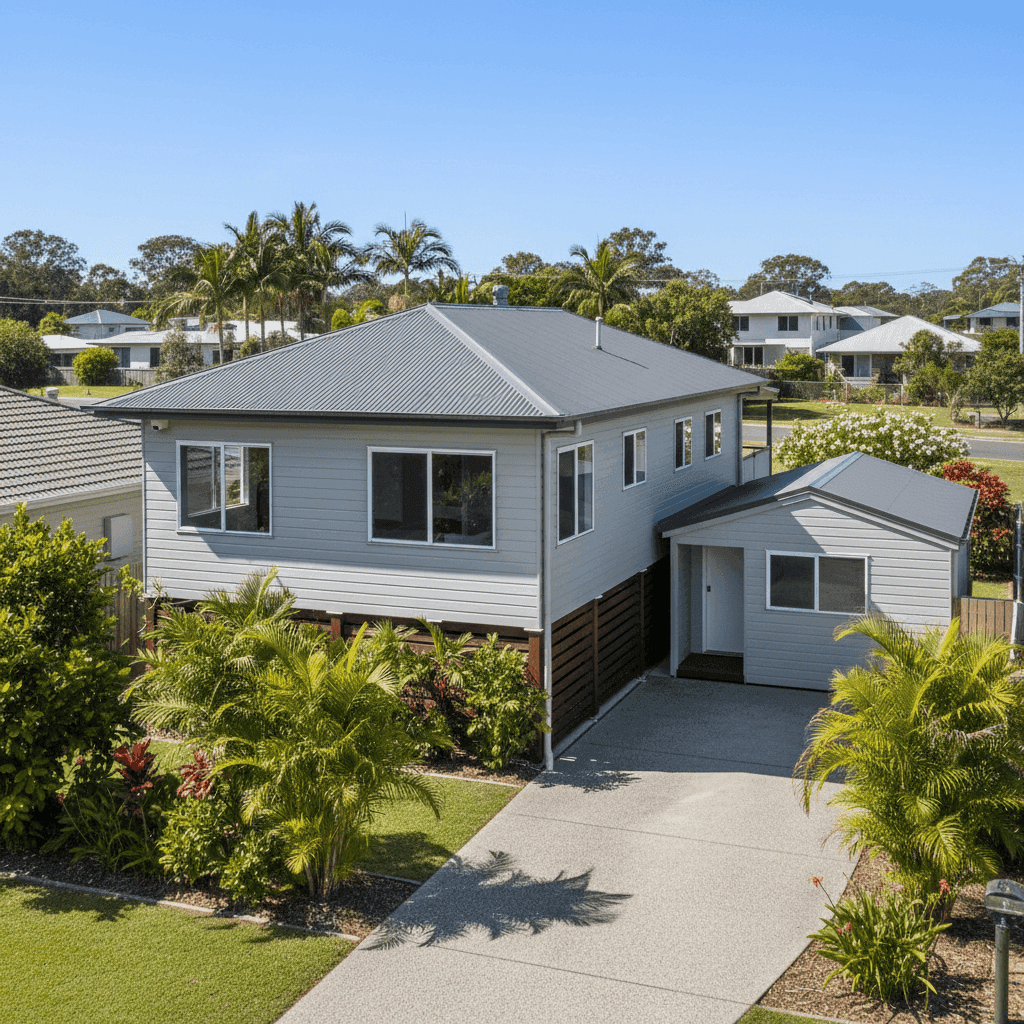
If you own a free standing home in Tweed Heads West, NSW 2485, you're probably well aware that home insurance in this part of coastal New South Wales can be anything but straightforward. Sitting just inland from the Queensland border, Tweed Heads West sits in a region where flood plains, storm activity, and ageing housing stock all play a role in shaping what insurers charge. This article breaks down a real home and contents insurance quote for a four-bedroom, three-bathroom property in the suburb — and puts the numbers in context so you can judge whether you're getting a fair deal.
---
Is This Quote Fair?
The annual premium for this property came in at $4,521 per year (or $390/month), with a building sum insured of $805,000 and $50,000 in contents cover. The building excess is $5,000 and the contents excess is $1,000.
CoverClub's pricing tool rates this quote as Fair — Around Average, and the data backs that up. Here's why:
- The suburb median premium for Tweed Heads West is $5,466/year, meaning this quote sits comfortably below the midpoint for the area.
- The suburb average is a much higher $8,864/year — a figure pulled upward by some very expensive outlier quotes (the 75th percentile sits at a striking $15,468/year).
- At $4,521, this quote is also above the suburb's 25th percentile of $3,543/year, so there may be some room to push the price down further — but it's not dramatically overpriced.
In short: this homeowner is paying less than most of their neighbours, but they're not yet in "great deal" territory. Shopping around could potentially close that gap.
---
How Tweed Heads West Compares
To really appreciate this quote, it helps to zoom out and look at the broader picture. You can explore the full data on the Tweed Heads West insurance stats page.
| Benchmark | Premium |
|---|---|
| This quote | $4,521/yr |
| Suburb median (2485) | $5,466/yr |
| Suburb average (2485) | $8,864/yr |
| NSW median | $3,770/yr |
| NSW average | $9,528/yr |
| National median | $2,764/yr |
| National average | $5,347/yr |
| Tweed LGA average | $26,089/yr |
A few things stand out here. First, the Tweed LGA average of $26,089/year is extraordinary — one of the highest in the country — reflecting the severe flood and storm risk that affects many parts of the Tweed Valley. This property's quote is dramatically lower than that LGA-wide figure, which suggests insurers are pricing this specific property more favourably than many others in the region.
Second, this quote sits above the NSW state median of $3,770/year and well above the national median of $2,764/year. That's not surprising for a coastal-adjacent, flood-prone region — premiums in Northern NSW and South East Queensland tend to run higher than the national norm. The fact that this quote is still below the suburb median is a reasonable outcome given the risk environment.
---
Property Features That Affect Your Premium
Several characteristics of this property are worth unpacking, as they each have a meaningful influence on the final premium.
Hardiplank/Hardiflex exterior walls are a positive for insurers. This fibre cement cladding is fire-resistant, durable, and holds up well in storm conditions — all of which can contribute to a more competitive premium compared to older weatherboard or brick veneer homes.
Colorbond steel roofing is similarly well-regarded. It's lightweight, resistant to rust and corrosion, and performs reliably in high-wind events. For a property in coastal NSW, this is a meaningful risk-reduction factor.
Stumps foundation and elevated structure — the home is elevated by at least one metre — is a double-edged sword. On one hand, elevation above ground level offers meaningful flood protection, which is a significant risk in the Tweed region. On the other hand, elevated homes (often Queenslander-style) can be more expensive to repair after storm or wind events due to the complexity of the subfloor structure.
Construction year of 1983 means this home is over 40 years old. Older properties can attract slightly higher premiums due to the increased likelihood of wear-related claims — ageing plumbing, wiring, and roofing components all factor into an insurer's risk assessment.
Timber and laminate flooring is generally straightforward to price, though timber floors in elevated homes can be susceptible to moisture and pest damage, which some policies may or may not cover depending on the cause.
The granny flat adds complexity to the risk profile. Depending on the insurer, a granny flat may or may not be automatically included in the building sum insured — it's critical to confirm this with your provider to avoid being underinsured.
No pool, no solar panels, and no ducted climate control all simplify the risk profile and likely contribute to keeping the premium in check.
---
Tips for Homeowners in Tweed Heads West
1. Verify your granny flat is fully covered Not all insurers automatically include secondary dwellings in their standard building cover. Contact your insurer directly to confirm whether the granny flat is included in the $805,000 sum insured — and if not, arrange additional cover before you need to make a claim.
2. Review your building sum insured annually Construction costs in regional NSW have risen sharply in recent years. A sum insured that was adequate in 2022 may no longer reflect what it would actually cost to rebuild your home today. Use a building cost calculator or ask your insurer to review the figure at each renewal.
3. Consider raising your contents cover $50,000 in contents cover is on the lower end for a four-bedroom, three-bathroom home. Take the time to do a proper contents inventory — furniture, appliances, clothing, electronics, and valuables all add up quickly. Being underinsured on contents can be a costly mistake after a major claim.
4. Compare quotes at every renewal The wide spread of premiums in Tweed Heads West — from $3,543 at the 25th percentile to $15,468 at the 75th — shows just how differently insurers price the same suburb. Loyalty doesn't always pay in insurance; comparing quotes each year is one of the simplest ways to avoid overpaying.
---
Ready to See What You Could Pay?
Whether you're a first-time buyer or a long-time Tweed Heads West resident, it pays to know where your premium sits relative to the market. CoverClub makes it easy to compare home and contents insurance quotes in minutes — no jargon, no pressure.
Get a quote at CoverClub today and find out if you could be paying less for the same level of cover.