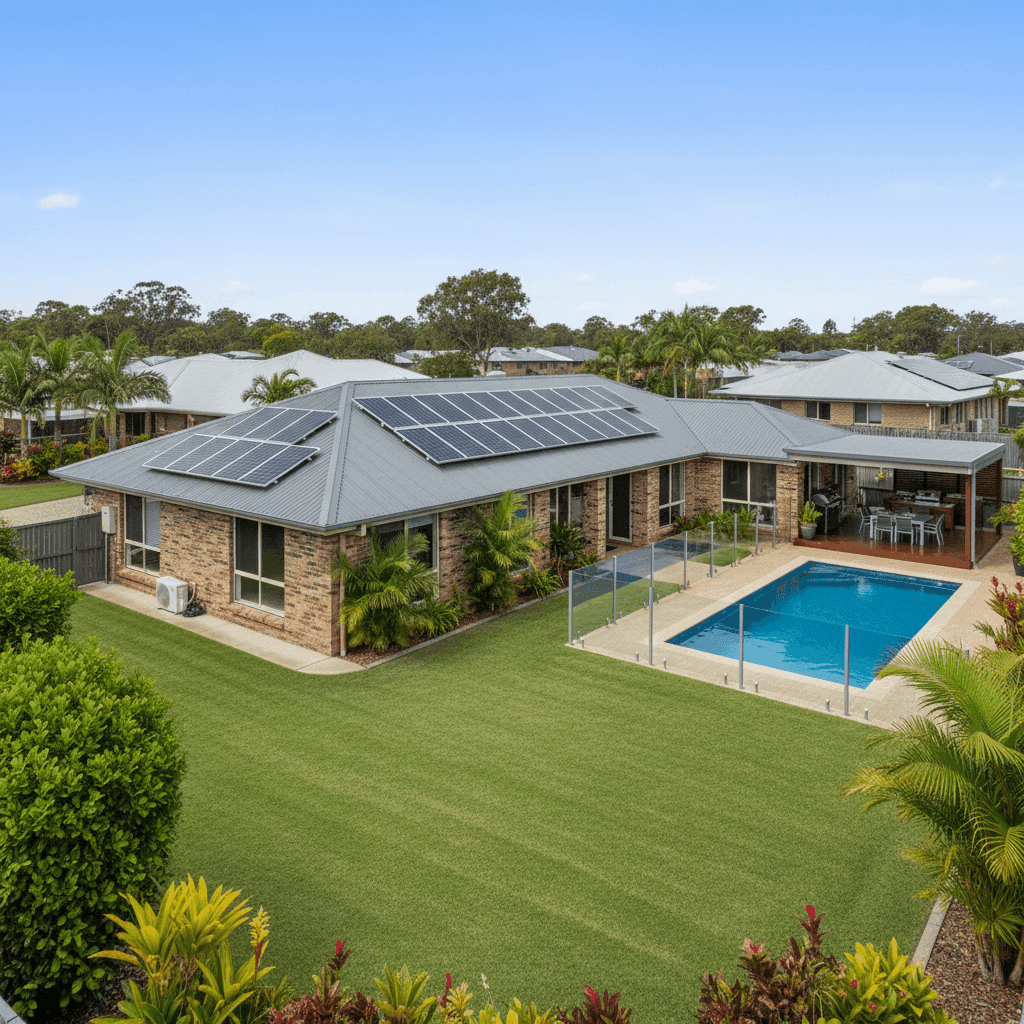
Home insurance costs in coastal Queensland can vary enormously — even between neighbouring streets. This article breaks down a real home and contents insurance quote for a four-bedroom, free-standing home in Twin Waters, QLD 4564, and puts it in context against local, state, and national benchmarks. Whether you're a current Twin Waters homeowner or considering a move to this popular Sunshine Coast suburb, understanding what drives your premium is the first step to making sure you're not paying more than you should.
---
Is This Quote Fair?
The quote in question comes in at $3,109 per year (or $291 per month) for combined home and contents cover, with a building sum insured of $673,000 and contents valued at $50,000. Both the building and contents excess sit at $1,000.
Our pricing analysis rates this quote as FAIR — around average. That's a meaningful finding. In a suburb where premiums can swing dramatically depending on flood zones, storm exposure, and property specifics, landing near the middle of the market suggests the insurer has priced this property in line with its actual risk profile — neither gouging the customer nor cutting corners on cover.
A "fair" rating doesn't mean there's no room to improve. It simply means this quote is competitive relative to what others in the same postcode are paying. As we'll explore below, the local market is wide, and there's genuine potential to find a better deal with the right comparison.
---
How Twin Waters Compares
To understand whether $3,109 is truly reasonable, it helps to zoom out and look at the broader pricing landscape. Here's how this quote stacks up across three levels:
| Benchmark | Average Premium | Median Premium |
|---|---|---|
| Twin Waters (4564) | $7,094/yr | $4,258/yr |
| Sunshine Coast LGA | $4,608/yr | — |
| Queensland | $4,547/yr | $3,931/yr |
| National | $2,965/yr | $2,716/yr |
(Based on [Twin Waters suburb data](https://coverclub.com.au/stats/QLD/4564/twin-waters), [QLD state data](https://coverclub.com.au/stats/QLD), and [national benchmarks](https://coverclub.com.au/stats/national) from CoverClub's quote database.)
A few things stand out here. The Twin Waters suburb average of $7,094 is strikingly high — more than double the national average — reflecting the elevated risk profile of coastal Queensland properties. Flooding, storm surge, and severe weather events all push premiums up in this region.
At $3,109, this quote sits below the suburb median of $4,258, below the QLD state average of $4,547, and only modestly above the national average of $2,965. It also sits comfortably above the suburb's 25th percentile of $2,708, which means roughly a quarter of Twin Waters quotes come in cheaper — but the other three-quarters are more expensive.
The wide spread in local premiums (from $2,708 at the 25th percentile to $8,432 at the 75th percentile) tells an important story: individual property characteristics matter enormously in this postcode. Two homes on the same street can attract very different premiums based on flood mapping, elevation, construction type, and insurer appetite.
---
Property Features That Affect Your Premium
Several characteristics of this property work in the homeowner's favour when it comes to pricing:
Brick veneer construction is generally viewed favourably by insurers. It offers solid structural integrity and reasonable resistance to wind and fire compared to lightweight cladding alternatives. Combined with a Colorbond steel roof, which is durable, low-maintenance, and well-suited to Queensland's harsh weather conditions, this home presents a relatively low-risk construction profile.
Slab foundation is the standard for homes of this era in Queensland and is generally neutral from an insurance perspective — though it can be a factor in flood-prone areas where elevated stumped homes may fare better.
Tiled flooring is a practical choice in Queensland's climate and tends to hold up well in the event of water ingress, which can reduce the severity of contents and building claims.
The property was built in 2000, placing it in a generation of homes that benefited from improved building codes following earlier cyclone and storm events in Queensland. This is a modest positive for insurers compared to older homes with potentially outdated construction standards.
The presence of a swimming pool adds a small amount of liability and maintenance risk, and some insurers factor this into their pricing. Solar panels are increasingly common on Queensland homes and most modern policies accommodate them, though it's worth confirming your policy explicitly covers panels for damage from storms or hail.
Notably, this property is not in a designated cyclone risk area, which is a significant pricing advantage for a QLD coastal suburb. Many nearby postcodes attract cyclone loading on premiums; the absence of this factor here helps explain why the quote sits well below the suburb average.
---
Tips for Homeowners in Twin Waters
1. Check your flood and storm surge mapping Even if your specific property isn't in a high-risk zone, Twin Waters sits within the Sunshine Coast's broader coastal and waterway network. Verify your property's flood overlay through the Sunshine Coast Council's mapping tools and make sure your policy explicitly includes flood cover — not all standard policies do.
2. Review your building sum insured regularly Construction costs in Queensland have risen sharply in recent years. A sum insured of $673,000 for a 214 sqm brick veneer home may be appropriate today, but it's worth recalculating your rebuild cost annually using an independent estimator to avoid being underinsured if you ever need to make a claim.
3. Confirm solar panel and pool coverage Ask your insurer directly whether your solar panel system is covered under the building section and what the limits are. Similarly, confirm that your pool, fencing, and associated equipment are included. These are easy items to overlook until you need to claim.
4. Compare quotes at renewal — every year The wide spread of premiums in Twin Waters (25th to 75th percentile spans nearly $5,700) means the market is highly competitive and variable. Don't assume your renewal quote is the best available. Running a fresh comparison at CoverClub takes minutes and could save you hundreds.
---
Ready to Compare?
Whether you're happy with your current insurer or looking for something better, it pays to know where you stand. CoverClub makes it easy to compare home and contents insurance quotes from multiple providers in one place — so you can see exactly how your premium measures up against others in Twin Waters and across Queensland. Get a quote today and make sure your home is covered at the right price.