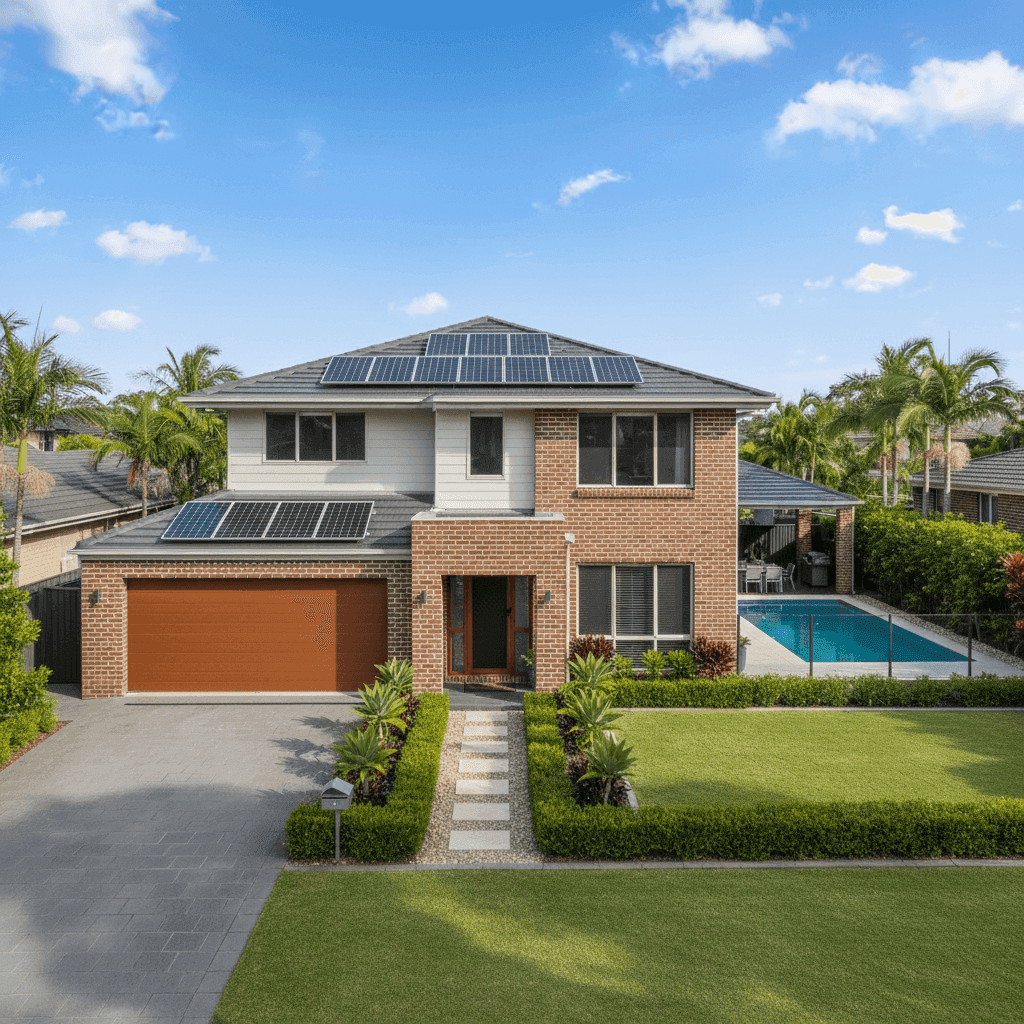
Twin Waters is a sought-after residential suburb on Queensland's Sunshine Coast, known for its canal-front streets, relaxed lifestyle, and proximity to the beach. For owners of free standing homes in this area, understanding the true cost of home and contents insurance — and whether you're getting a fair deal — is an important part of protecting one of your most valuable assets. This article breaks down a recent insurance quote for a four-bedroom, two-bathroom home in Twin Waters (postcode 4564) and puts the numbers into context against local, state, and national benchmarks.
---
Is This Quote Fair?
The short answer: yes, this is a very competitive quote. At $2,697 per year (or $264 per month) for combined home and contents cover, this premium sits well below the suburb average — earning a "Cheap (Below Average)" price rating.
To put that in perspective, the suburb average premium for Twin Waters sits at $4,374 per year, with a median of $4,246. That means this quote is roughly 38% cheaper than the average for comparable homes in the same postcode. Even against the 25th percentile — the cheapest quarter of quotes in the area — this premium of $2,697 still comes in below the $3,355 mark, placing it firmly among the most affordable options available locally.
The building is insured for $613,000 and contents for $50,000, with a $1,000 excess on both building and contents claims. These are reasonable settings for a 214 sqm home of this calibre, and the coverage levels appear well-matched to the property's size and age.
---
How Twin Waters Compares
Home insurance pricing varies enormously depending on where you live, and Queensland is a particularly interesting case. Let's look at how this quote stacks up across different geographic levels:
| Benchmark | Annual Premium |
|---|---|
| This Quote | $2,697 |
| Twin Waters Suburb Average | $4,374 |
| Twin Waters Suburb Median | $4,246 |
| Sunshine Coast LGA Average | $7,249 |
| QLD State Average | $9,129 |
| QLD State Median | $3,903 |
| National Average | $5,347 |
| National Median | $2,764 |
A few things stand out here. First, the Queensland state average of $9,129 per year is extraordinarily high — a reflection of the significant proportion of QLD properties located in cyclone, flood, and storm surge risk zones. This skews the average dramatically upward. The state median of $3,903 is a more realistic figure for many QLD homeowners, and this quote still beats it comfortably.
At the national level, the average premium is $5,347, while the national median sits at $2,764 — very close to what this homeowner is paying. This suggests the quote is in line with what a typical Australian homeowner pays, while being significantly cheaper than the local Twin Waters norm.
The Sunshine Coast LGA average of $7,249 is notably high, likely driven by coastal and flood-prone properties within the region. Twin Waters itself, while coastal, does not fall within a designated cyclone risk area, which helps keep premiums more manageable.
---
Property Features That Affect Your Premium
Several characteristics of this property play a direct role in determining the insurance premium — both positively and negatively.
Brick Veneer Walls & Tiled Roof Brick veneer construction with a tiled roof is generally viewed favourably by insurers. These materials offer solid resistance to fire and moderate weather events, and are among the more common construction types in Queensland. Compared to weatherboard or lightweight cladding, brick veneer typically attracts lower premiums.
Slab Foundation A concrete slab foundation is standard for homes of this era and is considered low-risk from an insurance perspective. It provides a stable base and reduces the likelihood of subsidence or structural movement claims.
Construction Year: 2000 At roughly 25 years old, this home is relatively modern by Australian standards. Newer builds tend to benefit from more current building codes — particularly important in QLD where cyclone and storm standards have evolved significantly since the 1970s and 80s.
Swimming Pool A pool adds value to the property but also introduces liability considerations. Most home insurance policies include public liability cover that extends to pool-related incidents, though it's worth confirming the specifics of your policy.
Solar Panels Solar panels are increasingly common on Australian homes, but they do add complexity to a policy. Panels are typically covered as part of the building sum insured, so it's important to ensure the $613,000 building cover adequately accounts for their replacement value.
Ducted Climate Control Ducted air conditioning systems are expensive to repair or replace. Having this included within the building sum insured is important — and with a 214 sqm home, the $613,000 building cover should be sufficient to account for it.
No Cyclone Risk This is a significant factor. Twin Waters is not classified as a cyclone risk area, which removes one of the biggest premium drivers for Queensland coastal properties. Homeowners further north — particularly in areas like Cairns, Townsville, or the Whitsundays — can pay dramatically more due to cyclone loading.
---
Tips for Homeowners in Twin Waters
1. Check Your Building Sum Insured Regularly Construction costs have risen sharply in recent years. The $613,000 building sum insured should be reviewed annually to ensure it reflects current rebuild costs — not just the market value of the home. Underinsurance is one of the most common and costly mistakes homeowners make.
2. Don't Overlook Contents Coverage A $50,000 contents value is on the modest side for a four-bedroom home with standard fittings. Take the time to do a proper contents inventory — furniture, appliances, clothing, electronics, and outdoor items (including pool equipment) can add up quickly. Many homeowners are surprised to find they're underinsured on contents.
3. Confirm Pool and Solar Panel Coverage Ask your insurer explicitly how your pool and solar panels are covered. Are the panels included in the building sum insured? Is pool equipment (pumps, filters, heating) covered? What liability coverage applies to the pool? Getting clarity on these points before you need to claim is far better than finding out the hard way.
4. Compare Quotes at Renewal This quote is already competitively priced, but insurance markets shift. Premiums can change at renewal without warning, and loyalty doesn't always pay. Make it a habit to compare quotes each year — even if you're happy with your current insurer — to ensure you're still getting good value.
---
Ready to Find a Better Deal?
Whether you're a first-time buyer or a long-time Twin Waters resident, comparing home insurance quotes is one of the simplest ways to save money without sacrificing cover. Get a personalised home insurance quote at CoverClub and see how your premium stacks up against the suburb, state, and national benchmarks — in minutes, for free.