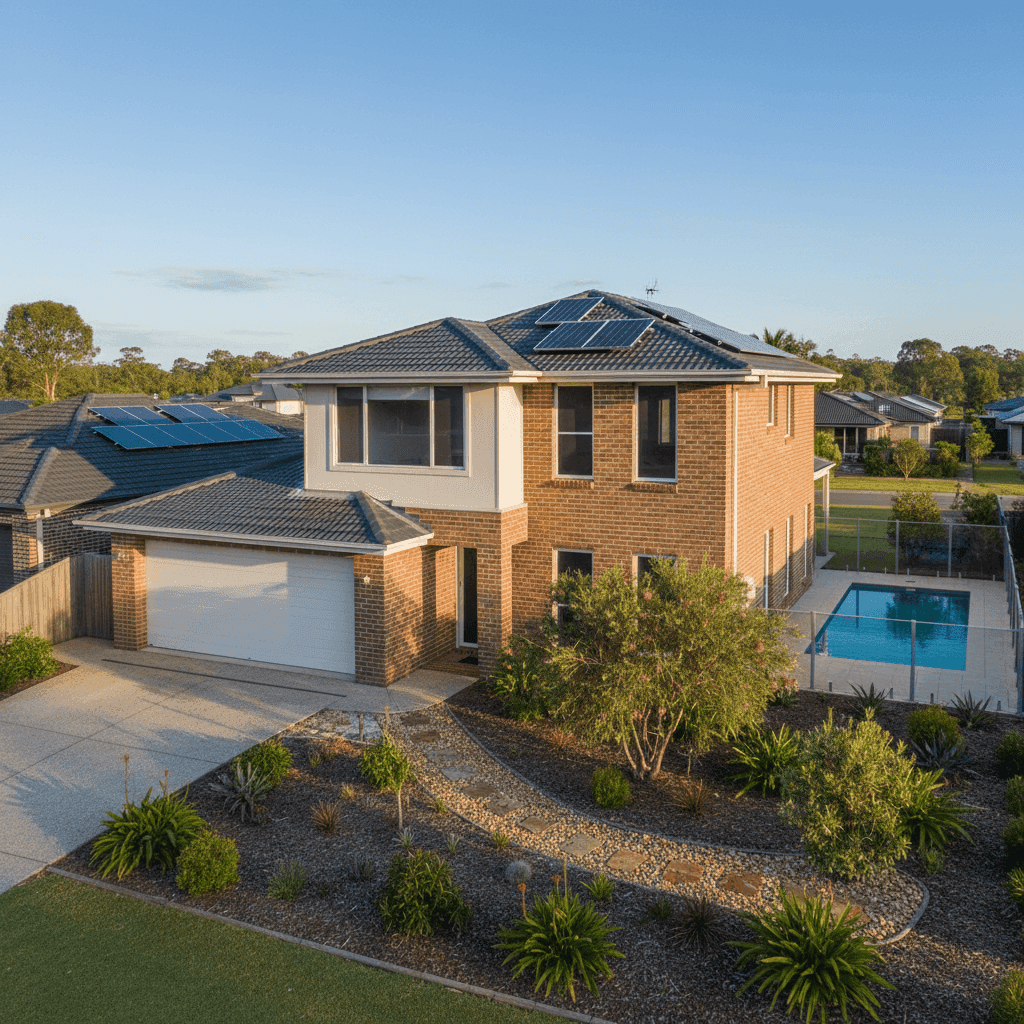
Twin Waters is one of the Sunshine Coast's most appealing residential pockets — a canal-front suburb in postcode 4564 known for its relaxed lifestyle, proximity to the coast, and well-established housing stock. If you own a free standing home here, you're likely paying close attention to your household budget, and home insurance is one of those recurring costs that's well worth scrutinising. This article breaks down a real home and contents insurance quote for a four-bedroom, two-bathroom free standing home in Twin Waters, and puts it in context against local, state, and national benchmarks.
---
Is This Quote Fair?
The short answer: yes — and then some.
The quote in question comes in at $2,927 per year (or roughly $274 per month) for combined home and contents cover, with a building sum insured of $680,000 and contents covered to $70,000. Both the building and contents excess are set at $2,000.
CoverClub has rated this quote as CHEAP — Below Average, meaning it sits comfortably below what most homeowners in the area are paying. That's a meaningful result, especially on the Sunshine Coast where premiums can vary dramatically depending on insurer, property profile, and risk assessment.
To put it plainly: this quote is performing well. The homeowner is getting a solid level of cover for a price that undercuts the local going rate by a significant margin.
---
How Twin Waters Compares
Understanding where your premium sits relative to the market is one of the most useful things you can do as a homeowner. Here's how this quote stacks up across three levels of comparison:
Suburb Level (Twin Waters, QLD 4564)
Based on 12 quotes collected for Twin Waters, the local benchmarks look like this:
| Metric | Premium |
|---|---|
| Suburb Average | $4,374/yr |
| Suburb Median | $4,246/yr |
| 25th Percentile | $3,355/yr |
| This Quote | $2,927/yr |
| 75th Percentile | $5,267/yr |
This quote sits below the 25th percentile — meaning it's cheaper than at least 75% of quotes seen in the suburb. That's a strong result.
State Level (Queensland)
Queensland is one of Australia's most expensive states for home insurance, largely due to cyclone exposure, flooding risk, and extreme weather events across much of the state. The QLD state average sits at a striking $9,129 per year, though the median is a more moderate $3,903/yr — indicating a wide spread driven by high-risk postcodes pulling the average up.
At $2,927/yr, this quote comes in well below the Queensland median, which is a solid outcome for a Sunshine Coast property.
National Level
Zooming out to the national picture, the Australian average home insurance premium is $5,347/yr, with a national median of $2,764/yr. This quote sits just above the national median — reasonable given the property size, sum insured, and the inclusion of contents cover.
Sunshine Coast LGA
It's also worth noting that the broader Sunshine Coast LGA average is $7,249/yr — significantly higher than this quote. Twin Waters, while coastal-adjacent, appears to attract more competitive pricing than many other parts of the LGA, likely due to its lower flood and cyclone risk profile.
---
Property Features That Affect Your Premium
Every home is different, and insurers price risk based on a wide range of property characteristics. Here's how the features of this particular home likely influence its premium:
Brick Veneer Walls Brick veneer is generally well-regarded by insurers. It offers good structural durability, reasonable fire resistance, and performs well in moderate weather events. Compared to weatherboard or fibre cement, brick veneer tends to attract more competitive premiums.
Tiled Roof Concrete or terracotta tiles are a standard roofing choice across Queensland and are generally viewed favourably by insurers for their longevity and resistance to fire. They can be more expensive to repair after hail or storm damage than Colorbond, but their overall risk profile is solid.
Slab Foundation A concrete slab foundation is a stable, low-maintenance base that typically doesn't raise red flags for underwriters. It's particularly common in Queensland homes built from the 1990s onwards.
Timber and Laminate Flooring Timber and laminate floors can increase the contents and building replacement cost slightly, as they're more expensive to replace than carpet. However, they're unlikely to materially shift the premium on their own.
Swimming Pool Pools add to the insured value of the property and can introduce liability considerations. They're a common feature in Queensland homes and most standard home insurance policies provide some level of cover for pool structures and equipment.
Solar Panels Solar panels are increasingly standard on Australian homes. They're typically covered under building insurance as a fixed fixture, but it's worth confirming with your insurer that your sum insured accounts for their replacement value — solar systems can cost $8,000–$15,000 or more to replace.
Ducted Climate Control Ducted air conditioning systems are a significant fixed asset and are generally covered under building insurance. As with solar panels, homeowners should ensure their building sum insured is adequate to cover replacement of these systems.
Construction Year: 1997 A home built in 1997 is now approaching 30 years old. While it's not new, it was built under reasonably modern construction codes. Regular maintenance is key — ageing roofs, plumbing, and electrical systems can affect both your risk profile and your ability to make successful claims.
---
Tips for Homeowners in Twin Waters
1. Review your sum insured regularly With a building sum insured of $680,000 for a 214 sqm home, the per-square-metre rebuild cost works out to approximately $3,178/sqm. Construction costs have risen sharply in recent years, so it's worth checking this figure against current builder rates in the Sunshine Coast region to ensure you're not underinsured.
2. Confirm solar panels and ducted AC are included Contact your insurer to verify that your solar system and ducted air conditioning are explicitly covered under your building policy and that their replacement value is factored into your sum insured. These are easy items to overlook.
3. Consider your excess carefully Both the building and contents excess on this policy are set at $2,000. A higher excess typically lowers your premium, but make sure you're comfortable meeting that cost out of pocket in the event of a claim. If $2,000 feels like a stretch, it may be worth exploring a lower excess option.
4. Shop around at renewal time Even with a competitive quote like this one, it's good practice to compare at renewal. Insurers regularly adjust their pricing models, and a policy that was cheap one year may not be the best value the next. CoverClub makes it easy to benchmark your renewal quote against the market.
---
Ready to Compare?
Whether you're a Twin Waters local reviewing your current policy or shopping for cover on a new purchase, CoverClub gives you the tools to see exactly how your quote stacks up. Get a home insurance quote today and find out if you're getting a fair deal — or paying more than you should be.