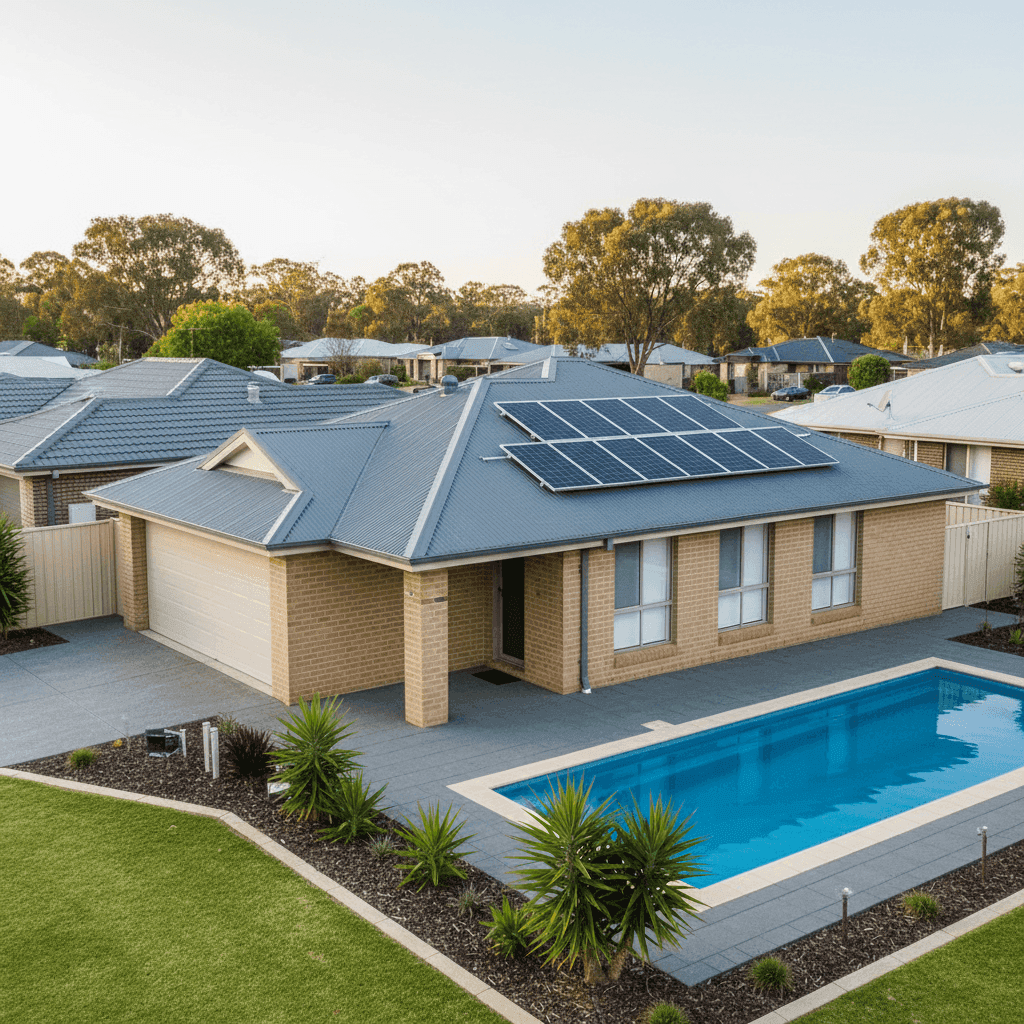
Two Wells is a growing township on the northern fringe of Adelaide, sitting roughly 40 kilometres from the CBD along the Port Wakefield Road corridor. It's become an increasingly popular choice for families seeking larger blocks and newer builds without straying too far from the city — and the property we're examining here is a textbook example of what the area offers: a modern, four-bedroom, two-bathroom free standing home built in 2017, complete with a pool, solar panels, and ducted climate control. So what does it actually cost to insure a home like this, and is the quote on the table a good one?
---
Is This Quote Fair?
The annual premium for this home and contents policy comes in at $1,935 per year (or around $202 per month), covering a building sum insured of $794,000 and contents valued at $274,000. The building excess is set at $3,000, while the contents excess is a more modest $500.
Our price rating for this quote is FAIR — Around Average, which is a solid result worth unpacking.
To put it in context, the cheapest quotes in Two Wells sit around the 25th percentile at $1,585 per year, so this premium is only $350 above the lowest tier of the local market. On the other end of the scale, the 75th percentile sits at $4,120 per year — meaning a significant portion of Two Wells homeowners are paying more than double this quote. Coming in well below that upper range, while carrying a combined insured value of over $1 million, is genuinely competitive.
The "around average" rating reflects the fact that this quote isn't quite in bargain territory, but it's not overpriced either. For a property of this size, age, and feature set, landing near the middle of the local market is a reasonable outcome.
---
How Two Wells Compares
Understanding where your premium sits relative to broader benchmarks helps you gauge whether it's worth shopping around further. Here's how the numbers stack up:
| Benchmark | Premium |
|---|---|
| This quote | $1,935/yr |
| Two Wells suburb average | $3,046/yr |
| Two Wells suburb median | $3,001/yr |
| SA state average | $2,433/yr |
| SA state median | $1,679/yr |
| Wakefield LGA average | $2,382/yr |
| National average | $5,347/yr |
| National median | $2,764/yr |
This quote sits 37% below the Two Wells suburb average and 20% below the SA state average — both meaningful savings. It also comes in well under the national average of $5,347, which has been driven up significantly by high-risk regions including cyclone-prone parts of Queensland and Northern Australia.
Interestingly, the quote does sit slightly above the SA state median of $1,679, which reflects the fact that many South Australian properties being insured are smaller, older, or carry lower sums insured. When you factor in the size of this home and the inclusion of contents cover, the premium compares very favourably.
You can explore the full breakdown of Two Wells insurance data here or browse South Australia-wide statistics to see how your area sits in the broader picture.
> Note: The Two Wells suburb sample size for this comparison is five quotes, so averages should be interpreted as a guide rather than a definitive market benchmark. As more data is collected, these figures will become increasingly reliable.
---
Property Features That Affect Your Premium
Several characteristics of this property have a meaningful influence on what insurers charge — and in this case, most of them work in the homeowner's favour.
Construction quality and age Built in 2017, this home is relatively new by Australian standards. Modern builds generally comply with updated building codes, which translates to better structural resilience and lower claims risk in the eyes of insurers. The brick veneer external walls and Colorbond steel roof are both well-regarded materials — brick veneer offers solid fire and impact resistance, while Colorbond is durable, lightweight, and performs well in a range of weather conditions.
Slab foundation A concrete slab foundation is standard for newer South Australian homes and is generally viewed favourably by insurers. It reduces the risk of subsidence and underfloor pest damage compared to older suspended timber floor systems.
Timber and laminate flooring While attractive and popular, timber and laminate flooring can be more susceptible to water damage than tiles. This is worth keeping in mind when reviewing your contents and building policy inclusions — particularly around escape of liquid cover.
Swimming pool A pool adds both value and complexity to a home insurance policy. It increases the replacement cost of the property and can introduce liability considerations. Ensure your building sum insured adequately accounts for the pool structure and any associated fencing or equipment.
Solar panels Solar panels are increasingly common in South Australia, and insurers treat them differently depending on the policy. Some include panels as part of the building sum insured automatically; others require them to be listed separately. It's worth confirming with your insurer that the panels are covered for storm damage, hail, and accidental breakage.
Ducted climate control Ducted systems are a significant fixed asset and should be captured within the building sum insured. Given the cost of replacement, it's important to ensure the $794,000 building cover reflects the full reinstatement value of the home including this system.
No cyclone risk Two Wells falls outside designated cyclone risk zones, which is a meaningful premium advantage compared to properties in northern Australia. This alone can account for thousands of dollars in annual savings for equivalent homes in high-risk postcodes.
---
Tips for Homeowners in Two Wells
1. Review your building sum insured annually Construction costs in South Australia have risen steadily in recent years. A sum insured that was accurate in 2022 may no longer reflect the true cost of rebuilding your home today. Use a building cost calculator or speak with a quantity surveyor to ensure your $794,000 cover remains adequate — underinsurance is one of the most common and costly mistakes homeowners make.
2. Confirm solar panel coverage explicitly Don't assume your solar system is automatically covered. Ask your insurer directly whether panels are included under the building definition, what events are covered (e.g., hail, storm, fire), and whether there are any sublimits that apply.
3. Consider your excess structure carefully This policy carries a $3,000 building excess — on the higher end of the typical range. A higher excess generally reduces your premium, but it also means a larger out-of-pocket cost when you do need to claim. Think about whether you'd comfortably cover that amount in the event of a significant weather event or accidental damage.
4. Don't overlook pool and liability cover If you have guests using your pool, public liability cover becomes especially relevant. Check that your policy includes adequate liability protection and that the pool structure, pump, and filtration equipment are all accounted for in your building sum insured.
---
Compare Quotes and Find Better Value
Whether you're renewing your existing policy or insuring a new purchase, comparing multiple quotes is the most effective way to ensure you're not overpaying. CoverClub makes it easy to see how your premium stacks up against real data from your suburb and state — so you can make an informed decision with confidence.
Get a home insurance quote today and see how your property compares.