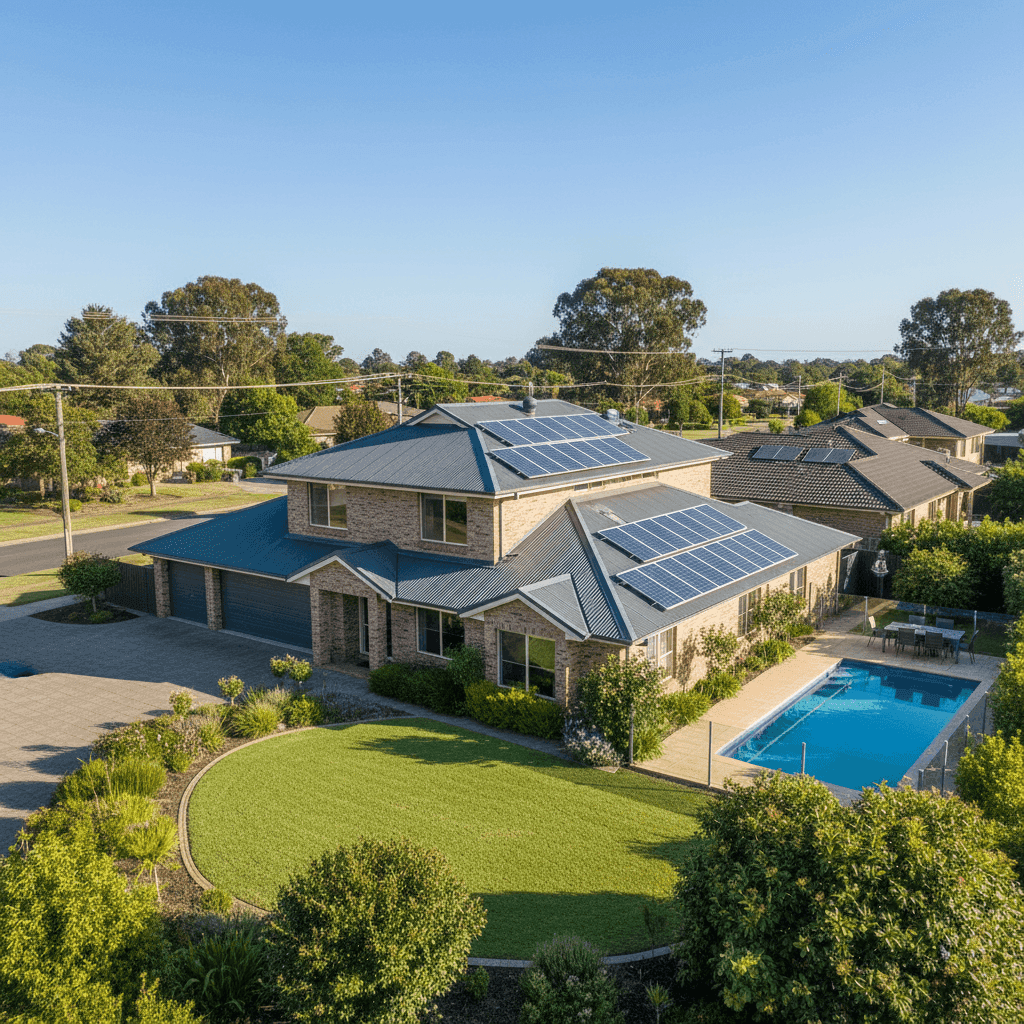
Tyabb is a semi-rural township on Victoria's Mornington Peninsula, known for its antique shops, acreage properties, and relaxed lifestyle just an hour south of Melbourne. For owners of larger homes in the area, understanding what drives your home insurance premium — and whether you're getting fair value — is an important part of protecting one of your biggest assets. This article breaks down a real home and contents insurance quote for a six-bedroom free standing home in Tyabb (VIC 3913), comparing it against local, state, and national benchmarks.
---
Is This Quote Fair?
The annual premium for this property came in at $3,584 per year (or $346/month), covering both building and contents. The building is insured for $1,578,000 and contents for $62,000, with a $1,000 excess applying to both.
Our price rating for this quote is FAIR — Around Average.
That assessment holds up when you look at the numbers. The suburb average for Tyabb sits at $4,420/year, with a median of $4,557/year. This quote lands comfortably below both figures — roughly 19% under the suburb average and well within the lower half of the local pricing range (the 25th percentile is $3,361/year and the 75th percentile reaches $5,451/year).
In other words, while this isn't the cheapest quote available in the suburb, it's meaningfully better than what most Tyabb homeowners appear to be paying. For a property of this size and specification, that's a reasonable outcome.
---
How Tyabb Compares
To put this quote in broader context, it helps to look at how Tyabb stacks up against Victoria as a whole and the national picture.
| Benchmark | Average Premium | Median Premium |
|---|---|---|
| Tyabb (VIC 3913) | $4,420/yr | $4,557/yr |
| Mornington Peninsula LGA | $2,652/yr | — |
| Victoria | $3,000/yr | $2,718/yr |
| National | $5,347/yr | $2,764/yr |
A few things stand out here. First, Tyabb premiums run notably higher than the broader Mornington Peninsula LGA average of $2,652/year — suggesting that properties within the Tyabb postcode carry specific risk characteristics or tend to be larger and higher in value than the LGA norm. Second, while the Victorian state average ($3,000/year) is lower than the Tyabb suburb average, the national average ($5,347/year) is considerably higher — driven largely by high-risk postcodes in Queensland, Western Australia, and Northern Australia where cyclone, flood, and storm exposure push premiums up significantly.
For a Victorian property of this scale, a premium of $3,584/year sits in a reasonable position: above the state average (reflecting the property's size and sum insured), but well below what similar homes might cost to insure in higher-risk parts of the country.
---
Property Features That Affect Your Premium
Several characteristics of this property have a direct bearing on what insurers charge. Here's how they play out:
Size and sum insured: At 363 sqm with six bedrooms and four bathrooms, this is a substantial home. The building sum insured of $1,578,000 reflects that scale. Larger sums insured mean greater potential payouts for insurers, which is one of the primary drivers of a higher base premium.
Double brick construction: Brick veneer and double brick homes are generally viewed favourably by insurers compared to timber-framed or clad exteriors. Double brick offers strong resistance to fire, wind, and impact damage — factors that can help moderate your premium.
Steel/Colorbond roof: Colorbond roofing is a popular choice in Australia and tends to perform well in assessments of storm and hail resilience. It's low maintenance and durable, which insurers typically regard positively.
Concrete slab foundation: Slab foundations are common in Victoria and are generally considered stable and low-risk from a structural standpoint, particularly in areas without significant soil movement concerns.
Swimming pool: Pools add to the replacement cost of the property and can introduce liability considerations, both of which may contribute to a slightly higher premium.
Solar panels: Rooftop solar systems add insurable value to the building. If panels are damaged in a storm or hailstorm, repair or replacement costs can be substantial — something insurers factor into their pricing.
Ducted climate control: Ducted heating and cooling systems are expensive to repair or replace and are typically included in the building sum insured. Their presence is consistent with the higher-end replacement cost reflected in this quote.
No cyclone risk: Tyabb is not in a designated cyclone risk zone, which is a meaningful premium advantage compared to properties in northern Australia.
---
Tips for Homeowners in Tyabb
1. Review your building sum insured regularly With a replacement cost of $1,578,000, it's essential this figure stays current. Construction costs have risen sharply in recent years, and being underinsured — even slightly — can leave you significantly out of pocket after a major claim. Consider using a quantity surveyor or your insurer's building cost calculator annually.
2. Check that your pool and solar panels are explicitly covered Not all policies automatically extend full cover to pools, pool equipment, or solar panel systems. Read your Product Disclosure Statement carefully to confirm these features are included — and at adequate limits.
3. Shop around at renewal time Even with a FAIR rating, there may be better value available. The spread between the 25th percentile ($3,361/year) and 75th percentile ($5,451/year) in Tyabb shows significant variation in what insurers charge for similar properties. Comparing quotes at renewal can save hundreds of dollars a year.
4. Consider your excess level This policy carries a $1,000 excess on both building and contents. Opting for a higher voluntary excess is one of the most straightforward ways to reduce your annual premium — just ensure you could comfortably cover that amount if you needed to make a claim.
---
Compare Home Insurance Quotes in Tyabb
Whether you're reviewing an existing policy or shopping for the first time, comparing quotes is the best way to make sure you're not overpaying. At CoverClub, you can enter your property address and get a clear picture of what home and contents insurance should cost for your specific home — with transparent benchmarks drawn from real quotes across Australia. Start your comparison today and see how your premium stacks up.